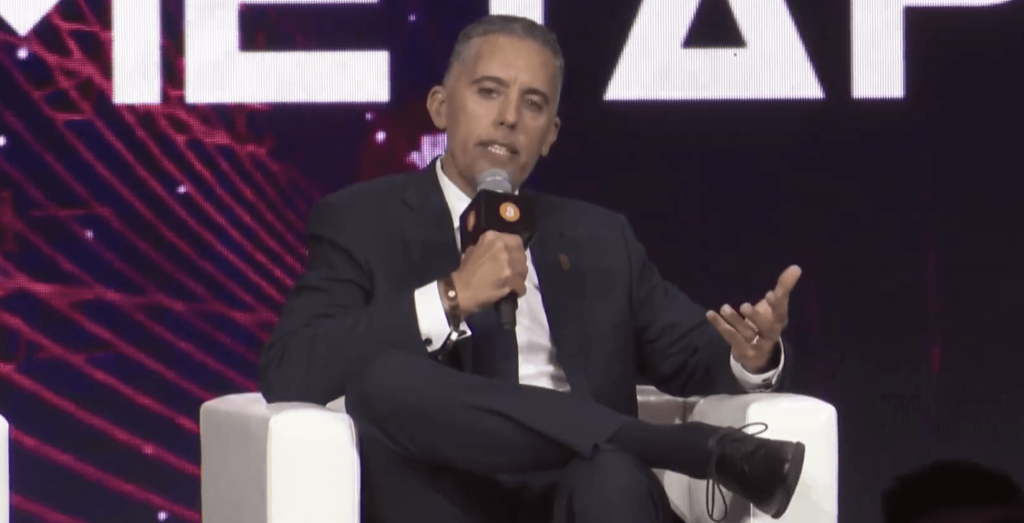
Matt Cole, CEO of Strive, stated on June 19 that the sharp decline in Strategy’s STRC and Strive’s SATA was caused by forced liquidations from leveraged investors rather than any weakness in the issuers’ financial health.
His comments followed one of the most volatile trading sessions in the digital credit market, during which STRC fell to $82.50 and SATA dropped into the low $90 range before both assets rebounded as buyers returned.
Cole Says Core Fundamentals Remain Strong
In a detailed post on X, Cole described Thursday as one of the toughest trading days in the history of digital credit.
He explained that many investors seeking higher yields borrowed heavily against assets like STRC and SATA. Once prices started declining, margin calls triggered a wave of forced selling, creating a chain reaction that drove prices lower regardless of the underlying fundamentals.
Cole emphasized that the sell-off was primarily a leverage driven liquidation event rather than a sign of deteriorating credit quality.
To illustrate his point, he compared the situation to past collapses in leveraged Treasury trades. In those cases, the issue was not poor asset quality but excessive leverage from investors chasing yield in assets perceived as safe.
Speaking specifically about Strive, Cole said the company’s dividend reserves remain untouched and that the firm is under no financial pressure. He also noted that liquidation driven sell-offs do not necessarily indicate weak collateral. In many cases, strong and stable collateral can actually encourage investors to take on excessive leverage.
Market Demand Concerns Still Exist
However, not all concerns have disappeared.
Udi Wertheimer, co founder of Taproot Wizards, questioned why STRC had already shown weakness before the crash, noting that it only climbed to around $97 near its last ex dividend date.
Cole acknowledged that demand had softened somewhat. He attributed this to weakness in the Bitcoin market, investor uncertainty around Strategy’s recent corporate decisions, and concerns over the company’s use of cash to pay down convertible debt.
Still, Cole argued that the nature of demand mattered more than the size of demand itself.
He explained that demand from long only institutional investors is much more stable than demand driven by highly leveraged buyers. While leveraged investors can create strong upward momentum, they can also trigger rapid and severe sell-offs when market conditions turn against them.
Cole added that Strive has a clear tool available if SATA’s growth begins to outpace demand, which is reducing the interest rate to slow expansion.
STRC Faces a Real Stress Test
Market data shows STRC has recovered to around $89 following the sell-off, though it remains well below its $100 par value. At current levels, its effective yield is close to 13%, with 30 day volatility around 21%.
Meanwhile, SATA has performed relatively better and was trading slightly above $97 at the time of writing.
Strategy has stated that its Bitcoin treasury, valued at roughly $53 billion based on Bitcoin trading near $63,000, is sufficient to cover dividend payments for approximately 32 years. The company’s annual obligations are estimated at about $1.7 billion.
However, critics such as Peter Schiff have challenged that outlook, arguing the projection depends heavily on Bitcoin maintaining its current price and dividend costs remaining stable. Any major drop in Bitcoin or increase in payout obligations could weaken that long term outlook.#crypto#cryptonews https://coinsignals.net https://t.me/coinsignalpublic