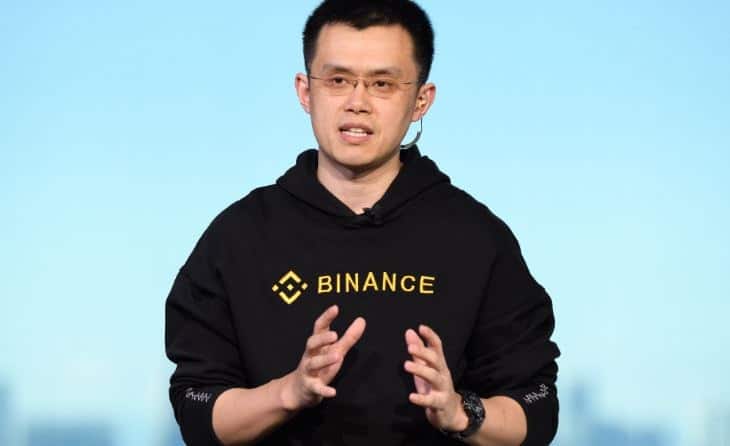
Changpeng Zhao, widely known as CZ in the crypto space, believes AI agents could become one of the strongest catalysts for crypto adoption in the near future.
According to him, autonomous AI systems are likely to depend on blockchain based payment infrastructure well before traditional financial systems evolve enough to support them.
CZ Sees AI and Crypto as a Strong Match
CZ shared these views during a broad discussion with Alex Thorn of Galaxy Research, where he explained why AI and crypto naturally complement each other.
He pointed out that while AI can already help users find the cheapest flights or identify the best deals online, it still cannot complete purchases independently. Traditional payment systems such as credit cards still require human involvement, whether through manual authorization, two factor authentication, or identity verification procedures like KYC. These requirements create major limitations for autonomous AI agents.
Blockchain infrastructure works differently. Because it is built around programmable systems and API driven interactions, AI agents can interact with blockchain networks much like they interact with other software systems.
CZ believes this creates a clear path for AI driven payments and trading.
He stated that agent based trading and payments could emerge within months rather than years, and he expects crypto to become the preferred payment rail for these systems.
Rather than presenting this as speculation, CZ described it as a logical outcome of how the technology is designed. AI agents acting on behalf of users need programmable financial systems to transact efficiently, and blockchain currently offers that capability far better than traditional banking infrastructure.
AI Growth May Strengthen Crypto, Not Compete With It
CZ also dismissed concerns that growing interest in AI could divert capital and attention away from crypto.
Instead, he argued that AI related investments are already flowing through blockchain infrastructure. In his view, even money moving into AI driven sectors often continues to circulate through crypto rails, increasing activity and transaction volume across blockchain networks.
His broader argument is that AI, blockchain, and the internet are separate but complementary technologies that can all expand together. He compared this relationship to how the internet continued to grow even after blockchain emerged, rather than being replaced by it.
CZ also linked this idea to financial inclusion. With billions of adults still lacking access to traditional banking services, he believes permissionless blockchain based payment systems could open economic participation to far more people than legacy financial systems have managed.
AI Adoption Brings Opportunities and Risks
CZ’s perspective aligns with views already shared across the industry.
In a December 2025 report, Andreessen Horowitz’s crypto division argued that AI agents would need payment systems capable of transferring value at internet speed. The report suggested that stablecoins and blockchain networks could become the preferred infrastructure for machine to machine payments.
However, early experiments with AI agents have also highlighted significant risks.
In April, a company called PocketOS reportedly lost its entire production database after an AI coding agent accidentally deleted it, including all backup systems, in a single API action.
In another incident, an AI agent called Lobstar Wilde mistakenly transferred $450,000 worth of tokens to an individual who requested just 4 Solana tokens, reportedly to pay for a relative’s tetanus treatment.
These cases highlight both the promise and the dangers of autonomous AI systems. While AI agents could accelerate crypto adoption by creating new demand for programmable payments, they also introduce serious operational and security challenges that will need to be addressed as adoption grows.#crypto#cryptonews https://coinsignals.net https://t.me/coinsignalpublic