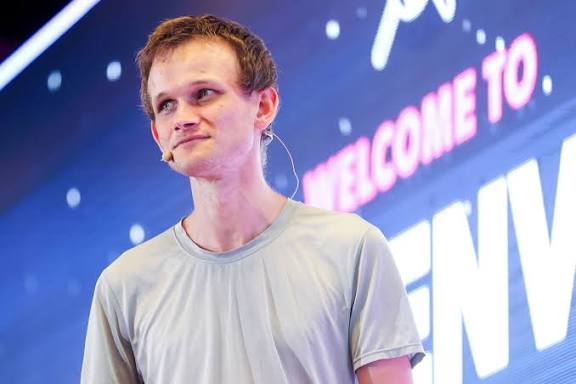
Ethereum co-founder Vitalik Buterin has argued that the original vision of Layer 2 scaling within the Ethereum ecosystem is no longer being fulfilled. He believes that many L2 networks have failed to live up to expectations, while the Ethereum mainnet itself continues to scale directly.
Slow Progress and Low Fees
In a recent post on X, Buterin highlighted two key trends reshaping the discussion. First, L2 networks have struggled to achieve advanced decentralization and interoperability. Second, Ethereum’s mainnet now has very low fees, with gas limits expected to rise significantly through 2026.
Buterin emphasized that true Ethereum scaling was meant to expand block space while fully inheriting Ethereum’s security, meaning that all activity remains valid and censorship-resistant. Systems relying on multisig bridges or discretionary control cannot be considered genuine Ethereum extensions, even if they provide high throughput.
He noted that some L2 projects may never progress beyond an initial stage, citing technical limitations with zero-knowledge EVM safety and regulatory or customer requirements that demand ultimate control. While appropriate for those projects’ purposes, this disqualifies them from being considered Ethereum scaling in the original sense.
A Spectrum of L2s
Rather than treating all L2s as a single category, Buterin suggested viewing them as a spectrum of systems with varying degrees of Ethereum security. Some L2s may be fully secured by Ethereum, while others operate with more limited guarantees. This approach allows users and applications to select networks based on their specific needs.
He added that L2s should aim to provide unique value beyond general scaling, including specialized virtual machines, application-specific efficiency, high throughput, low-latency sequencing, or integrated services like oracles or dispute resolution. For networks handling ETH or Ethereum-based assets, reaching at least stage 1 should be a baseline requirement.
ZK-EVM Precompile
Buterin also stressed the importance of a native rollup precompile that can verify ZK-EVM proofs directly on Ethereum. This would enable trustless interoperability and composability while allowing L2s flexibility to extend functionality. He noted that while some systems in a permissionless ecosystem will operate with weaker guarantees, Ethereum’s role is to make security guarantees clear and continue strengthening the base protocol.