
coinsignals

Analyst Says Deeply Discounted Altcoins Could Deliver Bigger Returns Than Bitcoin

Crypto market analyst Credible Crypto believes many alternative cryptocurrencies now offer a more attractive risk to reward opportunity than Bitcoin, particularly those that have fallen 80 percent to 90 percent from their all time highs.

According to the analyst, these heavily discounted assets could generate stronger gains than Bitcoin if market sentiment improves and the next phase of the bull cycle unfolds.

Bitcoin Still in a Healthy Long Term Structure

Speaking during the Ninja Trader podcast on July 5, Credible Crypto said Bitcoin has remained in a higher time frame correction since reaching its $126,000 peak in October last year. However, he believes the current decline represents a normal pullback within a broader bull market rather than the start of a long term bearish trend.

He pointed to Bitcoin’s consolidation between $50,000 and $75,000 during 2024, arguing that the market has returned to a price zone where investors previously accumulated significant amounts of BTC.

As long as Bitcoin remains above $50,000, he expects the current trading range to serve as a foundation for another upward move.

The analyst also highlighted on chain data showing that nearly 80 percent of Bitcoin’s circulating supply is now held by long term investors, the highest level ever recorded.

He explained that these holders have historically continued accumulating during periods of market weakness instead of selling into declines, helping reduce available supply until prices eventually recover.

Why the Analyst Prefers Altcoins

Credible Crypto revealed that he has shifted almost all of his investment portfolio into altcoins after accumulating Bitcoin at prices as low as $3,000 and later exiting most of his position as BTC approached $100,000.

While he believes Bitcoin could eventually climb from its recent low near $60,000 to around $250,000, he argues that many altcoins currently present greater upside because they have already experienced much steeper corrections.

According to him, several alternative cryptocurrencies are trading at valuation levels similar to where Bitcoin traded during its early growth stages around $3,000, $6,000, and $15,000.

He believes today’s deeply discounted altcoins resemble the accumulation opportunities that Bitcoin offered years ago before delivering its strongest rallies.

Not Every Altcoin Will Recover

Despite his optimistic outlook, Credible Crypto warned that investors should avoid assuming every cryptocurrency will participate in the next market rally.

He argued that a large percentage of the hundreds of thousands of digital assets currently in existence have little real utility or long term value and are unlikely to revisit previous highs.

Instead, he encouraged investors to focus on projects with proven products, active user communities, and sustainable business models rather than simply buying tokens because they have fallen sharply.

According to the analyst, only a small percentage of altcoins have the fundamentals needed to outperform during the next market cycle. Even if those projects never return to their previous record highs, he believes they could still deliver gains of three to four times their current value within weeks when market conditions become favorable.

By comparison, he noted that Bitcoin may require several months or even years to achieve a similar multiple, even if it eventually reaches his long term target of $250,000.#crypto#cryptonews https://coinsignals.net https://t.me/coinsignalpublic


Bitcoin Weathers Largest Miner Exit as Network Quickly Recovery

Bitcoin has successfully navigated one of the biggest challenges in its history after a large number of mining companies sharply reduced their involvement, demonstrating the network’s ability to adapt even as economic conditions forced miners to seek more profitable opportunities.

During the first quarter of 2026, Bitcoin miners reportedly sold a record 32,000 BTC while securing nearly $70 billion in artificial intelligence infrastructure contracts. The move marked the largest migration away from Bitcoin mining ever recorded as companies shifted resources toward the rapidly growing AI sector.

AI Boom Drives Miners Away From Bitcoin

In a post published on July 6, market analyst Shanaka Anslem Perera explained that several publicly traded mining firms, including MARA Holdings, CleanSpark, Riot Platforms, Canaan, Core Scientific, and Bitdeer redirected capital from Bitcoin mining into AI infrastructure after profitability declined.

Perera noted that producing one Bitcoin cost miners roughly $80,000, while the cryptocurrency traded below that level for much of the year. In contrast, AI infrastructure offered significantly higher returns through long term contracts from companies such as Microsoft and Google, making the transition financially attractive.

According to Perera, miners acted as any business would by selling substantial portions of their Bitcoin reserves and converting mining facilities into AI data centers to pursue stronger and more predictable revenue streams.

Bitcoin Network Adjusts Without Disruption

The large scale departure of miners briefly affected the network. Bitcoin’s total hash rate, which measures the computing power securing the blockchain, declined by around 4 percent, marking its first drop in six years and ending a five year period of uninterrupted double digit growth.

However, Bitcoin’s built in difficulty adjustment mechanism quickly responded. As fewer miners participated, mining automatically became easier and more profitable for those who remained online.

The reduced competition encouraged existing miners and new participants to increase operations. Mining difficulty fell by about 10 percent during some adjustment periods, one of the largest reductions of the year, helping push mining profitability back above $30 per petahash per second.

Perera argued that the recovery demonstrated Bitcoin’s decentralized design, with the network continuing to process blocks without interruption before eventually reaching a new all time high in hash rate.

According to the analyst, Bitcoin proved it could withstand the largest miner withdrawal in its history while continuing to produce blocks approximately every ten minutes as intended.

Miner Stress Indicator Signals Possible Market Bottom

Separately, market analyst Gah highlighted that the Miner Cycle Stress Composite, an indicator combining the Puell Multiple with the inverted Miner Capitulation Index, has fallen to its lowest level of 2026.

Historically, similar readings have appeared during periods of extreme miner stress in 2018, 2020, 2022, and 2024, which later coincided with major market bottoms.

The indicator also reached its absolute low in 2015, when Bitcoin fell from around $300 to nearly $160 within a week before eventually recovering.

According to Gah, the current pattern closely resembles previous cycles, suggesting the market may once again be approaching a period of undervaluation and potential long term recovery.#crypto#cryptonews https://coinsignals.net https://t.me/coinsignalpublic
Bitmine Adds 42,000 More ETH as It Moves Closer to Owning 5 Percent of Ethereum Supply

Bitmine Immersion Technologies has expanded its Ethereum holdings with another major purchase, bringing the company closer to its goal of controlling 5 percent of the cryptocurrency’s circulating supply.

The company, chaired by Tom Lee, announced that it acquired 42,197 ETH over the past week. While the pace of buying is slower than earlier this year, when Bitmine completed several purchases exceeding 100,000 ETH, the firm continues to steadily grow its Ethereum treasury.

Bitmine Nears 5 Percent Ownership Milestone

According to the company’s latest treasury update, Bitmine held 5,742,237 ETH as of July 5, representing approximately 4.8 percent of Ethereum’s circulating supply of 120.7 million tokens.

At the time of the report, the holdings were valued at more than $10 billion based on an Ether price of around $1,800. However, with Ether later falling to roughly $1,740, the company is once again facing unrealized losses estimated at between $9 billion and $10 billion.

Beyond Ethereum, Bitmine also owns 206 BTC, holds $527 million in cash and marketable securities, and maintains strategic investments in Beast Industries and Eightco Holdings worth a combined $251 million.

Tom Lee Remains Bullish on Ethereum

Lee continues to express greater confidence in Ethereum than in Bitcoin, particularly if the proposed CLARITY Act becomes law in the United States. Many market observers believe the legislation could provide a stronger regulatory framework that would particularly benefit Ethereum and the broader digital asset industry.

Lee also reiterated his belief that the cryptocurrency market is entering the early stages of what he describes as a crypto spring, suggesting that the prolonged bearish cycle is nearing its end.

He said Bitmine increased its pace of Ethereum purchases during the past week and intends to maintain consistent accumulation throughout 2026. Lee added that the company expects to reach its objective of controlling 5 percent of Ethereum’s circulating supply sometime next year.

Bitmine remains the second largest corporate cryptocurrency holder, trailing only Strategy. The gap between the two companies narrowed slightly after Strategy recently sold more than 3,500 BTC.

Staking Strategy Generates Additional Revenue

Bitmine is also expanding its staking operations to generate recurring income from its Ethereum holdings.

The company has already staked nearly 4.9 million ETH, representing about 85 percent of its total holdings, through its institutional staking platform, MAVAN.

Based on the current staking yield of 2.68 percent, Bitmine estimates annual staking rewards of approximately $235 million. If the company eventually stakes its entire Ethereum portfolio, projected annual rewards could increase to around $277 million.#crypto#cryptonews https://coinsignals.net https://t.me/coinsignalpublic

Ripple Secures Full MiCA License, Expanding Regulated Crypto Services Across Europe

Ripple has received full authorization as a Crypto Asset Service Provider (CASP) from Commission de Surveillance du Secteur Financier, marking a significant regulatory milestone for the company and strengthening its presence across Europe.

The approval enables Ripple to offer its regulated cryptocurrency payment services throughout the European Economic Area, giving the company access to all 30 member countries under a unified regulatory framework.

According to Ripple, the authorization builds on the preliminary approval it received in June and confirms that the company fully complies with the Markets in Crypto Assets Regulation framework introduced by the European Union.

With the license now in place, Ripple can provide its end to end digital asset payment solutions to financial institutions, businesses, and corporate clients across the region without requiring separate regulatory approvals in each participating country.

Cassie Craddock said the approval places Ripple in a strong position to expand its European operations as demand for regulated digital asset infrastructure continues to increase.

She noted that full CASP authorization allows the company to enter the post transition MiCA era fully compliant and prepared for growth. According to Craddock, financial institutions across Europe are increasingly seeking regulated partners to support their digital asset initiatives, and Ripple is now fully licensed to meet that demand.

The company also stated that it is among a small group of cryptocurrency firms to have secured full authorization under the MiCA framework. With this latest approval, Ripple’s global portfolio now includes more than 75 regulatory licenses.#crypto#cryptonews https://coinsignals.net https://t.me/coinsignalpublic

Strategy Sells More Bitcoin as Investors Watch for Potential Market Impact

Strategy has completed another Bitcoin sale, marking its second disposal of the asset in just over a month. The announcement was made by the company’s co founder and former chief executive, Michael Saylor.

The company sold 3,588 BTC for approximately $216 million to fund dividend payments tied to its Digital Credit securities. Following the transaction, Strategy’s Bitcoin holdings now stand at 843,775 BTC, while its cash reserve has increased to $2.55 billion.

Strategy Continues to Reduce Bitcoin Holdings

This latest sale follows a smaller transaction announced in late May, when Strategy sold 32 BTC to support preferred stock dividend payments.

Although that earlier sale was relatively small, it came at a time when Bitcoin was already under pressure. In the weeks that followed, Bitcoin extended its decline throughout June before falling below $58,000 by the end of the month.

At the same time, Strategy’s preferred security, STRC, dropped from its $100 issue price to below $75, leading some analysts to warn that the company could eventually be forced to liquidate a much larger portion of its Bitcoin reserves. Some estimates suggested more than 50,000 BTC could be sold over the next few years if financial pressures persist.

Analysts at CryptoQuant also previously recommended that Strategy pause its aggressive Bitcoin accumulation and prioritize strengthening its cash reserves, a move the company now appears to be making.

Saylor Reaffirms Long Term Bitcoin Vision

Despite the latest sale, Strategy recently introduced a new Digital Credit Capital Framework, shifting from a strategy centered solely on continuous Bitcoin purchases toward improving liquidity while maintaining long term exposure to the asset.

The company said its $2.55 billion cash reserve is sufficient to cover approximately 17.4 months of dividend payments. However, it also disclosed that it could sell up to $1.25 billion worth of Bitcoin in the future to extend that coverage beyond 25 months.

Before announcing the latest sale, Saylor shared his long term outlook for Bitcoin, arguing that the network will continue to mature by becoming more stable at its core while expanding its influence across financial markets.

According to Saylor, Bitcoin’s underlying protocol will become increasingly resilient, capital markets built around the asset will continue to grow, and digital credit products will play a much larger role as more financial infrastructure is developed on top of the Bitcoin network.

Bitcoin Retreats Following the Announcement

The market is now watching closely to see whether this latest sale will have a similar impact to the previous one.

Earlier in the day, Bitcoin climbed to $64,000, its highest level in roughly two weeks, before encountering strong resistance. Shortly after Strategy announced the sale, the cryptocurrency gave up more than $2,000, erasing much of its earlier gains and renewing concerns about short term price pressure.#crypto#cryptonews https://coinsignals.net https://t.me/coinsignalpublic
Bitcoin Falls Back After $64K Rejection as Pi Network Nears Record Low

Bitcoin briefly climbed to $64,000 for the first time in about two weeks before losing momentum and retreating below the $63,000 level. While the broader crypto market remained relatively quiet, Pi Network continued its downward trend and is now approaching a new all time low.

Bitcoin Rally Loses Steam at $64,000

Bitcoin endured a difficult June, extending the decline that began after its rejection around $83,000 in mid May. The leading cryptocurrency finished the month with a 20 percent loss, marking its weakest monthly performance in four years.

The bearish pressure carried into early July, briefly pushing BTC below $58,000, its lowest level since October 2024.

Buyers eventually stepped in, triggering a steady recovery over the following days. Bitcoin reclaimed the $60,000 level before continuing its gradual climb throughout the weekend.

The recovery peaked earlier today when BTC touched $64,000, reaching its highest price in two weeks. However, the rally quickly lost momentum as sellers returned, sending the asset back below $63,000.

Bitcoin’s market capitalization now stands just under $1.26 trillion, while its dominance of the overall cryptocurrency market remains above 56 percent.

Pi Network Continues to Struggle

Most large capitalization cryptocurrencies traded within a narrow range over the past 24 hours, with only modest price movements across the market.

Ether, BNB, Solana, XRP, and TRON posted gains of up to 1 percent, while Zcash and Cardano slipped by around 2 percent.

Among the stronger performers, Hyperliquid advanced 2.5 percent, while Stellar gained 3.6 percent. Meanwhile, Rain declined by approximately 3 percent.

In the mid and lower capitalization segment, DeXe and Litentry emerged as the biggest gainers, with both posting double digit increases. LIT’s latest rally has also strengthened its position among the top 100 cryptocurrencies by market capitalization.

On the downside, Pi Network remained one of the weakest performers. Its native PI token has continued to lose value and is now trading below $0.115, leaving it just 1 percent away from setting a new all time low after reaching its previous record low in late June.#crypto#cryptonews https://coinsignals.net https://t.me/coinsignalpublic
3 Key Events That Could Influence Crypto Markets This Week

This week is expected to be relatively light on major economic reports, with investors focusing mainly on labor market data and the release of the latest Federal Reserve meeting minutes.

Crypto markets started the week on a positive note after extending the gains recorded late last week. Investors are now looking ahead to several economic developments that could influence market sentiment over the coming days.

The biggest event on the calendar is the release of the Federal Reserve’s latest meeting minutes, which may provide additional insight into the central bank’s outlook on interest rates as inflationary pressures remain elevated.

Meanwhile, the total value of the US stock market has surpassed $80 trillion for the first time, representing nearly 48 percent of global market capitalization.

Market analysts at The Kobeissi Letter expect volatility to remain elevated as investors prepare for the start of another corporate earnings season.

Key Economic Events This Week

Monday begins with the release of June S&P Global Services Purchasing Managers’ Index (PMI) data, offering a fresh look at business activity in the services sector. On Tuesday, attention shifts to the ADP Employment Change report, which provides an early indication of private sector hiring.

On Wednesday, the Federal Open Market Committee will publish the minutes from its latest policy meeting, the first under the leadership of Kevin Warsh. Although policymakers kept interest rates unchanged at the meeting, persistent inflation driven by rising energy costs could shape future rate decisions.

Matthew Miskin said investors will closely examine the discussions to determine whether Federal Reserve officials are becoming more supportive of tighter monetary policy and what factors could influence future interest rate decisions.

Thursday brings the latest Initial Jobless Claims report. Recent labor market data has already shown signs of weakness, with full time employment falling by 514,000 in June to its lowest level since December 2024. According to The Kobeissi Letter, the slowdown in the US labor market appears to be gathering pace.

This week will also see SpaceX join the Nasdaq 100, while companies begin reporting quarterly earnings, another event that could drive broader market volatility.

Crypto Market Outlook

The cryptocurrency market remained in positive territory during Monday’s Asian trading session, with total market capitalization rising 1.1 percent to approximately $2.26 trillion.

Bitcoin led the market higher, climbing 2.7 percent over the weekend to trade around $63,700, its highest level in two weeks after recording its weakest monthly performance in four years.

Ether also posted strong gains, advancing 14 percent over the past week to trade close to $1,800 in early Monday trading.

Among altcoins, most tokens remained in positive territory, with Hyperliquid and Canton emerging as some of the strongest performers.#crypto#cryptonews https://coinsignals.net https://t.me/coinsignalpublic

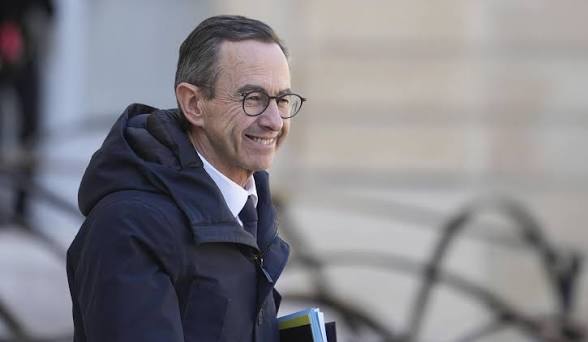
French Minister Says 77 Crypto Kidnapping Cases Recorded as New Security Strategy Nears

French authorities have announced stronger measures to combat crime following a rise in cryptocurrency related kidnappings and extortion cases.

Since the start of the year, France has recorded 77 cases involving kidnappings, attempted kidnappings, or extortion linked to cryptocurrency. Speaking at the Association of Digital Asset Holders (ADAN) on June 30, French Interior Minister Laurent Nuñez revealed that the figure represents a sharp increase from the 45 cases reported in 2025.

France Prepares Stronger Security Measures

Acknowledging growing concerns within the crypto industry, Nuñez described the attacks as serious but noted that emergency security measures introduced last year have already produced positive results. He said authorities arrested about 200 suspects, either after attacks occurred or before planned crimes could be carried out.

As an example, the minister pointed to an incident in the Somme region where suspects were arrested within eight hours after the victim used a dedicated emergency hotline established for members of the cryptocurrency sector.

Nuñez also revealed that 724 people working in the digital asset industry are now enrolled in the government’s rapid identification system, marking an 11 percent increase in participation.

Although full details of the upcoming security initiative have not yet been released, he said every department within the Interior Ministry has contributed to a new security strategy that will be more comprehensive than previous efforts.

The strategy is built around three main priorities. The first is improving intelligence gathering, especially because many of the people directing these crimes are believed to be operating from outside France. The second is strengthening collaboration with ADAN by creating a network of experts that connects cryptocurrency businesses with government authorities. The third focuses on improving coordination among law enforcement agencies while expanding cooperation with foreign governments to dismantle criminal networks responsible for these attacks.

The minister emphasized that international cooperation remains essential. He highlighted the June 2025 arrest in Morocco of a Franco Moroccan suspect believed to have orchestrated several kidnappings targeting the cryptocurrency industry. One of the victims was David Balland, the co founder of Ledger. According to Nuñez, that arrest brought the wave of attacks to an immediate halt.

Crypto Related Violent Robberies Continue

Despite France’s efforts, similar attacks continue to surface in other parts of the world.

In March, a cryptocurrency investor known by the pseudonym Sillytuna reported that armed criminals forced him to surrender approximately $24 million worth of digital assets during a violent robbery.

The victim said the attackers threatened kidnapping and sexual assault unless he transferred control of his cryptocurrency holdings. Blockchain investigators later traced the stolen assets as they moved across several blockchain networks before being converted into privacy focused cryptocurrencies, making them significantly harder to track.#crypto#cryptonews https://coinsignals.net https://t.me/coinsignalpublic

XRP Drops 22 Percent in June, but July Has Historically Been a Strong Month

XRP endured another difficult month as the broader cryptocurrency market remained under pressure, but historical trends suggest July could offer a much needed turnaround for the Ripple associated token.

After falling sharply in June, XRP has already begun recovering, raising hopes that the asset could once again deliver the strong July performance it has recorded in recent years.

June Ends on a Weak Note

According to data from CryptoRank, XRP lost 22.1 percent during June, making it one of the token’s weakest monthly performances in recent memory.

Selling pressure pushed XRP to nearly $1.00 on most exchanges as concerns over the crypto market and escalating geopolitical tensions weighed heavily on investor sentiment. The decline marked its lowest price since late 2024 and caused XRP to slip out of the top five cryptocurrencies by market capitalization.

The token has since recovered to around $1.15, although it still ranks behind Bitcoin, Ethereum, Tether, USD Coin, and BNB by market value.

Can July Deliver Another Rally?

Despite June’s losses, XRP investors have reasons to remain optimistic.

Historically, July has been one of the cryptocurrency’s strongest months. XRP has finished each of the last six Julys with positive returns, while five of those years produced gains exceeding 10 percent.

The standout performances came in 2020 and 2023, when XRP climbed 48.1 percent and 47.6 percent respectively. The token also gained 35 percent in 2025 and 31.2 percent in 2024. More modest advances were recorded in 2022 with a 14.6 percent increase and in 2021 with a 6.91 percent gain.

July 2026 has already started on a positive note, with XRP rising roughly 9 percent.

However, historical performance is not entirely one sided. Between 2015 and 2019, XRP finished every July in negative territory, highlighting that seasonal trends do not guarantee future performance.

One factor supporting the current recovery is the continued strength of spot XRP exchange traded funds. The investment products recently extended their streak of positive weekly inflows to nine consecutive weeks, reflecting sustained investor interest despite broader market weakness.

Consecutive Quarterly Losses Raise the Stakes

June’s decline also sealed another disappointing quarter for XRP.

The token finished the second quarter of 2026 down 22.4 percent, marking its third consecutive quarterly loss. XRP previously declined 35.4 percent during the fourth quarter of 2025 before falling another 27.1 percent in the first quarter of 2026.

While the extended losing streak is unusual, previous periods of sustained weakness have often been followed by significant recoveries.

Whether XRP can repeat that pattern will become clearer over the coming months as investors watch to see if the token can build on its early July momentum and finally reverse its longer term downtrend.#crypto#cryptonews https://coinsignals.net https://t.me/coinsignalpublic

Bitcoin Records Its Weakest Monthly Performance in Four Years. Can July Reverse the Trend?

Bitcoin endured its toughest month in four years during June 2026, extending what has been a challenging year for the leading cryptocurrency. With four of the first six months ending in negative territory, investors are now looking to July for signs of a sustained recovery.

While historical data suggests July has often been one of Bitcoin’s stronger months, the key question is whether the market can build on its recent rebound.

June Delivered a Major Setback

Bitcoin entered the second half of May with strong momentum after climbing above $82,000. The rally sparked optimism that the asset had erased much of its losses for the year and was preparing for another major bull market.

Instead, the advance stalled at that level, strengthening the familiar market narrative of selling in May. The rejection triggered heavy selling pressure that intensified throughout June.

During the month, Bitcoin fell below $70,000 and briefly slipped under $60,000 several times, marking its weakest levels since before the United States presidential election in late 2024.

Although buyers returned toward the end of June and helped Bitcoin recover part of its losses, the cryptocurrency still finished the month down approximately 20.5 percent. That made June 2026 its poorest monthly performance since June 2022.

History Favors Bitcoin in July

Despite June’s disappointing outcome, historical performance offers some optimism.

Bitcoin has ended July with gains in nine of the past thirteen years. Even more encouraging for investors, every July that followed a negative June has historically produced a positive monthly return.

The current month has also started on a stronger footing, with Bitcoin climbing back toward the $63,000 level over the weekend.

What Could Drive the Next Move?

Several factors may determine whether Bitcoin can extend its recovery throughout July.

One of the biggest obstacles remains the persistent outflows from United States spot Bitcoin exchange traded funds, which have weighed on market sentiment for several months. A return to sustained inflows could provide much needed support for prices.

Investor demand also remains an area of concern. Recent on chain data indicates that buying activity from United States and South Korean investors has remained relatively subdued, as reflected by the Coinbase Premium metric.

Broader macroeconomic developments could also influence the market. A lasting reduction in geopolitical tensions in the Middle East, along with greater clarity surrounding the United States midterm election outlook, may improve overall risk appetite.

At the same time, Bitcoin has begun flashing several bullish technical signals following its recovery above the $60,000 level, encouraging analysts to anticipate another potential breakout.

Market analyst Rekt Capital believes Bitcoin’s next major challenge will be the 50 month exponential moving average near $65,000. Successfully reclaiming that level could strengthen the case for a more sustained recovery during the weeks ahead.#crypto#cryptonews https://coinsignals.net https://t.me/coinsignalpublic