
coinsignals

Global Tensions and the Iran-US Conflict Weigh on Crypto Markets, Investors Step Back From Risk

Rising geopolitical tensions, particularly the ongoing conflict between Iran and the United States, have unsettled cryptocurrency markets and caused investors to retreat from risk-taking positions.

CryptoQuant analyst Darkfost noted on Monday that periods like this are typically unfavorable for risk appetite, and this trend is evident in the sharp decline of Bitcoin’s Estimated Leverage Ratio on Binance. This metric gauges the degree to which investors use leverage by comparing futures open interest with the amount of BTC reserves held on the exchange. Since February, the ratio has fallen significantly from 0.198 to 0.152, coinciding with Bitcoin’s decline from $96,000 to $69,000.

Signs of a Healthier Market Structure

Darkfost explained that if the leverage ratio remains low while Bitcoin consolidates, it could indicate that spot market buying, rather than leveraged speculation, is becoming the primary driver of price movements. This shift is generally considered a healthier market dynamic because it reduces systemic risk and stabilizes price action ahead of any new directional trend. Lower leverage typically means that the market experiences less artificial pressure from futures trading, which can prevent exaggerated swings and provide a foundation for more sustainable growth.

In a separate observation, CryptoQuant analyst “IT tech” highlighted that market participants calling for a bottom are increasing in number. One metric, the long-term holder to short-term holder SOPR ratio, has now recorded 29 consecutive days in distress territory and currently sits at 0.89. The analyst noted that while recent buyers are underwater and short-term holders are beginning to capitulate, long-term holders are neither selling nor absorbing new supply. This suggests that while short-term selling is building, it has not yet reached extreme levels, and declaring a structural low in Bitcoin would be premature.

At the same time, Glassnode reported on Monday that momentum has shown modest improvement. The relative strength index has lifted from recent lows, indicating some recovery, but price action still lacks the strength needed to confirm a decisive bullish reversal. Spot market activity remains subdued, with lower trading volumes reflecting softer participation even as conditions gradually begin to stabilize.

Crypto Market Outlook

Spot cryptocurrency markets have seen gains of approximately 4.3 percent on the day, bringing the total market capitalization to $2.46 trillion. This movement followed remarks from former US President Donald Trump, who suggested that the conflict with Iran could be “over soon.” Bitcoin reclaimed the $70,000 level during early trading in Asian markets on Tuesday, while oil prices sharply declined by 28 percent from Monday’s peak of $120 per barrel.

Ether (ETH) remained relatively weak, though it held above the key $2,000 mark at the time of reporting. Some altcoins recorded more substantial gains, including Hyperliquid and Zcash, which each surged more than 11 percent. Overall, the market shows tentative signs of stabilization, but traders remain cautious in light of geopolitical uncertainty and lingering volatility in major cryptocurrencies.#crypto#cryptonews https://t.me/coinsignalpublic https://coinsignals.net

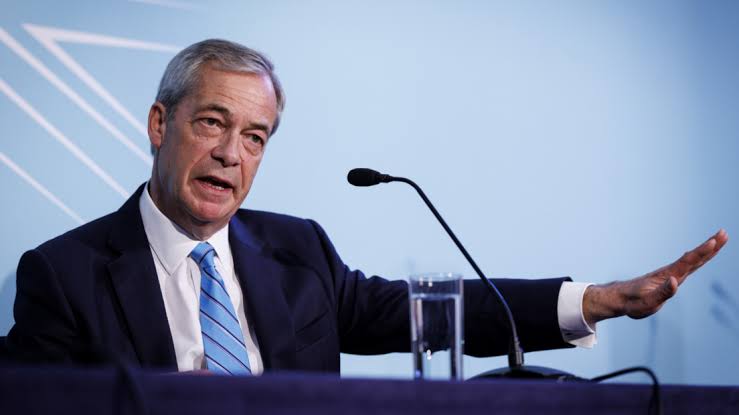
Analyst Highlights Potential Market Shift as Binance Bitcoin Index Hits 0.35

Bitcoin (BTC), trading around $69,000 at the time of this report, has shown signs of potential market inflection according to multiple on-chain metrics. These indicators point to weakening momentum in derivatives markets and falling capital among short-term holders, raising questions among traders about whether the current price action signals an imminent rebound or the beginning of a deeper correction.

Derivatives Index and Short-Term Holder Capital Signal Attention

On March 9, on-chain analyst Amr Taha reported that the Binance Bitcoin derivatives market index has dropped to approximately 0.35. Taha noted that this level is comparable to readings observed in July and August of 2024, and it is below the 0.43 recorded in April 2025. Historically, similar levels have coincided with major market lows, which were followed by significant price increases.

In the same analysis, Taha highlighted that the market capitalization of Bitcoin held by short-term investors has declined to roughly $390 billion, down from about $437 billion on April 7, 2025. Historically, sharp drops in this metric have often preceded substantial capitulation events among short-term holders. For instance, on April 8, 2025, following the previous value of $437 billion, intense selling pressure pushed Bitcoin down toward $78,000 before it eventually climbed above $108,000.

Analyst GugaOnChain also weighed in, describing the current market setup as a “No Traction Engine” scenario. This diagnosis was based on the Network Value to Transaction Value ratio, which surged by 77 percent to reach 41.34. The NVT ratio compares Bitcoin’s market capitalization to its on-chain transaction volume, and the spike indicates that price movements are occurring without corresponding increases in network activity.

Further confirmation of market caution comes from the short-term holder MVRV ratio, which sits at 0.76, suggesting that retail investors are realizing losses. Additionally, the Coinbase Premium turned negative at -0.0048, reflecting institutional selling pressure. GugaOnChain emphasized that this combination of indicators serves as a strong warning, cautioning that temporary stability or small rebounds without trading volume should not be taken as signs of sustained strength.

Mixed Signals Amid Narrow Trading Range

These signals have emerged while Bitcoin trades within a relatively narrow range, influenced in part by volatility from the ongoing conflict in the Middle East. The cryptocurrency briefly reached $74,000 last week, but by March 8, it fell below $66,000 according to CoinGecko data, before recovering to its current level above $68,000.

Meanwhile, U.S.-based spot Bitcoin ETFs attracted approximately $568 million in new inflows last week, marking the second consecutive week of positive fund flows after months of net withdrawals. However, daily activity has shown some volatility. Strong inflows earlier in the week were offset by nearly $350 million in outflows on Friday, according to data from SoSoValue. This pattern indicates that while fresh capital is entering the market, many investors remain cautious and are carefully monitoring price action before committing further funds.

Overall, the convergence of derivative market weakness, reduced short-term holder capital, and the “No Traction Engine” signals highlight a market in flux, with traders closely watching for clear signs of direction amid ongoing global uncertainty.#crypto #cryptonews https://t.me/coinsignalpublic https://coinsignals.net
Nigel Farage Backs UK Bitcoin Company Led by Former Chancellor Kwasi Kwarteng

Stack BTC Plc, a UK-based Bitcoin firm chaired by former Chancellor Kwasi Kwarteng, has successfully raised $347,204 from several investors, including Nigel Farage, leader of the Reform UK party, and the cryptocurrency platform Blockchain.com. The company plans to use the funds to acquire and expand British businesses, build a Bitcoin treasury, and support general working capital needs.

The capital was raised through the issuance of 5,200,000 new ordinary shares priced at five pence each. A press release issued on March 9 highlighted that Farage’s investment reflects his long-standing commitment to supporting UK businesses and his belief in Bitcoin as both a financial asset and a digital currency. Throughout his career, Farage has consistently promoted independent and local enterprises, emphasizing their importance to the British economy.

“London and the UK have historically been at the center of global financial markets, and I believe we can and should become a major hub for the crypto industry,” Farage said in the statement. He also emphasized the significance of small and medium sized enterprises, which provide employment for roughly 60 percent of the private sector workforce. Farage noted that Stack’s approach of acquiring and nurturing businesses represents a strategy for long-term growth and economic support.

Blockchain.com will provide institutional-grade services to support Stack’s Bitcoin treasury initiative, complementing its investment in the company. Stack BTC Plc was officially registered with the UK Financial Conduct Authority on February 10, 2026, which allows the company to operate legally as a crypto asset business within the region.

Kwasi Kwarteng, who serves as Executive Chairman of Stack, welcomed the involvement of both Farage and Blockchain.com, noting that their participation aligns closely with the company’s objectives. “Nigel’s steadfast support for British businesses and his conviction that Bitcoin will play an increasingly important role in global finance are perfectly aligned with the company’s ethos and strategic plans,” Kwarteng stated. He added that the infrastructure provided by the crypto service provider will ensure that Stack maintains the highest standards for custody and security of its Bitcoin reserves.

Share Trading and Ownership Structure

The new shares are scheduled to begin trading on the Aquis Growth Market from March 12, 2026. Investors who purchased the shares will also receive warrants, which can be exercised once certain conditions are met. Following this issuance, Stack will have a total of 68,130,000 ordinary shares in circulation, each carrying one voting right. The existing concert party now holds 45.21 percent of the company’s issued share capital.

Nigel Farage currently owns 4,300,000 shares, representing 6.31 percent of the total, while Kwarteng holds 3,700,000 shares, equal to 5.43 percent. The remaining shares are distributed among other directors and investors.

Earlier in March, Stack announced its intention to operate as a dedicated Bitcoin treasury company. The firm plans to start its treasury with an initial acquisition of 21 BTC, with future reserves to be funded through a combination of equity issuance, acquisitions, and operating profits.

With this move, Stack joins established participants in the UK Bitcoin treasury space, including the Smarter Web Company and Satsuma Technology, which currently hold 2,692 BTC and 620 BTC, respectively, according to data from BitcoinTreasuries. This step further solidifies the company’s position as a growing player in the intersection of corporate treasury management and cryptocurrency investment.#crypto#cryptonews https://t.me/coinsignalpublic https://coinsignals.net

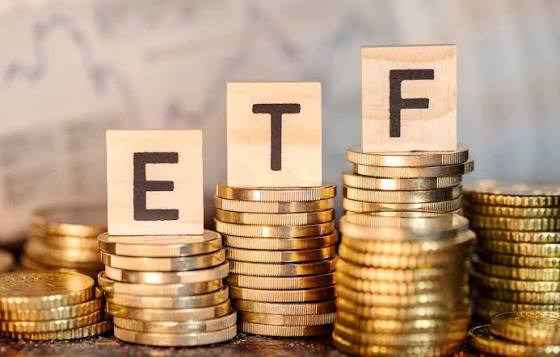
ETFs and Corporate Treasuries Continue Pulling Millions of BTC Off Exchanges

Analysts note that an increasing portion of Bitcoin is now being held within exchange-traded funds and corporate treasuries rather than on centralized trading platforms.

Data from crypto market analyst Dark Fost shows that Bitcoin reserves on exchanges have steadily declined since 2022, returning to levels last observed in 2019. This trend has intensified following the collapse of the FTX exchange, which prompted investors to rethink the safety of keeping assets on centralized platforms.

Migration of Bitcoin Supply

In November 2022 alone, over 325,000 BTC were withdrawn from exchange reserves as investors moved their coins to private wallets. The continued outflow has reduced the total Bitcoin reserves accessible on retail-friendly exchanges to approximately 2.7 million BTC.

Among these exchanges, Binance accounts for roughly 20 percent of the remaining supply. When platforms mainly used by institutional investors are considered, Coinbase Advanced emerges as the leader, holding close to 800,000 BTC. Despite this, the figure is still around 200,000 BTC lower than what was recorded in July 2025, highlighting a significant reduction over time.

Dark Fost explained that while the FTX collapse was a major catalyst encouraging investors to shift their assets off exchanges, two additional developments have reinforced this trend. The first is the introduction of spot Bitcoin exchange-traded funds in January 2024. At that time, exchange reserves were still above 3.2 million BTC. Since the launch of these ETFs, they have accumulated around 1.3 million BTC, equivalent to roughly 6.7 percent of the total Bitcoin supply, effectively removing this portion from liquid exchange availability.

The second contributing factor is the growth of digital asset treasury companies, or DATs, which hold Bitcoin as a reserve asset. Collectively, these firms now control about 1.1 million BTC, representing nearly 5 percent of the total supply. Both ETF holdings and corporate treasuries are therefore taking an increasingly large share of the Bitcoin supply and represent structured storage outside of traditional exchange liquidity.

Dark Fost emphasized that this shift in supply could have long-term implications for market liquidity and price formation, though these structural effects generally take time to fully manifest.

Geopolitical Tensions Impact Market Activity

Amid these changes in Bitcoin supply, the cryptocurrency faced pressure in early March as investors remained focused on escalating geopolitical tensions in the Middle East. Bitcoin recently failed to break above $70,000, with the ongoing US-Iran conflict contributing to overall market uncertainty.

Despite this pullback, crypto analyst Michaël van de Poppe noted that Bitcoin’s current trading activity does not signal a worst-case scenario. In his latest post on X, he highlighted that BTC continues to move within a defined range but maintains relatively strong performance given the market conditions. He also pointed out that oil prices surged by approximately 15 percent on Monday to reach their highest levels since 2022, while gold and other commodities declined, and the Nasdaq experienced notable losses.

Van de Poppe added that if the US stock market opens higher and oil prices begin to correct, Bitcoin could regain momentum and push back toward the $70,000 level, suggesting that the current weakness is temporary and largely driven by external market factors rather than a breakdown in Bitcoin’s underlying demand.#crypto #crypronews https://t.me/coinsignalpublic https://coinsignals.net

Bitcoin Approaches $70,000 as Oil Prices Plunge Following Trump’s Comments on the Middle East

After a day of volatile trading triggered by fast evolving events in the Middle East, Bitcoin briefly approached $70,000 as former President Trump commented on the war and the situation in the Strait of Hormuz.

His remarks caused ripples across financial markets, particularly in oil, where WTI Crude Oil contracts fell below $90 per barrel after earlier surging to $120.

Trump’s statement that the conflict is nearly over comes at a notable moment, as Iran recently appointed a new Supreme Leader, Mojtaba Khamenei, son of the former leader. Trump expressed strong disapproval of the appointment, calling it a serious mistake.

Meanwhile, reports continue that several regional countries, including the UAE and Turkey, are intercepting additional drones and missiles launched from Iran.

Addressing the broader situation, Trump also mentioned that the United States is considering controlling the Strait of Hormuz, which has effectively been closed for days, limiting the transport of goods, primarily oil.

Following Trump’s comments, oil prices dropped sharply after reaching a multi-year high earlier in the day. At the same time, gold and the S&P 500 saw gains, with gold touching $5,140 per ounce and the S&P 500 climbing above 6,800 points.

Bitcoin surged from $68,000 to $69,600 on Bitstamp but pulled back and now trades around $69,000. Ethereum surpassed the $2,000 mark, while Solana is trading above $85.#crypto#cryptonews https://t.me/coinsignalpublic https://coinsignals.net
140,000 BTC Leave Short Term Holders as Capitulation Pressure Builds in Bitcoin

Short term Bitcoin holders continue to realize losses as on chain data reveals persistent selling pressure throughout most of the past week.

Recent analysis from Axel Adler Jr. shows that the Short Term Holder Spent Output Profit Ratio, known as STH SOPR, remained below the neutral level of 1.0 for seven out of the eight days between March 2 and March 9. This metric measures whether coins held for less than 155 days are sold at a profit or a loss.

When the indicator stays below 1.0 it means investors are selling their coins at prices lower than what they originally paid.

Weak Hands Continue to Sell

By March 9 the intraday average STH SOPR was recorded at 0.987. Only six out of 35 monitored blocks, which represents about 17 percent, closed above the 1.0 mark. The seven day moving average remained close to 0.992, indicating that short term holders have been consistently selling at a loss for several days rather than during a single event.

During this period the metric rose above 1.0 only once on March 4. At that time Bitcoin briefly climbed to $74,000 before quickly returning to a phase where investors continued selling at a loss. The lowest weekly reading appeared on March 6 at 0.979, while March 8 recorded 0.991. Both figures show that most transactions from this group were completed below their purchase price.

Adler explained that a clear shift in market conditions would likely appear when the STH SOPR closes above 1.0 for several consecutive days while prices continue rising.

Signs of Capitulation

Adler also analyzed changes in the total supply held by short term investors. Over the last two weeks the amount of Bitcoin held by this group dropped from around 6.06 million BTC to roughly 5.92 million BTC. This indicates that approximately 140,000 BTC has left the short term holder category.

This decline may represent capitulation through realized losses or the gradual transition of coins into long term holder status once they pass the 155 day holding period.

During the same timeframe the average realized price for this group remained close to $89,028 while the market price traded near $67,000. The difference represents an unrealized loss of about 24 percent for the typical short term holder.

Adler noted that the gap between the realized price and the current market price creates structural supply pressure. As Bitcoin prices recover, some investors who bought at higher levels may use rallies as opportunities to exit their positions without losses. This behavior could introduce additional supply into the market and weaken upward momentum.

Together these indicators suggest an ongoing process of market cleansing in which the most price sensitive participants gradually exit through selling pressure rather than through a recovery in profitability.#crypto#cryptonews https://t.me/coinsignalpublic https://coinsignals.net
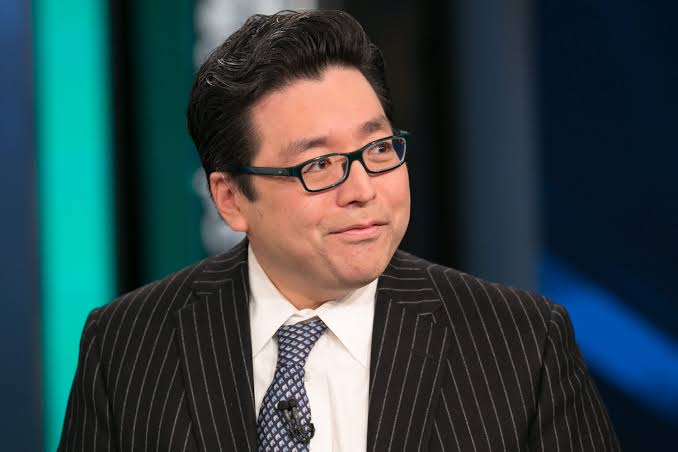
Tom Lee’s BitMine Acquires Nearly 61,000 ETH as Ethereum Approaches $2,000

BitMine, the former Bitcoin mining company chaired by Tom Lee, has continued its aggressive Ethereum accumulation with another large purchase.

The company recently added 60,976 ETH to its holdings in a deal valued at nearly $123 million. This latest acquisition increases BitMine’s total Ethereum holdings to 4,535,563 ETH, which is worth more than $9 billion at current market prices. However, the firm’s average purchase price remains above $3,700 per coin, meaning it is still holding unrealized losses worth several billion dollars.

Beyond its Ethereum holdings, the company controls about 3.76 percent of the total Ethereum supply. BitMine also owns 195 Bitcoin, maintains a $200 million investment in Beast Industries, holds a $14 million stake in Eightco Holdings, and has cash reserves totaling $1.2 billion.

Tom Lee noted that Ethereum prices showed resilience this week despite growing war related concerns and rising oil prices. He stated that the company believes the crypto market is in the late or final phase of what it describes as a mini crypto winter. According to Lee, this view aligns with the analysis of BitMine adviser Tom DeMark of DeMark Analytics.

DeMark’s analysis suggests that Ethereum’s price movement in 2026 closely mirrors the behavior of the S&P 500 during the fall of 2011 and the fall of 1987.

Lee explained that the correlation between Ethereum’s current trend and those historical market patterns stands at 89 percent for 2011 and 93 percent for 1987. If the pattern continues to follow these historical examples, Ethereum could reach a bottom sometime this week below $1,750, which would match the expected structure of the final stage of the mini crypto winter.

Based on this outlook, Lee said BitMine plans to continue increasing the pace of its Ethereum accumulation slightly.

In recent hours, Ethereum has recovered following the intense market volatility triggered by developments in the Middle East. The asset is now trading just above the key $2,000 level. However, its breakout attempt last week stopped at around $2,200, and it has not been able to return to those levels since then.#crypto#cryptonews https://t.me/coinsignalpublic https://coinsignals.net

Iran Crisis Draws $619 Million Into Crypto Funds Despite Late Week Selloff

Investment products linked to digital assets recorded net inflows of $619 million last week. According to CoinShares, the data suggests that the market initially reacted positively to the Iran crisis. During the first three days of the week alone, inflows reached $1.44 billion, showing early investor optimism.

However, sentiment weakened toward the end of the week as $829 million exited the market on Thursday and Friday. These outflows occurred even though payroll data came in much weaker than expected, which would normally provide support for risk based assets.

Geopolitical Tensions Influence Weekly Performance

Higher oil prices offset any potential drop in inflation that could have resulted from weak labor market data. Despite the withdrawals at the end of the week, overall flows still indicate that investor sentiment toward digital asset investment products remained generally positive amid ongoing geopolitical tensions.

The latest Digital Asset Fund Flows Weekly Report from CoinShares revealed that Bitcoin received the largest portion of investor allocations, with $521 million flowing into related investment products. Even so, sentiment around the asset remained mixed as short Bitcoin investment products attracted $11.4 million in fresh capital.

Among alternative cryptocurrencies, Ethereum recorded the highest inflows with $88.5 million, followed by Solana with $14.6 million. Smaller inflows were also seen in Uniswap and Chainlink, which each attracted $1.4 million. Multi asset investment products received $5.4 million during the same period. In contrast, XRP experienced outflows totaling $30.3 million from funds connected to the token.

Most of the positive investment activity came from the United States, where digital asset products recorded $646 million in inflows. Other regions showed weaker sentiment. Europe saw $23.8 million leave the market, while Asia and Canada recorded outflows of $2.2 million and $3.6 million respectively.

Traders Prepare for Continued Volatility

Bitcoin remained relatively stable even as tensions involving Iran pushed oil prices above $115 and created pressure across global markets. Concerns about possible supply disruptions through the Strait of Hormuz and growing instability in the Middle East placed pressure on global equities and pushed the VIX index above 29.

Despite these conditions, analysts at QCP Capital noted that Bitcoin has performed more resiliently than many other risk based assets, which is a pattern the crypto market has not seen in some time. Activity in the options market also indicates that traders are less worried about another steep decline compared to the initial shock seen last week.

Although traders are still maintaining downside protection, particularly through short term options with strike prices between $61,000 and $64,000, market flows suggest that investors are preparing for continued volatility rather than expecting a sustained one direction decline.#crypto#cryptonews https://t.me/coinsignalpublic https://coinsignals.net

$1.28 Billion in Bitcoin Purchased as Strategy Announces Latest Acquisition

Michael Saylor’s company Strategy has revealed another major Bitcoin purchase.

Strategy, recognized as the largest corporate holder of Bitcoin in the world, announced that it recently acquired Bitcoin valued at about $1.28 billion.

The company purchased 17,994 BTC at an average price of $70,946 per coin. This large acquisition may have contributed to the price surge observed in the market last week.

Following this latest purchase, Strategy’s total Bitcoin holdings have reached 738,731 BTC. The company accumulated this amount at a total cost of roughly $56 billion, with an average purchase price of $75,862 per Bitcoin.

Opinions within the industry remain divided regarding the company’s strategy. Some analysts and market observers have criticized the approach of relying on company shares to fund large scale Bitcoin purchases.

Despite the aggressive accumulation strategy, Strategy is currently facing an unrealized loss of around $6 billion as Bitcoin prices experienced significant volatility today.#crypto#cryptonews https://t.me/coinsignalpublic https://coinsignals.net

Nasdaq Partners With Kraken to Introduce Tokenized Stocks

Kraken will collaborate with Nasdaq to bring tokenized equities to the market.

Payward, the infrastructure company behind the US based crypto exchange Kraken, has announced a partnership with Nasdaq. The collaboration is focused on developing tokenized equities and strengthening the connection between traditional financial markets and blockchain powered systems.

This development reflects a broader push within the financial industry to modernize market infrastructure. As previously reported, the crypto sector recently played a leading role in global markets following the US strike on Iran. 

Kraken’s tokenized equity product called xStocks will provide the permissionless infrastructure layer that will support issuer sponsored equity tokens on Nasdaq.

Tokenized stocks along with commodities such as gold, silver, and more recently crude oil have become a major topic in financial markets. Crypto enabled trading platforms allow these assets to be traded around the clock, unlike many traditional exchanges that operate within limited hours.

According to the official announcement, the initiative will build on the growing adoption of xStocks, which has already recorded more than 25 billion dollars in total transaction volume.  In this partnership, Kraken will serve as a distribution partner.

Arjun Sethi, co chief executive officer of Payward and Kraken, explained that tokenization improves market infrastructure at the asset level by turning equities into programmable financial instruments that can function across regulated capital markets as well as open blockchain networks. He also noted that most equities today remain inside brokerage systems where their use is largely limited to simple price exposure and certain broker specific margin arrangements.

The partnership signals the continued institutional expansion of the crypto industry and a growing shift toward integrating traditional equities and commodities into blockchain based systems. It also highlights Kraken’s aggressive move into this space as the company continues to accelerate its involvement in the evolving tokenization landscape.#crypto#cryptonews https://t.me/coinsignalpublic https://coinsignals.net