Uncategorized

Oil Prices Rise as New Developments in US and Iran Tensions Raise Questions for Crypto Markets

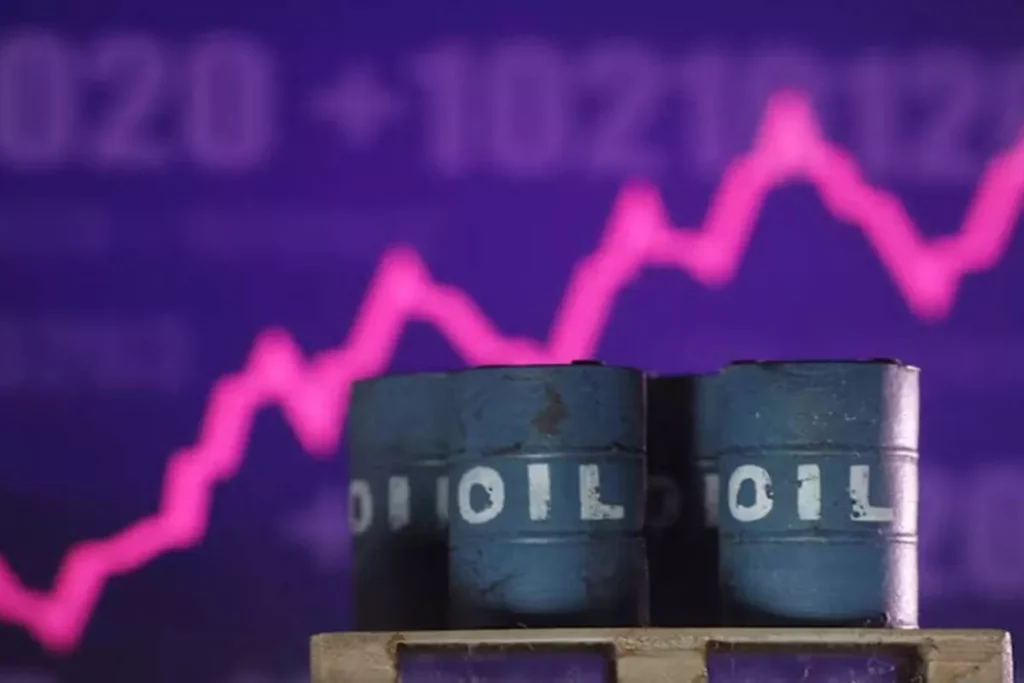
Oil prices have climbed again, but investors are now considering what the impact could be on cryptocurrency markets.

This week, both Brent crude and West Texas Intermediate moved above 106 dollars per barrel as markets reacted to ongoing developments linked to tensions between the United States and Iran. The increase reflects rising fears of supply disruptions along with broader geopolitical instability, particularly around key global shipping routes.

Brent crude has risen by about 50 percent since late February, largely driven by concerns about possible disruptions in the Strait of Hormuz, a major transit route for global oil shipments.

Although the strait has reopened after earlier interruptions, markets remain highly sensitive to any indication that supply could once again be restricted.

Oil Supply Risks Remain the Main Driver

The recent surge in oil prices is not being fueled by higher demand but rather by concerns over supply security. The energy sector has been shaken by escalating tensions in the US and Iran conflict, with shipping lane disruptions emerging as a major risk factor.

Even though the Strait of Hormuz has recently reopened, any relief in the market has been short lived. Uncertainty continues to build, and there are reports suggesting political pressure on the United States president to bring the conflict to a quick resolution.

According to reporting cited by The Kobeissi Letter from the Wall Street Journal, Donald Trump is reportedly open to ending the conflict with Iran if the Strait of Hormuz remains closed. This reflects concerns that efforts to forcibly reopen the passage could extend the conflict beyond an expected four to six week timeline. The approach appears to favor a diplomatic resolution that restores trade flow while reducing military escalation.

However, the Washington Post reports that several Gulf nations including Saudi Arabia, Kuwait, and Bahrain are privately encouraging continued military pressure on Iran, arguing that the country has not been sufficiently weakened. Saudi Arabia and the United Arab Emirates are said to be among those pushing for stronger action.

Overall, the uncertainty is weighing on markets as investors begin to price in the risk of another wave of inflation.

What This Means for Crypto

In general, cryptocurrencies have historically behaved like risk on assets and often move in line with technology stocks, making them sensitive to tighter macroeconomic conditions. This means higher inflation expectations and rising interest rates can create pressure on crypto valuations.

There is also a more direct connection through mining costs. Rising energy prices, often linked to higher oil costs, can increase electricity expenses for miners, especially in regions where power is tied to fossil fuel pricing.

At present, crypto markets appear to be responding more broadly to macroeconomic uncertainty rather than oil prices alone. Bitcoin has remained relatively stable over the past 24 hours, but continued volatility in energy markets could become a more significant influence on digital asset pricing going forward.#crypto#cryptonews https://coinsignals.net https://t.me/coinsignalpublic


Binance Set to Launch Prediction Market Feature in Its Wallet

Binance is preparing to expand into blockchain based prediction markets by introducing a new feature in its wallet that will aggregate services from third party providers.

According to data from the Binance wallet website, as reported by Wu Blockchain, the main current provider is Predict Fun, a decentralized prediction market protocol built on the BNB Smart Chain.

The upcoming feature will allow users to bet on a range of future outcomes, including sports events, economic indicators, global developments, and cryptocurrency related predictions.

To access the service, Binance users will need to update the mobile application to version 3.11.1 or 3.11.2 and later on Android. The prediction section will appear at the top of the Markets page, and users will be able to place trades using USDT from either their spot or funding accounts.

Other major exchanges have already entered the prediction market space. Platforms such as Coinbase and Crypto.com have begun offering similar services through partnerships or standalone products.

Prediction market platforms like Kalshi and Polymarket have seen rapid growth in recent months. Kalshi recently raised one billion dollars in funding, bringing its valuation to 22 billion dollars, while Polymarket secured an additional 600 million dollars from the Intercontinental Exchange.

Despite growing interest, these platforms continue to face regulatory challenges. Some countries have banned their services, with Argentina being the most recent jurisdiction to impose restrictions.#crypto#cryptonews https://coinsignals.net https://t.me/coinsignalpublic
Bought High, Sold Lower: Nakamoto Reduces Bitcoin Holdings as Prices Decline

The company sold Bitcoin at an average price of about 70,422 dollars per coin, which is significantly below its earlier average purchase cost.

Bitcoin treasury firm Nakamoto scaled back part of its holdings in the first quarter of the year. According to its Form 10 K filed on March 30, the company sold around 284 BTC in March, generating proceeds of roughly 20 million dollars.

This places the average selling price at approximately 70,422 dollars per Bitcoin.

Bought High, Sold Lower

The sale follows a period of strong accumulation after the company launched its Bitcoin strategy in August 2025. At that time, it purchased 5,342 BTC for about 631.39 million dollars, resulting in an average acquisition cost of roughly 118,171 dollars per Bitcoin.

The difference between the earlier purchase price and the recent selling price reflects a decline in market value over time. The company had already reported a loss of 166.2 million dollars linked to changes in the fair value of its digital asset holdings in 2025.

By the end of that year, Bitcoin had fallen to about 87,500 dollars, which was still below the firm’s average cost basis. The March sale appears to be part of a broader liquidity and capital management approach. The company explained that the proceeds would support operations, fund reinvestments, and cover working capital needs related to recent acquisitions.

Alongside the Bitcoin sale, the firm also reported selling 5 million shares of Metaplanet stock for about 11.1 million dollars in the first quarter. These transactions come after a period of major corporate activity, including the completion of acquisitions involving BTC Inc. and UTXO Management GP, LLC in February 2026. Those deals were largely financed through equity issuance.

In a separate statement, the company said Nakamoto continues to treat its Bitcoin holdings as a long term strategic treasury asset. It added that this approach reflects a disciplined capital strategy that separates long term Bitcoin exposure from short term liquidity needs while still maintaining upside exposure to price appreciation over time.

Digital Asset Treasuries Under Market Pressure

Volatility in crypto markets is weighing on the valuation of companies holding Bitcoin and similar digital assets, raising concerns about wider financial effects. Several publicly listed firms entered the sector last year expecting long term gains from rising prices, but current market conditions have been less supportive.

Recent reports indicate that Strategy is currently the main driver of Bitcoin treasury accumulation, continuing to dominate market activity. Over the past 30 days, the company has added about 45,000 BTC in what is its most aggressive accumulation phase since April 2025.#crypto#cryptonews https://coinsignals.nethttps://t.me/coinsignalpublic

Expert Warns of Critical Ongoing Supply Chain Attack Targeting Axios

A cybersecurity expert has raised concerns about an active supply chain attack affecting Axios, one of the most widely used packages in the npm ecosystem.

Feross Aboukhadijeh, co founder of the security focused company Socket Security, reported that Axios is currently involved in an ongoing compromise within npm dependencies.

npm, short for Node Package Manager, is the world’s largest software registry. It hosts more than two million open source JavaScript packages and is widely considered a foundational layer of modern web and Web3 development.

According to Aboukhadijeh, the latest version of axios 1.14.1 appears to be pulling in a previously unseen package called plain crypto just 4.2.1. The sudden appearance of this dependency suggests that the ecosystem may be experiencing an active compromise.

He described the situation as a classic example of supply chain installer malware. Axios records over 100 million weekly downloads, meaning any installation using the latest version could already be exposed. Analysis from Socket AI reportedly confirms the presence of malicious activity, describing plain crypto js as an obfuscated loader or dropper.

The malicious code is said to be capable of deleting or renaming files after execution to hide forensic traces. It may also stage and copy payloads into temporary system directories such as OS temp and Windows ProgramData, as well as execute decoded shell commands.

Security experts are advising developers using Axios to immediately lock their package versions, review their lockfiles carefully, and avoid updating dependencies until the issue is fully investigated and resolved.#crypto#cryptonews https://coinsignals.net https://t.me/coinsignalpublic

KuCoin Agrees to $500,000 Settlement Over Unregistered US Operations

KuCoin has reached an agreement to resolve a case with the US Commodity Futures Trading Commission and will pay a civil penalty of 500,000 dollars.

The United States District Court for the Southern District of New York issued a consent order against Peken Global Limited, the company that operates the KuCoin cryptocurrency exchange.

Regulators alleged that the platform allowed users in the United States to trade directly on its services without registering with the Commodity Futures Trading Commission as a foreign board of trade.

The matter has been settled through a monetary penalty of 500,000 dollars. The order confirms that no additional disgorgement is required, and the court did not impose it based on the specifics of the case.

The enforcement action began in March 2024 during the previous United States administration. It accused the company of multiple violations of CFTC rules, including offering access to commodity futures, swaps, and leveraged trading products without proper registration.

The outcome reflects a noticeable change in enforcement style by the regulator. In earlier similar cases, stronger remedies were more common, including broader restrictions and financial penalties beyond fines.

In this case, the resolution is more limited and focuses only on the civil penalty without extra financial obligations. This suggests a more practical approach that places greater emphasis on regulatory clarity for the cryptocurrency sector as it becomes integrated into traditional financial systems.

This shift is also reflected in recent joint guidance issued by the Commodity Futures Trading Commission and the Securities and Exchange Commission.#crypto#cryptonews https://coinsignals.net https://t.me/coinsignalpublic

Analyst Warns Japan Liquidity Strain Could Trigger Next Crypto Downturn

Borrowing in yen at low cost and investing in higher risk assets overseas is becoming less appealing as Japanese yields continue to rise.

Bitcoin’s next decline may not originate within the crypto market itself but could instead be driven by tightening liquidity conditions in Japan. This view comes from analyst Ted Pillows, who believes rising Japanese bond yields could act as a trigger that spreads across global markets and negatively impacts digital assets.

Rising Japanese Yields Add Pressure to Global Liquidity

In a post shared on March 30, Pillows explained that Japan’s long standing low interest rate environment is starting to shift. Increasing long term bond yields are placing stress on the financial system. Higher borrowing costs are pushing down the value of existing bonds, leaving banks and pension funds exposed to potential losses.

He noted that such losses reduce confidence and make institutions more cautious with capital. This caution often leads to what he describes as liquidity tightening, a situation where less money circulates throughout the financial system.

Japan has historically been a major source of global liquidity through the yen carry trade. This strategy involves borrowing yen at low rates and investing in higher yielding assets abroad. However, as yields rise, the strategy becomes less attractive, prompting investors to withdraw funds. This shift can reduce liquidity across global markets, including cryptocurrencies.

According to Pillows, when liquidity tightens, investors tend to reduce risk and move away from volatile assets such as crypto, which often leads to price declines in Bitcoin and altcoins.

Earlier this year, there were signs of this shift when the 30 year Japanese government bond yield surged by 30 basis points in a single session, reaching its highest level since the bond’s introduction in 1999. This followed policy signals from Sanae Takaichi, who called for increased government spending alongside tax cuts ahead of snap elections in February.

The election results gave Takaichi a strong mandate, which some analysts viewed as negative for Bitcoin in the near term due to the likelihood of tighter global liquidity stemming from these fiscal policies.

On Chain Weakness Adds to Market Pressure

Pillows’ concerns come alongside recent market movements. Bitcoin recently fell below 65000 dollars before recovering toward 68000 dollars, with volatility linked in part to geopolitical tensions in the Middle East and comments from Donald Trump.

These factors have made it difficult for Bitcoin to sustain higher price levels, particularly after failing to break resistance near 72000 dollars. At the time of writing, the asset is trading just under 68000 dollars, remaining more than 46 percent below its October 2025 peak.

Additional pressure is coming from on chain data. A contributor from CryptoQuant, Sunny Mom, observed a divergence in Bitcoin’s structure. Whale accumulation that supported prices earlier in the year has now turned negative.

At the same time, the Exchange Whale Ratio, which tracks large inflows to exchanges relative to total inflows, has been steadily rising over the past three months. Its 30 day average is approaching 0.6, a level that has historically preceded increased selling pressure in the market.#crypto#cryptonews https://coinsignals.net https://t.me/coinsignalpublic

Over 40 Percent of Altcoins Hover Near Record Lows, Surpassing Last Bear Market Weakness

More than 40 percent of altcoins are currently trading at or close to their all time lows as of March 30, 2026, based on data shared by analyst Darkfost. The scale of this decline has now exceeded the levels seen during the previous bear market, raising fresh concerns about liquidity and demand across the crypto sector.

There are now over 47 million tokens across major blockchain networks, which has spread available liquidity more thinly than in earlier stages of the cycle.

Altcoins Face Mounting Pressure

In a post on X, Darkfost explained that selling pressure on altcoins has intensified compared to earlier in the current cycle. More than 40 percent of these assets are nearing record lows, compared to about 38 percent during the peak of the last bear market.

The analyst attributed this weakness to a mix of macroeconomic challenges and structural issues within the crypto market. Geopolitical instability in the Middle East and volatility in traditional financial markets have further weighed on risk assets, including cryptocurrencies.

Darkfost also pointed to the rapid increase in the number of tokens as a key factor. The market now includes more than 47 million tokens, with around 22 million on Solana, over 18 million on Base, and about 4 million on the BNB Smart Chain. This expansion has diluted liquidity, as capital is spread across a much wider range of assets, leaving smaller tokens with limited trading activity and weaker price support.

Market Data Confirms Broad Weakness

This view aligns with insights from analyst Wise Crypto, who previously noted that the total altcoin market capitalization had fallen below 1 trillion dollars. During this period, Ethereum briefly dropped under 2,000 dollars, Solana declined by around 12 percent within two days, and several high volatility tokens experienced even steeper losses.

According to Wise Crypto, while a few assets showed gains, the overall trend indicated that liquidity was flowing out of the altcoin market.

Market sentiment has also deteriorated significantly. The Crypto Fear and Greed Index currently stands at 8, signaling extreme fear. It has remained in this range for nearly two months, reflecting reduced participation and weaker conviction among traders.

Despite this, some short term recovery has appeared. Ethereum has gained around 3 percent in the past 24 hours, trading slightly above 2,000 dollars. Solana has risen by more than 2 percent over the same period, although it remains down over the past week. Tokens such as Jupiter, Zcash, and Shiba Inu recorded daily gains between 6 percent and 8 percent. Meanwhile, Bitcoin Cash, Kaspa, and Hyperliquid posted losses ranging from 4 percent to 6 percent.

Outlook Remains Uncertain

Darkfost stopped short of declaring a market bottom but noted that similar periods of extreme underperformance in the past have created opportunities for investors who can identify stronger projects.

A comparable perspective has been shared by the analytics firm Santiment, which has observed that Bitcoin and the broader market often move against prevailing sentiment when fear reaches extreme levels.

Looking ahead, upcoming economic events in the United States could introduce additional volatility. These include the March jobs report and a speech by Jerome Powell. Both have historically influenced crypto markets. With sentiment already low and altcoins.#crypto#cryptonews https://coinsignals.net https://t.me/coinsignalpublic

Ethereum Targets First Monthly Gain Since August 2025

Ethereum is trading slightly above 2,000 dollars as March comes to a close, with traders closely watching whether it can secure its first positive monthly return since August 2025. The result could shape the near term outlook, as a sustained move above or below key price levels may determine whether the asset breaks out of its extended downturn or continues to weaken.

ETH Holds Near 2,000 Dollars Amid Weak Momentum

The second largest cryptocurrency has recorded losses for six consecutive months, with data shared on March 30 by analyst Wise Crypto indicating a cumulative decline of nearly 50 percent. Since mid March, price action has remained confined within a downward channel. At the same time, large holders have reduced their positions significantly, offloading about 180,000 ETH and increasing selling pressure in an already weak demand environment.

Market analyst Markus Thielen highlighted mixed technical signals. Ethereum recently slipped below a key support level and formed a pattern often associated with continued downside movement. He pointed out that a similar setup appeared in January before the asset dropped below 1,800 dollars, raising concerns that the current structure could follow the same path.

Demand for Ethereum has also remained subdued. Trading volumes are relatively low, and exchange traded fund flows have been negative. According to SoSoValue data, the last positive day for ETF inflows was March 17, followed by eight consecutive days of outflows, bringing total monthly flows to a loss of 82.13 million dollars.

Wise Crypto identified 1,970 dollars as a critical level. A drop below this point could push prices toward 1,910, 1,830, or even 1,650 dollars. On the upside, a recovery above 2,050 dollars could offer short term relief. This outlook aligns with analyst Ted Pillows, who previously suggested that Ethereum could rebound toward a liquidity zone near 2,100 dollars before potentially resuming its downward trend.

Recent data shows Ethereum trading around 2,040 dollars, gaining roughly 2 percent over the past day while remaining mostly unchanged over the last week. However, it is still down more than 10 percent over the past two weeks, despite posting a monthly gain of about 6 percent so far.

Ethereum and Bitcoin Show Similar Trends

Looking at Ethereum’s broader performance, data from CryptoRank shows strong gains in May, July, and August 2025. However, momentum weakened afterward, with consistent monthly losses from September through February. The steepest drop occurred in November 2025, when returns fell by more than 22 percent.

After a relatively flat December, losses resumed in January 2026 with a decline of 17.7 percent, followed by another 19.6 percent drop in February. March has so far shown a modest gain of just under 5 percent, but with little time left in the month and ongoing price volatility, that positive return is not yet guaranteed.

Bitcoin is also attempting to achieve its first monthly gain since October 2025, although its progress is more limited, with returns still below 1 percent. This follows declines of nearly 15 percent in February and just over 10 percent in January.

A March 30 update from XWIN Research Japan suggested that Bitcoin’s current market behavior reflects a pause in demand rather than a full capitulation phase. Its SOPR metric, which tracks whether coins are being sold at a profit or loss, is currently hovering near the break even level.

A similar interpretation may apply to Ethereum. The core infrastructure, including ETF products, institutional participation, and decentralized finance systems, remains intact. However, buying pressure is still lacking. Traders are now focused on whether price action around the 1,970 dollar level will act as a turning point before the monthly close.#crypto#cryptonews https://coinsignals.nethttps://t.me/coinsignalpublic

Is This the Final Dip? Key Bitcoin Indicator Signals Possible Last Capitulation Phase

Bitcoin continues to face resistance, keeping its price within the 66,000 to 68,000 dollar range. While market sentiment remains fragile, a familiar technical signal that previously appeared in 2014, 2018, and 2022 has emerged again.

This development could present a significant buying opportunity for long term investors.

A Potential Golden Opportunity

Crypto analyst Ali Martinez has highlighted a recurring pattern linked to Bitcoin’s historical cycle bottoms. The signal is based on the crossover of the 50 day and 200 day Simple Moving Averages on the three day chart. This formation has consistently appeared near the final stage of bear markets since 2014 and has often preceded the last major sell off before a new bullish cycle begins.

In 2014, Bitcoin had already declined by 72 percent from its peak when the crossover appeared in December. This was followed by an additional 52 percent drop over the next 23 days, marking the cycle bottom. A similar pattern occurred in 2018 after a 67 percent decline, with the crossover forming in November and a final 50 percent drop taking place over 33 days.

The 2022 cycle followed a comparable structure. Bitcoin fell 50 percent before the crossover in May, then dropped another 45 percent within 33 days. A secondary lower low later formed after 156 days, completing the broader bear market phase.

In the current cycle, Bitcoin has already declined by 52 percent since its peak in October 2025. The SMA crossover appeared on February 27, 2026. Around 30 days have passed since then, placing the market within the same timeframe in which previous cycles experienced their final downward move.

Martinez noted that if historical patterns continue, Bitcoin may be entering what he describes as the final accumulation window within days.

Based on previous declines after similar signals, which ranged between 40 percent and 50 percent, he points to possible accumulation zones near 40,000 dollars for a moderate correction and around 30,000 dollars in a more severe scenario. While this indicator does not guarantee further downside, it has historically aligned with the final major drop before a long term bottom and the start of a new bull phase.

Analysts Share Broader Downside Scenarios

On chain analyst Willy Woo estimates that Bitcoin could find its bottom between 46,000 and 54,000 dollars based on traditional valuation models. The CVDD Floor, currently around 45,500 dollars, continues to rise and serves as a key support level. He also noted that capital inflows into Bitcoin have been declining since November, reflecting weakening demand. Since these models are based on a limited number of past cycles under favorable economic conditions, a weaker global environment could push prices below these estimates.

Another analyst, Doctor Profit, suggests a deeper downside range between 35,000 and 45,000 dollars. He believes the market has not yet reached its cycle bottom.

In the short term, Bitcoin could still see upward movement toward the 79,000 to 84,000 dollar range. However, such rallies are considered temporary and may present opportunities for short term trading rather than signaling a sustained recovery.#crypto#cryptonews https://coinsignals.net https://t.me/coinsignalpublic

BTC and ETH Decline While XRP Stands Out as 414 Million Dollars in Outflows Raise Market Concerns

Crypto investment products reversed course last week after five consecutive weeks of inflows, recording 414 million dollars in outflows. Most of this came from investors in the United States. According to CoinShares, rising caution among investors is being driven by the Iran conflict and increasing inflation concerns. Expectations for the June FOMC meeting have also changed, with markets shifting from anticipating rate cuts to considering possible rate hikes.

This shift in sentiment has reduced total assets under management to 129 billion dollars, returning to levels last seen in early February and around April 2025 during Trump’s tariff rollout.

Ethereum Records the Largest Losses

Ethereum experienced the biggest decline, with 222 million dollars leaving the asset, possibly linked to recent developments surrounding the Clarity Act. This brings its total losses for the year to 273 million dollars, making it the weakest performer among major digital assets.

Bitcoin also saw 194 million dollars in outflows during the same period, though it still maintains a positive net inflow of 964 million dollars for the year. Short Bitcoin products attracted an additional 4 million dollars.

Solana recorded withdrawals of 12.3 million dollars, while Sui saw a smaller decline of 0.4 million dollars. Multi asset investment products lost 4.4 million dollars.

In contrast, XRP stood out by attracting 15.8 million dollars in inflows. Chainlink and Stellar also posted modest gains of 0.2 million dollars each.

Regional Trends Show Diverging Investor Behavior

Investor activity varied significantly by region. The United States led the outflows with 445 million dollars withdrawn. Switzerland, Sweden, and Hong Kong also recorded smaller outflows of 4 million, 3.5 million, and 0.6 million dollars respectively.

Meanwhile, Germany and Canada took advantage of lower prices, bringing in 21.2 million and 15.9 million dollars. Brazil also recorded a smaller inflow of 2.6 million dollars.

Weak Market Confidence Keeps Bitcoin Range Bound

The shift in investment flows reflects Bitcoin’s lack of strong momentum. QCP Capital expects Bitcoin to remain within the 65000 to 70000 dollar range in the near term.

The asset has been following a pattern of dipping toward the weekend as traders reduce positions, then recovering early in the week. Although it has held this range and even outperformed gold and major equities since the Iran conflict began, overall market sentiment remains fragile.

Bitcoin is now on track for a sixth consecutive monthly decline and its first three month losing streak of the year. Stronger investor confidence will likely be needed for any significant upward movement, especially after recent selling pressure following quarterly options expiry.

QCP Capital expects Bitcoin to trade sideways at least until early April, when an important United States deadline related to possible military action against Iran approaches.

Geopolitical Risks and Inflation Remain Key Factors

Rising geopolitical tensions and high oil prices could keep inflation elevated, which may influence Bitcoin’s long term appeal as an alternative store of value.#crypto#cryptonews https://coinsignals.net https://t.me/coinsignalpublic