Developers may soon rely on artificial intelligence to mathematically confirm that software functions correctly instead of depending entirely on human auditors.
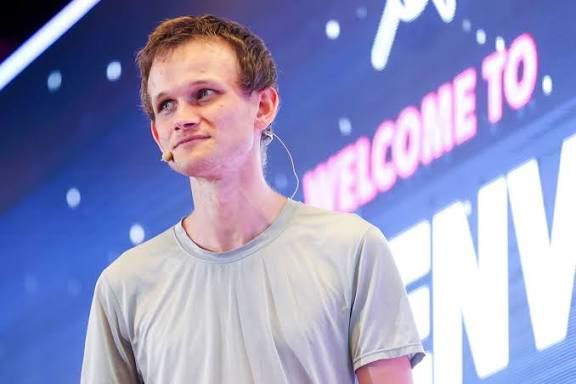
Vitalik Buterin, the co founder of Ethereum, has addressed growing fears that AI powered bug discovery could overwhelm developers and lead to endless blockchain exploits.
According to Buterin, the technology could eventually make crypto systems safer rather than more vulnerable. He believes AI assisted formal verification could become one of the most effective ways to protect crypto platforms and internet infrastructure from security failures.
AI Could Enhance Security Rather Than Undermine It
Formal verification involves creating mathematical proofs that software behaves exactly as intended, allowing computers to verify the results automatically instead of relying on manual human review. Although the concept has existed for decades, it never became widely adopted because producing these proofs manually was time consuming and difficult for developers.
Buterin explained that AI is now changing this process. Instead of developers writing the proofs themselves, they can use AI to generate both the code and the supporting proofs. Developers would then only need to confirm that the proof accurately demonstrates the intended outcome.
He described a future where AI systems become advanced enough to automatically detect vulnerabilities in existing software and questioned what this could mean for systems where even one flaw could result in massive losses for users.
His view is that end to end formal verification allows developers to mathematically guarantee that software performs exactly as expected. In that case, even highly advanced AI systems searching for vulnerabilities would encounter code that has already been proven secure.
Buterin also highlighted several Ethereum related infrastructure projects already exploring this approach. One of them is Arklib, which aims to create a fully formally verified STARK implementation. Another is evm asm, which is developing an Ethereum Virtual Machine written in low level RISC V assembly while verifying its accuracy against a human readable reference version.
When discussing useful AI models for this type of work, Buterin said both Claude and DeepSeek 4 Pro are capable of writing Lean proofs.
He also mentioned Leanstral, a lightweight open weights model specifically fine tuned for Lean. According to him, it can run locally while outperforming much larger general purpose models in formal verification benchmarks.
Formal Verification Still Has Weaknesses
Despite his optimism, Buterin also acknowledged several limitations of formal verification in real world use cases.
He pointed to issues involving verified compilers that still contained bugs, libraries where only some portions of the code were formally proven while the unverified sections caused problems, and situations where specifications were technically correct but failed to reflect what developers actually intended to guarantee.
Even so, Buterin emphasized that formal verification should not replace every other security practice. Instead, he sees it as another important tool in the broader effort to reduce software vulnerabilities over time.
The discussion comes at a critical moment for the crypto industry. On the same day Buterin published his comments, the sector was dealing with its third major exploit in four days after a hacker reportedly stole more than 76 million dollars in crypto assets from the cross chain bridge of Echo Protocol.
Earlier reports also revealed a hack involving THORChain that resulted in losses exceeding 10 million dollars.
Another attack later targeted the Verus Ethereum Bridge, where a hacker exploited the absence of a validation check to steal approximately 11.58 million dollars. This type of isolated vulnerability is exactly the kind of issue that formal verification could potentially prevent.#crypto#cryptonews https://coinsignals.net https://t.me/coinsignalpublic