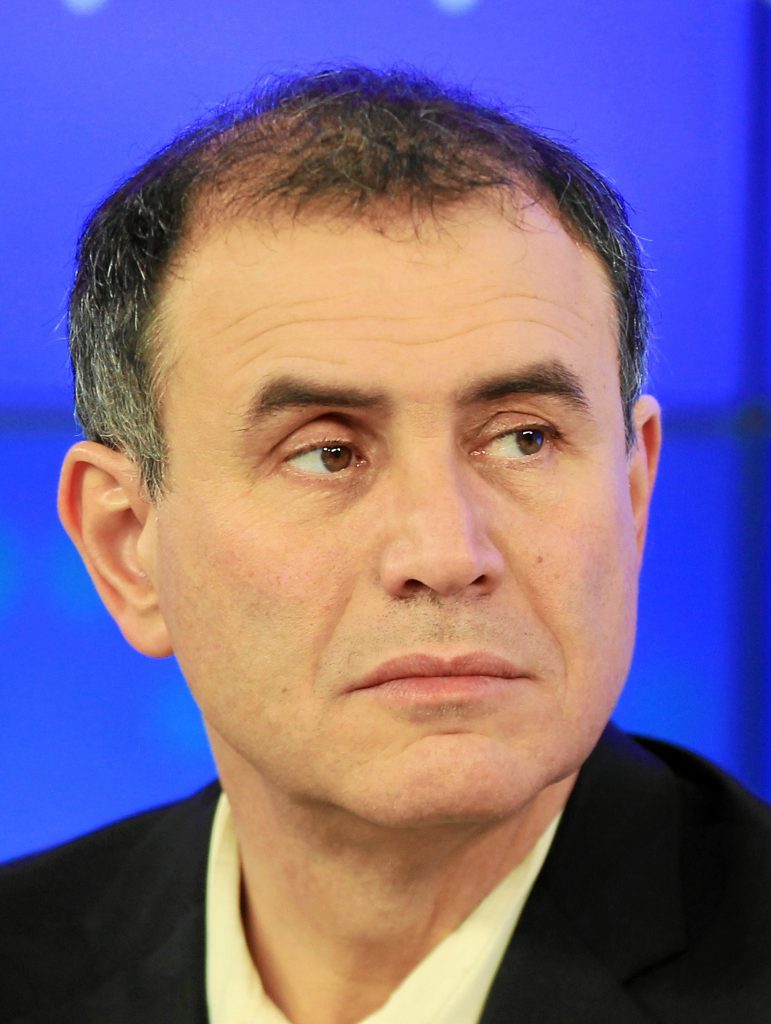
Economist Nouriel Roubini has issued a fresh warning about what he calls an approaching crypto apocalypse, arguing that Bitcoin behaves more like a leveraged speculative bet than a safe haven. According to him, it tends to rise and fall with high risk equities instead of protecting investors during periods of uncertainty.
Roubini, a long time critic of digital assets, said the future of money and payments will change slowly through incremental innovation rather than the dramatic overhaul promised by crypto supporters. In a recent statement, he pointed to the latest price drop in Bitcoin and other cryptocurrencies as proof of the extreme volatility of what he describes as a pseudo asset class, adding that regulators should take notice before the damage deepens.
He reflected on events from a year earlier, when Donald Trump returned to the US presidency after actively appealing to retail crypto investors and receiving strong backing from figures within the crypto industry. At the time, many proponents claimed Bitcoin would surge to at least 200,000 dollars by the end of 2025 and establish itself as digital gold.
Roubini Says Bitcoin Fails as a Hedge
Roubini argued that Trump followed through on pro crypto promises by rolling back much of the existing regulatory framework. He cited actions such as signing the Guiding and Establishing National Innovation for US Stable Coins Act, promoting the Digital Asset Market Clarity Act, benefiting from crypto related business deals, endorsing a meme coin using his name, granting pardons to convicted crypto criminals, and hosting exclusive White House events for industry insiders.
He noted that crypto was also expected to thrive amid rising macroeconomic and geopolitical risks, including expanding public debt, weakening fiat currencies, trade disputes, and heightened tensions involving the United States, Iran, and China. These conditions helped gold climb more than sixty percent in 2025.
Bitcoin, by contrast, declined six percent that year and was down forty two percent from its October high at the time of writing. It was also trading below its level at the time of Trump’s election, while the TRUMP and MELANIA meme coins had lost around ninety five percent of their value. Roubini highlighted that Bitcoin has repeatedly fallen during periods when gold rallied, reinforcing his view that it acts like a leveraged risk asset closely tied to speculative stocks rather than a hedge.
He repeated his long held position that crypto does not qualify as a currency, arguing that it fails to function as a unit of account, a scalable payment method, or a reliable store of value. He referenced El Salvador as an example, noting that Bitcoin accounts for less than five percent of transactions there. He also maintained that crypto is not a true asset since it does not generate income or provide meaningful real world utility.
Views on Stablecoins and Regulation
Roubini said that after seventeen years, the only crypto application with meaningful adoption is the stablecoin. He described it as a digital version of fiat money that traditional finance has already replicated, adding that most blockchain systems are centralized, permissioned, and privately controlled. In his view, fully decentralized finance will never scale because governments will not allow anonymous transactions, and compliance rules such as AML and KYC eliminate claims of lower costs.
On regulation, Roubini warned that the GENIUS Act could recreate the instability seen in nineteenth century free banking. He argued that stablecoins lack proper banking safeguards, including access to lenders of last resort and deposit insurance, making them vulnerable to runs. He also criticized proposals that would allow stablecoins to pay interest, saying this could destabilize fractional reserve banking unless payment systems and credit creation are clearly separated.
These remarks come as Bitcoin continues to weaken, falling another six percent on Thursday and trading below 71,600 dollars at the time of writing. The ongoing decline has added to broader market anxiety, with analysts cautioning that prolonged weakness could create serious balance sheet stress for companies holding large Bitcoin reserves and potentially introduce wider systemic risks.