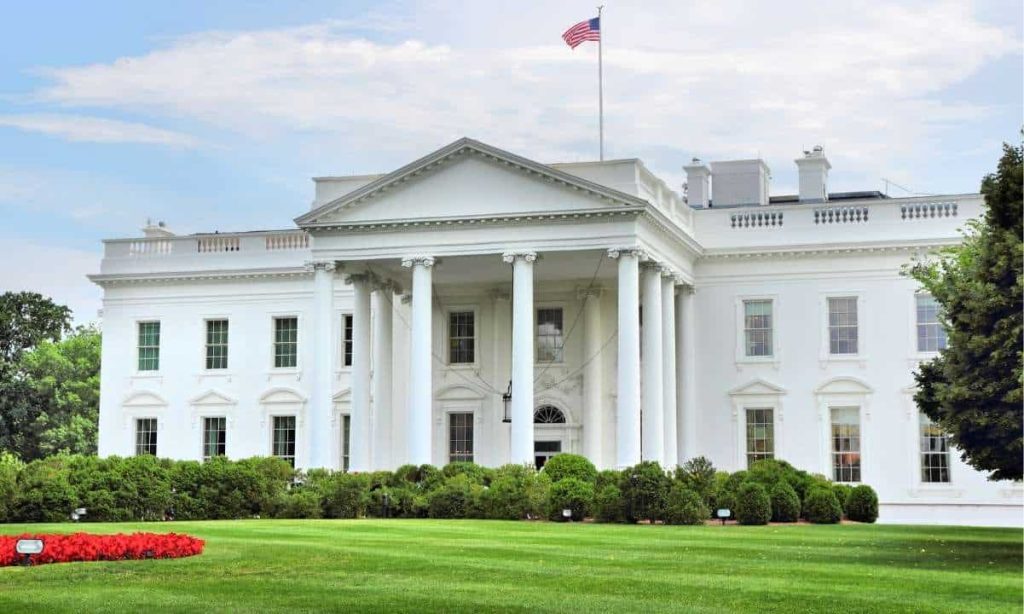
The White House is pushing forward with tougher regulatory steps that would ban the payment of yield or interest on payment stablecoins. Draft enforcement language proposes civil fines of $500,000 per violation per day, signaling a strong intent to eliminate any loopholes that could allow firms to mimic yield farming through stablecoin products.
Details from the administration’s third ongoing meeting with crypto executives and banking representatives were shared by journalist Eleanor Terrett. According to her update, the latest session was smaller than the previous one and included participants from Coinbase, Ripple, and Andreessen Horowitz, along with industry groups such as the Blockchain Association and the Crypto Council for Innovation. No individual banks were present, with the sector represented instead by trade associations.
During the discussion, White House Crypto Council Executive Director Patrick Witt presented draft text that became the central focus. The proposal addressed concerns raised by financial institutions in a prior principles document on yield and interest prohibitions, while clarifying that any restrictions on rewards would be narrowly tailored.
As it stands, earning yield on idle stablecoin balances appears unlikely to be permitted. Talks are now focused on whether companies may offer rewards linked to specific user activities rather than passive holdings.
One crypto industry participant suggested that banks are motivated more by competitive pressures than by fears of deposit flight. Meanwhile, a banking source said trade associations continue to advocate for a formal study examining how payment stablecoins could affect deposit flows.
The proposed anti evasion provisions would grant enforcement authority to both the Securities and Exchange Commission and the Commodity Futures Trading Commission. Firms attempting to bypass restrictions on yield for idle balances could face fines of $500,000 per violation per day.
Public comments following the meeting have again described the talks as productive and constructive. Observers noted a shift in tone, with the White House taking a more direct role in steering the conversation rather than leaving it primarily to crypto firms and banking trade groups.
This latest session follows two earlier meetings where officials and industry leaders debated whether stablecoins should be allowed to offer yield, how such policies might impact bank deposits, and whether strict limits could hinder innovation and competitiveness. Banking trade groups are expected to brief their members and evaluate possible compromise options, with further negotiations anticipated in the coming days and progress potentially achievable by the end of the month.