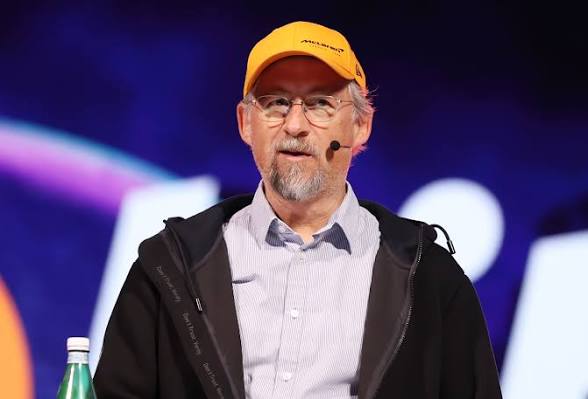
Adam Back has firmly denied speculation that he is the elusive creator of Bitcoin, Satoshi Nakamoto.
His latest response comes after a report by New York Times journalist John Carreyrou suggested that he could be the strongest candidate behind the pseudonym.
Back Responds to the Allegations
After the article was published, Back addressed the claims on X, clearly stating that he is not Satoshi.
The Blockstream founder explained that he had been highly active on the Cypherpunks mailing list since the early 1990s, where he frequently discussed electronic cash and cryptographic privacy.
He noted that this long history likely explains why researchers often find similarities between his past work and the ideas later reflected in Bitcoin. His consistent participation also created a detailed public record, making his contributions easy to trace and analyze.
Back added that his frequent posts meant he would have appeared regularly in discussions on topics related to Bitcoin, especially compared to others with similar interests who were less active.
When asked about Satoshi’s true identity, Back maintained that he does not know who it is. He also emphasized that this mystery benefits Bitcoin, as it allows the asset to be viewed as a mathematically scarce digital commodity rather than a project tied to any individual.
Details Behind the Investigation
Carreyrou’s argument is built on several observations. Back is British, participated in the Cypherpunks community during the 1990s, and created Hashcash, a proof of work system that Satoshi referenced in the Bitcoin white paper.
The report also claims that more than one hundred words and phrases from Satoshi’s writings closely match those found in Back’s archived mailing list posts.
Another point raised involves Satoshi’s tendency to embed political messages within Bitcoin’s design. Carreyrou linked this to a 2002 post in which Back inquired about the 1933 United States gold seizure, an event that Satoshi later referenced within Bitcoin as commentary on government control over money.
Additionally, Back’s expertise in distributed computing and his knowledge of the C++ programming language align with what is known about Satoshi’s technical background.
Despite these connections, Carreyrou acknowledged that they do not provide definitive proof. He noted that only cryptographic verification could conclusively establish Satoshi’s identity, something only Back himself could provide if he were truly responsible.
Emails between Back and Satoshi, which became public during the London fraud trial of Craig Wright, offer further context. In those messages, Satoshi contacted Back in August 2008 to confirm a reference before releasing the Bitcoin white paper.
Many interpret these emails as evidence that the two individuals are separate. However, Carreyrou suggested the possibility that Back could have sent the messages to himself as a form of cover, a theory that has been widely met with skepticism.#crypto#cryptonews https://coinsignals.net https://t.me/coinsignalpublic