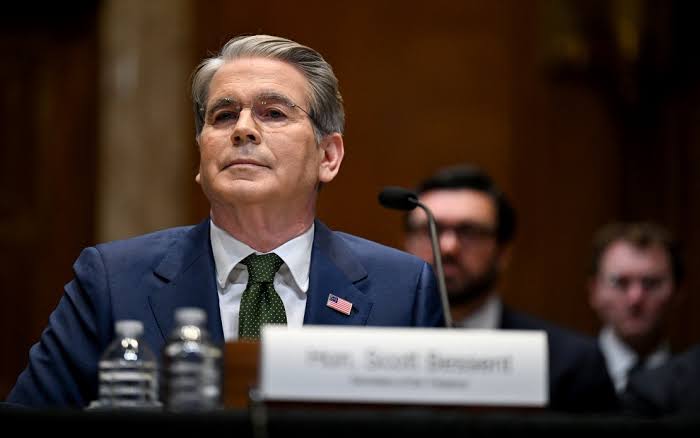
US Treasury Secretary Scott Bessent announced on April 29 that Washington’s sanctions campaign is expanding to restrict Iran’s access to cryptocurrency, placing it alongside efforts aimed at oil exports, shipping operations, and shadow banking networks.
This marks the first time the Treasury has explicitly highlighted digital assets within its pressure strategy against Iran, signaling that crypto is now a significant factor in an ongoing geopolitical conflict that has already influenced Bitcoin price movements in recent weeks.
Treasury Expands Sanctions to Include Crypto Channels
In his statement, Bessent explained that the initiative, referred to as “Economic Fury,” is targeting Iran’s shadow banking system, cryptocurrency usage, weapons procurement networks, and Chinese independent refineries known as “teapot” plants that purchase Iranian oil.
He noted that these actions have disrupted tens of billions of dollars in potential revenue that could have supported terrorism. He also pointed out that Kharg Island, Iran’s main oil export hub, is nearing full storage capacity, a situation that could lead to production cuts costing the country an estimated one hundred seventy million dollars per day.
The inclusion of crypto stands out because sanctions have traditionally focused on banks, shipping firms, and oil traders. By grouping digital assets with shadow banking and weapons procurement, the Treasury is signaling that crypto may be playing a role in larger scale trade settlement rather than just small transactions.
Market analyst Shanaka Anslem Perera reported that the latest measures targeted thirty five entities and individuals under existing executive orders. Among them were Shuqun Ltd, which allegedly transferred over seventy million dollars linked to Iranian oil sales, and Fratello Carbone Trading Limited, which reportedly moved more than twenty million dollars.
The number of entities sanctioned under the Economic Fury campaign has now surpassed one thousand since late February. Analysts believe the message is aimed not only at Iran but also at global banks, exchanges, and intermediaries that may facilitate such transactions.
Crypto’s Growing Role in Geopolitical Tensions
This is not the first time cryptocurrency has intersected with tensions involving Iran. On April 8, the Financial Times reported that Iranian officials were requesting Bitcoin payments from ships passing through the Strait of Hormuz. Following that news, Bitcoin’s price rose from around sixty eight thousand dollars to nearly seventy three thousand.
Later developments continued to impact the market. Reports on April 27 indicated that Iran had submitted a new peace proposal through Pakistani mediators, briefly pushing Bitcoin to a twelve week high near eighty thousand dollars before the rally faded.
More recently, Donald Trump stated that Iran had entered a “state of collapse,” which drove oil prices above one hundred dollars per barrel and contributed to Bitcoin falling below seventy six thousand.
These market reactions highlight how closely cryptocurrency now responds to geopolitical tensions, energy market shifts, and sanctions policy. If the US successfully disrupts crypto based settlement channels tied to Iranian trade, it could limit one avenue for bypassing sanctions. However, if alternative systems continue to operate, transactions may increasingly shift away from the US dollar toward other currencies such as the yuan or digital assets.#crypto#cryptonewshttps://coinsignals.net https://t.me/coinsignalpublic