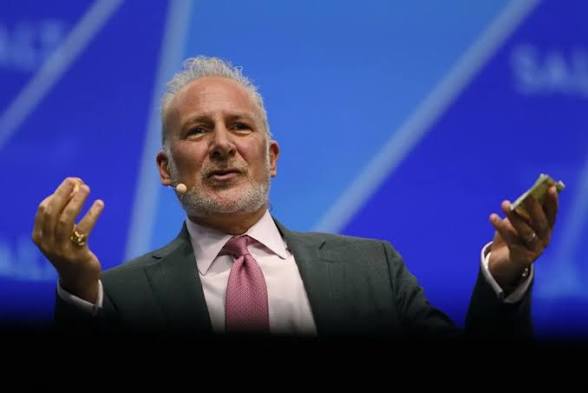
Economist and longtime cryptocurrency critic Peter Schiff has pushed back against Jamie Dimon’s proposal to subject stablecoin issuers to the same regulatory standards as traditional banks, arguing that the two operate under fundamentally different business models.
The remarks, made on June 7, caught many observers by surprise given Schiff’s long history of skepticism toward the cryptocurrency sector.
Schiff Defends Stablecoins’ Unique Role
In a post on X, Schiff responded to Dimon’s suggestion that crypto firms offering yield generating products should face the same capital and compliance requirements imposed on banks.
Schiff rejected the comparison, arguing that banks and stablecoin issuers assume very different types of risk.
According to him, banks are backed by deposit insurance and operate on a fractional reserve basis while extending loans, whereas stablecoin issuers generally do not engage in those activities.
When questioned about whether his position conflicted with his past criticism of crypto’s investor protections, Schiff clarified that he sees a legitimate role for stablecoins. He stated that issuers should not be treated as banks, particularly when their tokens are fully backed by U.S. dollars and invested exclusively in Treasury securities.
Journalist Eleanor Terrett highlighted the significance of the debate, noting that it was unusual to hear a prominent non crypto figure argue against regulating stablecoins under the same framework as banks.
Dimon’s Opposition to the CLARITY Act
Dimon’s criticism emerged during a public interview in late May, where he took aim at the proposed CLARITY Act, which had recently advanced through the Senate Banking Committee.
His primary concern focused on provisions that would allow stablecoin issuers to offer yield bearing products. Dimon argued that such arrangements could enable crypto firms to pay interest on customer funds without being subject to the safeguards, oversight, and anti money laundering obligations imposed on banks.
He also criticized Brian Armstrong, a vocal supporter of the legislation, accusing him of promoting a flawed regulatory approach.
Armstrong responded by expressing confusion over Dimon’s remarks but emphasized that he still respects the JPMorgan chief executive.
Meanwhile, Cynthia Lummis defended the bill, arguing that Dimon had either misunderstood its contents or was misrepresenting them. She pointed out that the legislation extends provisions of the Bank Secrecy Act to digital assets, addressing concerns surrounding financial crime compliance.
Banking Industry Intensifies Lobbying Efforts
The public dispute reflects a broader lobbying battle that has been developing for months.
The American Bankers Association reportedly sent thousands of letters to Senate offices before the committee vote, seeking revisions to the bill’s treatment of stablecoin yields.
Anti money laundering concerns have also become a central issue. The Bank Policy Institute cited data showing a sharp increase in illicit cryptocurrency activity last year, claiming that total illegal crypto flows rose to $154 billion.
The organization further argued that sanctioned entities accounted for a significant portion of that growth and that stablecoins, particularly USDT, represented the majority of illicit transaction volume.
Schiff Remains Bearish on Bitcoin
Despite defending stablecoins in this instance, Schiff has not softened his stance on cryptocurrencies overall.
Over the weekend, he posted a poll on X asking followers how far Bitcoin would need to fall before they acknowledged his long standing criticism of the asset.
He has also warned that Bitcoin could potentially decline to $20,000 if it were to break below the $50,000 level. For now, however, the cryptocurrency has recovered above $63,000 after recently dropping to a 19 month low near $59,000.
While Schiff and Dimon disagree on how stablecoins should be regulated, their debate highlights a growing divide over how digital asset companies should fit into the traditional financial system as lawmakers continue to shape the industry’s regulatory future.#crypto#cryptonews https://coinsignals.net https://t.me/coinsignalpublic