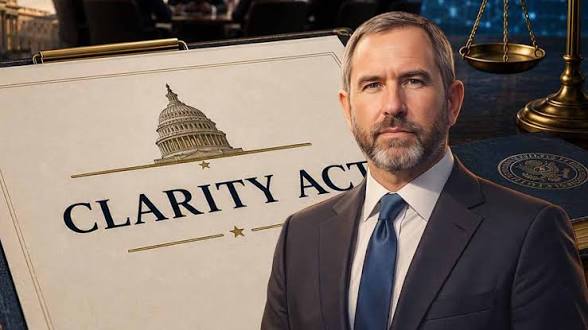
Ripple CEO Brad Garlinghouse has responded sharply to JPMorgan CEO Jamie Dimon, accusing him of mischaracterizing the proposed CLARITY Act and unfairly portraying it as a weakening of financial compliance standards.
Garlinghouse said Dimon has long been dismissive of the crypto industry and is now spreading misleading claims about the intent of the legislation.
Dispute over crypto regulation intensifies
Speaking in an interview with Fox Business host Maria Bartiromo, Garlinghouse addressed Dimon’s recent comments in which the banking executive criticized Coinbase CEO Brian Armstrong for lobbying in Washington. Dimon also argued that the CLARITY Act could reduce safeguards against money laundering and violations of the Bank Secrecy Act.
Garlinghouse rejected those claims, suggesting Dimon either misunderstands the bill or is deliberately misrepresenting it to weaken support.
He noted that while Armstrong advocates for Coinbase’s interests, Dimon’s framing of the legislation as lowering compliance standards is inaccurate.
According to Garlinghouse, the bill does not weaken protections but instead seeks to establish clearer regulatory rules. He described Dimon’s comments as either intentional distortion or a careless attempt to undermine the legislation.
Dimon had also criticized Armstrong during an appearance at the Reagan National Economic Forum, saying banks would not support the bill in its current form and using unusually strong language in his remarks.
Broader reactions from industry voices
Economist Peter Schiff also weighed in on the debate, criticizing Dimon’s stance. While Schiff remains a longtime critic of crypto, he argued that stablecoin issuers should not be regulated in the same way as traditional banks. He pointed out that banks benefit from FDIC insurance and engage in fractional reserve lending, while fully backed stablecoins typically hold reserves in US Treasuries and serve a different financial role.
Status of the CLARITY Act
The CLARITY Act continues to move through the US legislative process but faces increasing resistance from large banking institutions. The bill is designed to clearly define regulatory responsibilities for digital assets by dividing oversight between the Securities and Exchange Commission and the Commodity Futures Trading Commission, aiming to reduce uncertainty in the US crypto sector.
After passing the House in 2025, the legislation advanced through the Senate Banking Committee last month. However, it still requires approval from the full Senate, where debates continue, particularly over stablecoin yield provisions. Banks argue that these features could allow crypto firms to offer interest like returns without facing the same regulatory constraints as traditional financial institutions.#crypto#cryptonews https://coinsignals.net https://t.me/coinsignalpublic