coinsignals

Bitwise: Crypto Fundamentals Continue to Strengthen Despite Third Consecutive Losing Quarter

While cryptocurrency prices extended their decline for a third straight quarter, Bitwise says the industry’s underlying fundamentals continue to improve, with adoption and network activity advancing even as market performance remains weak.

In its Q2 2026 Crypto Market Review, the asset manager reported that its 10 Large Cap Crypto Index fell 15.4% during the quarter, marking the longest losing streak since 2022.

Prices Remain Under Pressure as Adoption Grows

According to the report, eight of the index’s ten assets ended the second quarter in negative territory.

Cardano (ADA) posted the steepest decline, falling nearly 40% during the quarter and more than 56% since the start of the year. Ethereum and XRP dropped 24.66% and 20.79%, respectively, while Solana recorded a smaller quarterly decline of 10.87%. However, Solana’s year to date loss widened to more than 40%.

Bitcoin also struggled, recording its weakest June performance in four years after briefly falling below $60,000. At the time of the report, the leading cryptocurrency remained about 49% below its October 2025 all time high above $126,000, extending its downturn to roughly nine months.

Only two assets in the index finished the quarter with gains. Hyperliquid (HYPE) surged 79%, while Stellar (XLM) advanced more than 10%. On a year to date basis, HYPE remained the standout performer with gains approaching 158%, whereas XLM was still down 6.71%.

Separate data from CryptoQuant showed that roughly 40% of altcoins are trading near their all time lows. That figure climbed to almost 45% when Bitcoin briefly slipped below the $60,000 level.

Market Activity Shows Mixed Picture

Bitwise noted that on chain activity, trading volumes, and total value locked across decentralized finance declined during the quarter.

However, several areas of the digital asset industry continued to expand. Prediction markets reached a record $43.2 billion in trading volume during Q2, representing an almost eighteenfold increase compared with the same period last year.

Tokenized real world assets also continued their rapid growth, rising more than 50% this year to nearly $33 billion.

Meanwhile, crypto related equities outperformed the broader digital asset market, with the Bitwise Crypto Innovators 30 Index gaining 30.6%.

The report also highlighted the growing importance of stablecoins, noting they processed 2.3 times more transaction value than Visa while collectively holding more US Treasury securities than countries including Norway, India, Brazil, and Saudi Arabia.

Revenue generation within the crypto ecosystem has also become increasingly concentrated, with Hyperliquid, PancakeSwap, and Aave each generating roughly $900 million over the past year.

Crypto Has Grown Far Beyond the 2022 Bear Market

Comparing today’s market with the previous bear cycle, Bitwise found that industry fundamentals have strengthened considerably despite similar price levels.

Ethereum now processes roughly thirteen times more transactions than it did at the equivalent stage of the 2022 cycle. Total value locked across decentralized finance is more than 60% higher, while stablecoin assets under management have doubled.

According to Bitwise, the disconnect lies primarily in market valuations rather than adoption. Although crypto prices remain near levels associated with the last major bear market, the industry now operates at nearly twice the scale, supported by stronger infrastructure, deeper liquidity, and significantly greater participation from traditional financial institutions.#crypto#cryptonews https://coinsignals.net https://t.me/coinsignalpublic
STRC and SATA Record $10 Billion Monthly Trading Volume Despite Falling Below Par

Bitcoin backed preferred shares STRC and SATA recorded their strongest month on record in June, with combined trading volume surpassing $10 billion even as Bitcoin’s sharp decline pushed both securities below their $100 par value.

Data from BitcoinTreasuries.net (BTN) shows that Strategy’s STRC generated $8.7 billion in trading volume during June, while Strive’s SATA added another $1.5 billion. The record activity came as Bitcoin briefly dropped to around $57,000.

Record Trading Activity During Market Turbulence

BTN’s latest corporate adoption report revealed that STRC’s June trading volume increased 20.8% from May’s $7.2 billion and rose 11.5% compared with April’s $7.8 billion. Trading activity was also more than 52% higher than March, highlighting growing investor participation after a relatively quiet start to the year.

Earlier in 2026, STRC recorded $2.4 billion in January, $2.2 billion in February, and then surged 159.1% in March before maintaining elevated volumes through the second quarter.

According to BTN, June marked the first major stress test for Bitcoin backed digital credit products after both STRC and SATA fell well below their $100 par value beginning on June 18.

The report said margin calls forced leveraged investors to liquidate positions after both securities had traded close to par for an extended period.

Following Bitcoin’s recovery from below $60,000, STRC rebounded from a low of $75 to around $87 by July 2, while SATA recovered to approximately $97.

Investors Remained Confident

Despite heightened volatility, BTN’s survey found that investor confidence remained resilient.

More than half of respondents said the decline in price was not a major concern. Around 84% reported holding onto their STRC and SATA positions throughout the selloff, while 52% said they purchased one or both securities after June 18.

BTN argued that concerns over the safety of the preferred shares may be misplaced, noting that Strategy currently holds 847,363 BTC acquired at an average cost of roughly $75,651. According to the report, the primary issue is whether cash flow can support dividend payments rather than the company’s overall solvency.

The report also highlighted that none of the issuers missed dividend payments during the period, and there were no changes to their credit quality following the June market decline.

Strategy Leads Investor Confidence

BTN’s survey also examined which companies investors believe are best positioned to issue additional digital credit products over the coming years.

Strategy ranked first by a wide margin, with most respondents expecting the company to issue between $10 billion and $30 billion in new digital credit products by the end of 2027.

Strive placed second, with investors projecting an additional $2 billion to $5 billion in issuance. Metaplanet, Smarter Web Company, and Bitmine followed in the rankings.

When asked which issuers appeared most attractive, 78.4% of respondents selected Strategy as their top choice. Strive ranked second with support from 74.5% of participants, while Metaplanet secured third place with 49% backing.#crypto#cryptonews https://t.me/coinsignalpublic https://coinsignals.net

Bitcoin Climbs Back Above $64K Despite Strategy Sale and Renewed US Iran Tensions: Weekly Market Recap

It was another volatile week for the cryptocurrency market, with geopolitical tensions and major corporate developments weighing on sentiment. Despite the headwinds, Bitcoin managed to recover and finish the week with solid gains.

Bitcoin entered the week on the back of a strong rebound after briefly falling below $58,000 the previous week for the first time in nearly two years. The asset quickly regained the $60,000 level before extending its rally to around $63,300 by Saturday. It later eased to roughly $62,500 on Sunday.

The new week began on a positive note as Bitcoin climbed back to $64,000 for the first time in two weeks. However, the rally was interrupted after Strategy announced its second Bitcoin sale in less than two months. The company sold more than 3,500 BTC, triggering a sharp decline that briefly pushed Bitcoin down to around $61,200.

Unlike the selloff that followed Strategy’s previous sale in early June, buyers returned quickly and drove the price back toward $64,800.

Midweek, renewed military exchanges between the United States and Iran added fresh uncertainty to global markets after President Donald Trump stated that the memorandum of understanding between the two countries was no longer in effect. The developments briefly sent Bitcoin back to around $61,600.

The cryptocurrency later recovered once reports emerged that both sides were preparing for renewed diplomatic talks. By the end of the week, Bitcoin had climbed to approximately $64,500, posting a weekly gain of about 3.5%.

Ethereum also advanced nearly 3% to reclaim the $1,800 level. Zcash, Uniswap, and Bitcoin Cash outperformed the broader market, while Solana, Dogecoin, Rain, and Stellar ended the week under pressure. XRP, meanwhile, successfully defended support around $1.10.

Market Snapshot

Total Market Capitalization: $2.29 trillion

24 Hour Trading Volume: $61 billion

Bitcoin Dominance: 56.5%

Bitcoin: $64,450 (+3.5%)

Ethereum: $1,800 (+2.7%)

XRP: $1.11 (-0.35%)

Biggest Crypto Stories of the Week

Strategy’s Bitcoin Sale Sparks Debate

Although Strategy’s latest Bitcoin sale initially triggered a sharp market decline, Bitcoin’s swift recovery has led some analysts to argue that the transaction may not be as bearish as initially feared. Instead, some believe the sale strengthens the company’s financial flexibility and long term balance sheet.

Ripple Secures Full MiCA License in Europe

Ripple achieved a major regulatory milestone after receiving full authorization as a Crypto Asset Service Provider under the European Union’s Markets in Crypto Assets framework. The license, granted by Luxembourg’s financial regulator, enables Ripple to offer its regulated crypto payments services throughout the European Economic Area.

Hoskinson Accuses Ethereum of Borrowing Cardano’s Ideas

Cardano founder Charles Hoskinson claimed Ethereum is incorporating concepts pioneered by Cardano, particularly those related to the UTXO payment model, without acknowledging the project’s contributions. The criticism followed Ethereum’s proposal to improve payment efficiency by reducing state storage requirements.

Negative Sentiment Around Solana Reaches New High

Growing pessimism surrounding Solana pushed negative social sentiment to its highest level of 2026. Analysts at Santiment suggested that such extreme bearish sentiment has historically coincided with market bottoms and could ultimately pave the way for a stronger recovery.

Ethereum Upgrade Fuels Optimism

Despite trading roughly 65% below its all time high, Ethereum attracted renewed attention ahead of the upcoming Glamsterdam upgrade. Analysts pointed to strong on chain activity despite muted social interest, a divergence that has often preceded significant price moves.

Bitmine Expands Ethereum Holdings

Bitmine purchased an additional 42,197 ETH during the week, increasing its holdings to roughly 4.8% of Ethereum’s circulating supply. Despite sitting on substantial unrealized losses, the company continues to accumulate and stake ETH, with projected annual staking rewards exceeding $200 million.#crypto#cryptonews https://coinsignals.net https://t.me/coinsignalpublic

Strategy Holds Larger Unrealized Bitcoin Losses Than Binance, Says CryptoQuant

Strategy’s massive Bitcoin holdings leave the company with a significantly larger unrealized loss position than Binance, according to a new analysis from CryptoQuant.

The comparison comes after the business intelligence firm and Bitcoin treasury company completed its largest Bitcoin sale of the year, prompting analysts to examine how its position stacks up against the world’s biggest cryptocurrency exchange.

Strategy Holds More Bitcoin Than Binance

CryptoQuant analyst Darkfost noted that cryptocurrency exchanges collectively hold around 8 million BTC, with nearly 30% of those reserves sitting on Binance. Other major exchanges, including Bitfinex, Gemini, Kraken, and OKX, each account for more than 5% of total exchange holdings.

However, the report emphasized that most of Binance’s Bitcoin reserves belong to customers rather than the exchange itself. Binance reportedly liquidated around 94% of its proprietary Bitcoin holdings and converted them into stablecoins during a major restructuring in early 2025. Since then, the exchange has largely acted as a custodian for client assets instead of actively managing its own BTC position.

Binance currently holds approximately 656,561 BTC on behalf of users, while Strategy remains the larger holder with 843,775 BTC.

That lead comes despite Strategy selling Bitcoin twice within the past two months. The company first sold 32 BTC for $2.5 million in late May before offloading another 3,588 BTC for $216 million earlier this week. According to Darkfost, the sales were driven by liquidity requirements and dividend obligations rather than a bearish outlook on Bitcoin.

Strategy Faces a Larger Loss Position

CryptoQuant estimates that Strategy acquired its Bitcoin at an average price of $75,476 per coin, while its recent sales occurred around the $60,000 level, resulting in realized losses of roughly 20%.

By comparison, the estimated realized price of the Bitcoin held on Binance stands at approximately $60,900, substantially lower than Strategy’s average acquisition cost. This suggests that Strategy’s remaining holdings are sitting on significantly larger unrealized losses than the Bitcoin held on the exchange.

Because Strategy also owns a larger quantity of Bitcoin than Binance, its overall unrealized loss exposure is considerably greater. CryptoQuant noted that if the company continues selling while Bitcoin remains near the $60,000 level, it would likely realize additional losses on future transactions.#crypto#cryptonews https://coinsignals.net https://t.me/coinsignalpublic

Circle Secures Final OCC Approval to Launch National Trust Bank

Circle has received final approval from the US Office of the Comptroller of the Currency (OCC) to establish a national trust bank, becoming one of a small but expanding group of crypto focused firms to earn the regulator’s authorization.

The company behind the world’s second largest stablecoin announced that it will launch First National Digital Currency Bank, N.A., operating under the name Circle National Trust. Company executives described the approval as a major milestone that places the institution under direct federal oversight.

Circle Advances US Banking Strategy

The national trust bank charter will allow Circle to provide fiduciary cryptocurrency custody services for both the company and its affiliates. It also creates a path for managing USDC reserves under OCC supervision, bringing a key part of the stablecoin’s infrastructure within the US federal banking system.

Circle said it may eventually expand its custody services to a select group of institutional clients, including banks and other regulated financial institutions, depending on market demand.

Commenting on the approval, Circle Co Founder, Chairman, and CEO Jeremy Allaire said the authorization marks an important step toward integrating blockchain technology and digital assets into the core of the US financial system. He added that federal oversight of Circle National Trust establishes a stronger foundation for transparency, governance, and scalability while giving financial institutions greater confidence to build on public blockchain networks.

The approval also represents the latest milestone in Circle’s long term regulatory strategy. The company submitted its application for the charter about a year ago, received conditional approval in 2025, and has now secured full authorization.

Circle Joins Other Crypto Firms With OCC Approval

Circle joins a growing list of digital asset companies that have obtained approval from the OCC to establish national trust banks.

Among them is Ripple, which received authorization to launch Ripple National Trust Bank, a move widely viewed as another step toward integrating blockchain based financial infrastructure into the US banking system.

Other crypto focused firms that have received similar regulatory approval include BitGo, Digital Assets, and Paxos, reflecting the increasing acceptance of digital asset firms within the traditional financial framework.#crypto#cryptonews https://coinsignals.net https://t.me/coinsignalpublic
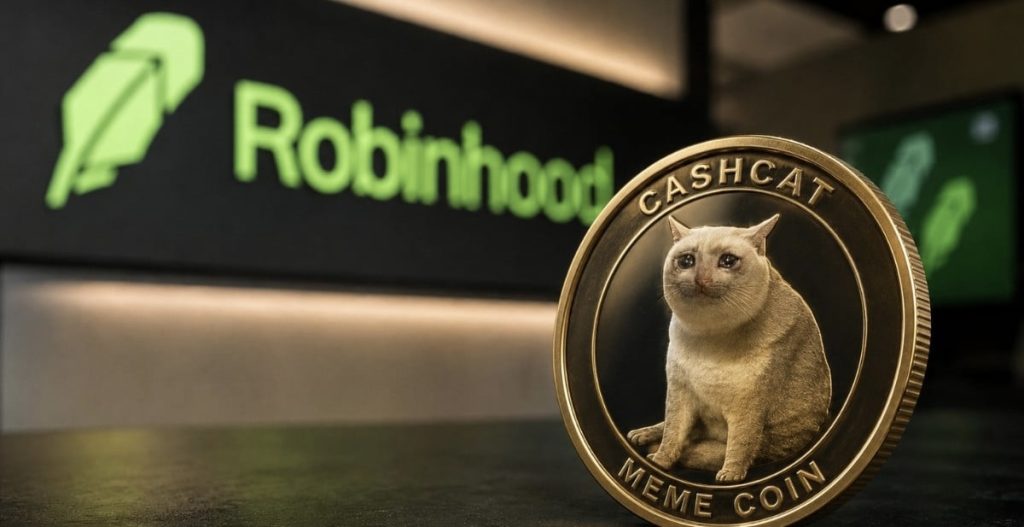
Robinhood Chain Fuels Crypto Buzz With Tokenized Stocks and CASHCAT Frenzy

Robinhood Chain has quickly become one of the hottest topics in the crypto industry, with fresh data showing it has dominated online discussions since late Monday.

According to Santiment, Robinhood’s early July launch of its Arbitrum based Layer 2 network has expanded the company’s focus beyond stock trading into tokenized real world assets (RWAs), decentralized finance (DeFi), and a wider range of on chain financial services.

Tokenized Stocks Drive Adoption

Robinhood Chain is designed to integrate tokenized stocks and ETFs, cryptocurrencies, lending, collateral services, and eventually AI powered trading into Robinhood’s existing retail platform.

Much of the attention has centered on Robinhood’s Stock Tokens, which give eligible users in more than 120 countries economic exposure to stocks and exchange traded funds through the Robinhood Wallet, subject to local regulations.

According to Santiment, Robinhood’s ambitions extend well beyond tokenized investing. The firm expects these digital assets to eventually be tradable on decentralized exchanges, deposited into DeFi lending protocols, and used as collateral across other blockchain based financial applications.

Many market participants see this as an important step toward making tokenized real world assets more accessible by linking traditional financial products with decentralized infrastructure.

The network reached another milestone by surpassing $200 million in total value locked within its first week.

CASHCAT Sparks Early Trading Boom

While tokenized stocks have been the network’s flagship offering, its first major wave of attention was fueled by the CASHCAT meme coin.

The token gained widespread attention after reports claimed a trader turned an investment of roughly $800 into more than $1 million.

Although the story spread rapidly across crypto social media, much of the engagement was reportedly driven by automated accounts and allegedly sponsored key opinion leaders.

The meme coin excitement also coincided with a sharp increase in on chain activity. Uniswap trading volume on Robinhood Chain exceeded $500 million in a single day, while the network recorded nearly 200,000 active addresses, more than 140,000 first time users, and thousands of newly launched tokens.

Santiment argued that Robinhood possesses one advantage many crypto native ecosystems have struggled to build, namely broad retail distribution. The combination of simple onboarding, low transaction fees, wallet integration, tokenized stocks, lending services, perpetual trading, and future AI powered tools gives users multiple reasons to engage with the ecosystem without requiring deep technical knowledge.

The analytics platform also noted that some observers believe the increased activity generated by meme coins could indirectly benefit the Ethereum ecosystem, even if it does not directly strengthen ETH itself.

Concerns Remain Despite Strong Momentum

Despite the enthusiastic reception, critics have highlighted several risks surrounding the new network.

One of the main concerns is that Robinhood’s Stock Tokens are structured as tokenized debt securities, giving users economic exposure to underlying assets rather than legal ownership of the actual shares.

Market participants have also pointed to failed transactions, heavy bot activity, concentrated liquidity, fraudulent token listings, and uncertainty over whether the network can maintain its early momentum after meme coin speculation begins to fade.#crypto#cryptonews https://coinsignals.net https://t.me/coinsignalpublic
$1.4 Billion in Bitcoin Options Set to Expire Today as Traders Watch for Volatility

Another weekly crypto options expiry has arrived, with Bitcoin and Ethereum contracts set to expire as spot markets continue trading within a narrow range.

Roughly 23,400 Bitcoin options contracts worth an estimated $1.4 billion are due to expire on Friday. Because this week’s expiry is relatively small compared to previous events, analysts expect only a limited impact on spot prices.

The broader crypto market rallied earlier in the week before giving back much of those gains following heightened geopolitical tensions involving Iran and the US Federal Reserve’s latest policy meeting. Since Monday, the total crypto market has shed around $30 billion in value.

Bitcoin Options Show Balanced Positioning

This week’s Bitcoin options carry a put to call ratio of 0.97, indicating a fairly even balance between bearish and bullish positioning. The maximum pain price stands near $62,000, slightly below Bitcoin’s current market price, meaning some contracts are likely to expire worthless.

According to Deribit data, the largest concentration of open interest remains at the $80,000 strike price with approximately $1.1 billion in outstanding contracts. Meanwhile, bearish traders still hold about $1 billion in open interest at the $60,000 strike.

Data from CoinGlass shows total Bitcoin options open interest across exchanges has edged higher to roughly $28.7 billion.

Derivatives analytics firm Greeks Live noted that the options market has returned to a more balanced term structure while continuing to reflect a preference for downside protection. The firm said the sharp pricing distortions seen earlier in June have eased, with risk now distributed more evenly across different contract maturities.

Although traders remain cautious about the possibility of further downside, the overall options market appears less fragmented than it was a few weeks ago.

Alongside Bitcoin, approximately 141,000 Ethereum options contracts with a notional value of $237 million are also expiring today. Those contracts have a maximum pain price of $1,700 and a put to call ratio of 1.2, suggesting a slightly stronger bearish bias. Total Ethereum options open interest across exchanges remains relatively modest at around $4.4 billion.

Combined, today’s Bitcoin and Ethereum options expiries represent roughly $1.6 billion in notional value, making it one of the smaller weekly expiry events.

Spot Market Holds Steady

The crypto market posted modest gains on Friday morning, lifting total market capitalization to approximately $2.25 trillion, although it remains slightly lower for the week overall.

Bitcoin climbed more than 2% during Asian trading, briefly touching an intraday high of $64,000. The next major hurdle sits just above $64,500, with a successful breakout potentially opening the path toward the $66,000 level.

Ethereum also recorded modest gains but continues to trade below the key $1,800 resistance level. Among altcoins, Zcash, Stellar, and Canton outperformed the broader market after a largely negative week for the sector.#crypto#cryptonews https://coinsignals.net https://t.me/coinsignalpublic
XRP On Chain Metrics Signal Continued Weakness as Selling Pressure Persists

XRP continues to show signs of a weakening market structure, with the latest CryptoQuant analysis indicating that sellers remain firmly in control as investor participation continues to fade.

The analytics platform reported that XRP’s Open Interest has fallen to $350.6 million, one of its lowest levels in recent months. The decline suggests traders are closing futures positions and reducing leverage, reflecting a more cautious market environment.

Weak Demand Keeps Sellers in Control

While falling Open Interest can sometimes signal a healthy reset by removing excessive leverage, CryptoQuant believes that is not the case this time because capital is also flowing out of the broader XRP market.

According to the firm, the decline extends beyond derivatives trading, pointing to a shortage of fresh capital entering the asset. As existing traders exit their positions without being replaced by new buyers, overall market participation continues to weaken.

On chain metrics also offer little indication of an imminent recovery. XRP’s Network Value to Transactions (NVT) ratio remains elevated at 162.86, suggesting that network activity has yet to grow enough to support the asset’s current valuation.

CryptoQuant said the combination of declining Open Interest and a persistently high NVT ratio reflects deteriorating market conditions. The firm added that investor appetite for risk has fallen sharply, leaving market participants fatigued and giving sellers a clear advantage.

Institutional flows also remained negative. On July 8, US spot XRP ETFs recorded net outflows of $7.3 million, although the products have generally performed better than comparable Bitcoin and Ethereum funds.

Adoption Continues Despite Market Weakness

Although short term market sentiment remains subdued, XRP continues to strengthen its presence through real world adoption, particularly across Asia.

Earlier this week, Japan’s SBI VC Trade revealed that more companies are adding XRP alongside Bitcoin to their corporate treasury reserves and shareholder reward programs. XRP also remains one of the most actively traded digital assets in South Korea.

Ripple further expanded XRP’s visibility by securing the first cryptocurrency sponsorship of a major US college athletics program. Under the agreement, the University of Kansas Jayhawks will feature the XRP logo on team jerseys beginning this fall.#crypto#cryptonews https://coinsignals.net https://t.me/coinsignalpublic

Analyst Predicts Upside for Ethereum as Glamsterdam Upgrade Nears

Growing spot market activity alongside declining leverage suggests long term investors may be replacing speculative traders.

Ethereum (ETH) remains nearly 65% below its all time high, with market interest hovering close to its lowest level of the past year. Despite the subdued sentiment, the network is only weeks away from rolling out Glamsterdam, its most significant upgrade since The Merge.

According to one market analyst, the contrast between weak social engagement and resilient on chain activity is the type of divergence that has historically preceded major price moves for Ethereum.

Glamsterdam Upgrade Could Become a Key Catalyst

In a July 9 post on X, pseudonymous analyst Wise Crypto highlighted that Ethereum continues to process around 450,000 active addresses even as social media discussion around the asset sits near yearly lows.

The analyst believes the upcoming Glamsterdam upgrade could provide a strong catalyst for ETH. The upgrade is expected to triple Ethereum’s gas limit, reduce transaction fees by roughly 78%, and boost network capacity to approximately 10,000 transactions per second.

Calling it a “major catalyst” receiving very little attention, Wise Crypto identified $1,754 as a crucial resistance level. A sustained breakout above that price could pave the way toward $2,440, while losing support may expose ETH to a decline toward $880.

At the time of writing, CoinGecko data showed Ethereum trading just below that resistance after slipping about 1% over the past 24 hours. Even so, the asset remained up nearly 7% over the previous week and around 3% over the last month.

Spot Demand Strengthens as Leverage Declines

The muted market sentiment is being accompanied by notable exchange activity. CryptoQuant contributor Amr Taha reported that Binance’s 30 day ETH open interest dropped by 594,000 ETH earlier this week, marking its steepest contraction since August 2024.

At the same time, ETH spot trading volume on OKX climbed to $2.09 billion, surpassing its previous yearly peak from February 5 by 49%.

According to Taha, the combination of falling open interest and rising spot volume suggests leveraged traders are exiting the market while long term investors continue accumulating Ethereum, rather than signaling a broad withdrawal from the asset.

Industry Leaders Remain Optimistic

Ethereum has failed to break above the $1,800 level on three occasions this week, but leading figures in the ecosystem remain confident about its outlook.

On Wednesday, Consensys co founder Joseph Lubin said the “Summer of Ethereum Love is gaining steam,” pointing to the launch of new steward organizations such as Ethlabs working alongside the Ethereum Foundation. He also cited Ethereum’s eleven year record of uninterrupted uptime as a key factor attracting institutional interest.

Analyst Michaël van de Poppe shared a similarly optimistic outlook over the weekend, arguing that Ethereum’s weakest stretch is likely behind it after posting three consecutive quarterly losses of more than 20%, an unprecedented run for the asset. He added that a fourth straight quarterly decline appears statistically unlikely and suggested the proposed CLARITY Act could serve as a future liquidity catalyst.#crypto#cryptonews https://coinsignals.net https://t.me/coinsignalpublic
ZachXBT Warns of Potential Liquidity Issues at AscendEX Amid Withdrawal Delays

Blockchain investigator ZachXBT has raised concerns about AscendEX after numerous users reported difficulties withdrawing their funds following the exchange’s decision to cease operations.

The platform officially stopped operating on July 1 after the European Union’s transition period for the Markets in Crypto-Assets (MiCA) regulation ended, prompting the exchange to begin winding down its services.

Withdrawal Delays Spark Liquidity Concerns

In its announcement, AscendEX said challenging market conditions and the implementation of MiCA made it impossible to continue operating without the required regulatory approval.

As part of the shutdown process, the exchange restricted account access to offboarding activities and suspended automated withdrawals. Customers seeking to withdraw assets must now go through a manual review process, which the company warned could result in delays, requests for additional documentation, or unsuccessful withdrawal attempts.

AscendEX also acknowledged that it could not guarantee when withdrawals would be completed or whether the full requested amounts would be processed, adding that all requests would be reviewed under the same procedures without preferential treatment.

Before the official announcement, ZachXBT had reported on Telegram that several users had already been waiting days or even weeks for withdrawals, with some requests remaining unprocessed. After examining the exchange’s on-chain wallets, he claimed that AscendEX held very limited reserves of major assets, including USDT, USDC, ETH, and SOL, leading him to question the platform’s liquidity.

Community members echoed those concerns, with many saying their withdrawal requests had remained stuck in an “initiating” status for more than a week.

In a subsequent update, ZachXBT alleged that the exchange still had more than seven figures worth of pending customer withdrawals awaiting processing. He encouraged affected users to report the matter to local law enforcement and financial regulators in an effort to hold the company accountable.

Exchange Cites Financial Challenges

Founded in 2018 by George (Jing) Cao, AscendEX was once a prominent cryptocurrency exchange. The platform suffered a major setback in December 2021 after hackers stole approximately $78 million in digital assets.

In its latest statement, the company acknowledged that its closure was driven by mounting financial and operational difficulties. It revealed that a planned strategic transaction intended to improve liquidity ultimately failed, while broader market conditions further strained its finances.

AscendEX said it is currently evaluating its financial position and the available options for customers. The company advised users to submit complaints through its official support channels and stated that it would provide further updates if formal insolvency proceedings are initiated.#crypto#cryptonews https://coinsignals.net https://t.me/coinsignalpublic