Uncategorized

White House Moves Toward $500K Per Day Fines to Curb Stablecoin Yield Workarounds

The White House is pushing forward with tougher regulatory steps that would ban the payment of yield or interest on payment stablecoins. Draft enforcement language proposes civil fines of $500,000 per violation per day, signaling a strong intent to eliminate any loopholes that could allow firms to mimic yield farming through stablecoin products.

Details from the administration’s third ongoing meeting with crypto executives and banking representatives were shared by journalist Eleanor Terrett. According to her update, the latest session was smaller than the previous one and included participants from Coinbase, Ripple, and Andreessen Horowitz, along with industry groups such as the Blockchain Association and the Crypto Council for Innovation. No individual banks were present, with the sector represented instead by trade associations.

During the discussion, White House Crypto Council Executive Director Patrick Witt presented draft text that became the central focus. The proposal addressed concerns raised by financial institutions in a prior principles document on yield and interest prohibitions, while clarifying that any restrictions on rewards would be narrowly tailored.

As it stands, earning yield on idle stablecoin balances appears unlikely to be permitted. Talks are now focused on whether companies may offer rewards linked to specific user activities rather than passive holdings.

One crypto industry participant suggested that banks are motivated more by competitive pressures than by fears of deposit flight. Meanwhile, a banking source said trade associations continue to advocate for a formal study examining how payment stablecoins could affect deposit flows.

The proposed anti evasion provisions would grant enforcement authority to both the Securities and Exchange Commission and the Commodity Futures Trading Commission. Firms attempting to bypass restrictions on yield for idle balances could face fines of $500,000 per violation per day.

Public comments following the meeting have again described the talks as productive and constructive. Observers noted a shift in tone, with the White House taking a more direct role in steering the conversation rather than leaving it primarily to crypto firms and banking trade groups.

This latest session follows two earlier meetings where officials and industry leaders debated whether stablecoins should be allowed to offer yield, how such policies might impact bank deposits, and whether strict limits could hinder innovation and competitiveness. Banking trade groups are expected to brief their members and evaluate possible compromise options, with further negotiations anticipated in the coming days and progress potentially achievable by the end of the month.


Bitcoin Swings as US Supreme Court Invalidates Trump Era Tariffs

The Supreme Court of the United States has officially ruled against former President Donald Trump in the closely watched tariff dispute, declaring that the administration’s use of emergency powers to impose trade duties was unlawful. The decision follows several delays and marks a significant legal setback for Trump.

According to reports shared by financial journalist Walter Bloomberg, the tariffs targeting imports from Canada, China, Mexico, and the European Union were expected to generate approximately 1.5 trillion dollars over the next ten years.

Trump responded sharply to the ruling, describing it as a disgrace and insisting that his team has an alternative strategy prepared. Trade specialist Lawrence Herman also weighed in, suggesting that trade frictions are unlikely to fade despite the Court’s decision. He argued that tariffs could remain in place in some capacity and warned that trade relations between the United States and Canada have already suffered significant damage.

In the latest development, Trump appeared to criticize the broader US legal system, signaling that he may take further action regarding the courts.

Bitcoin reacted with heightened volatility following the ruling. The cryptocurrency briefly dropped to 66,500 dollars, then surged past 68,000 dollars within minutes, repeating sharp swings several times before stabilizing below the 68,000 dollar level. Historically, bitcoin has responded negatively to Trump’s tariff announcements, including a steep decline during the initial rollout last April, and has often reacted to renewed trade threats.

Bitcoin Stuck Below $70K as Bearish Pressure Mounts While CLARITY Act Gains Momentum

Bear market concerns are intensifying as bitcoin remains stuck below seventy thousand dollars, while optimism grows that the CLARITY Act could soon be approved. Several leading figures in the crypto sector believe the legislation is close to passing. At the same time, BTC continues to struggle with price momentum.

After weeks marked by sharp volatility and fresh multi year lows, bitcoin has managed to establish support, though strong resistance is still preventing a sustained breakout.

Last Friday, bitcoin tested support near sixty five thousand dollars after being rejected at seventy thousand and seventy two thousand earlier in the week. Buyers stepped in and prevented another decline. Instead, bitcoin rebounded and briefly climbed above seventy thousand during an uncommon weekend surge.

That move proved short lived. By Monday, the asset had fallen back below the key psychological threshold and began drifting lower. Following several days of sideways trading between sixty eight thousand and seventy thousand, bitcoin dropped under sixty six thousand amid growing predictions of deeper losses, with some extreme forecasts even pointing to ten thousand dollars.

The market responded with a bounce to just above sixty eight thousand earlier today, but sellers quickly pushed the price down again. BTC is now trading below sixty seven thousand, leaving it slightly down for the week compared with last Friday’s levels.

The altcoin market has also remained relatively subdued. XRP, BNB, and ADA are modestly higher, while ETH, LINK, and XLM are slightly lower.

Stronger gains were recorded by WLFI, PEPE, and ZEC, whereas HYPE posted the largest decline among higher market cap altcoins.

BTC stands at sixty six thousand seven hundred fifty dollars, down one percent. ETH trades at one thousand nine hundred thirty dollars, down two percent. XRP is priced at one dollar and thirty eight cents, up zero point three percent.

This week’s key crypto developments include:

The Ethereum Foundation released its 2026 roadmap, emphasizing post quantum security and plans to further raise the gas limit. The organization also intends to reorganize development into three main areas focused on scaling, user experience, and Layer 1 security.

Michael Saylor’s company Strategy purchased an additional 2,486 BTC for nearly one hundred seventy million dollars, despite holding substantial unrealized losses. The firm now controls more than 717,000 BTC.

Brad Garlinghouse stated that the CLARITY Act has a strong chance of approval, estimating a ninety percent likelihood due to growing bipartisan support.

Analytics firm Santiment reported that more than half of the total ETH supply is now locked in Ethereum’s proof of stake contract, marking the first time this milestone has been reached in the network’s eleven year history.

The founder of CryptoQuant suggested that older bitcoin addresses could eventually be frozen to guard against potential quantum computing threats.

Market analyst Willy Woo warned that bitcoin may be entering the second phase of a broader bear market cycle, indicating that a full recovery could still be months away.

This week’s chart analysis covers Ethereum, Ripple, Cardano, Binance Coin, and Hyperliquid.

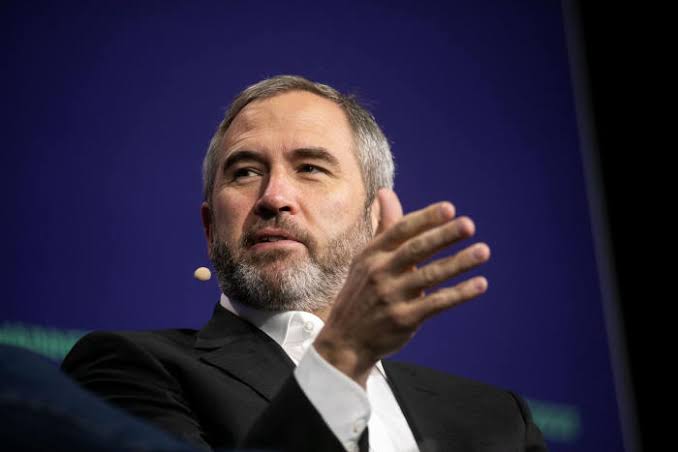
Ripple CEO Garlinghouse Predicts CLARITY Bill Has 90 Percent Chance of Approval Soon

Ripple CEO Brad Garlinghouse stated he now believes there is a 90 percent chance that the CLARITY Act will become law by April 2026. He described the outlook as stronger than before, citing consistent progress in Washington and more focused discussions among lawmakers, the White House, crypto companies, and banking representatives. According to Garlinghouse, talks have moved from broad disagreements to resolving specific policy details, signaling improved momentum for the legislation.

Garlinghouse shared his updated assessment during an appearance on Fox Business, highlighting growing bipartisan interest in digital asset market structure. He noted that recent meetings helped narrow differences that had previously slowed progress. The House of Representatives passed the CLARITY Act in 2025 with bipartisan support, while the Senate has been slower. Officials involved in negotiations are reportedly aiming to resolve remaining policy issues by March 1, 2026, a timeline seen as critical ahead of the midterm election cycle.

The CLARITY Act, formally called the Digital Asset Market Clarity Act, aims to create a clear federal framework for digital assets. It would assign assets that resemble securities to the Securities and Exchange Commission and commodity-like assets to the Commodity Futures Trading Commission. Supporters say this clarity would reduce legal uncertainty, lower compliance risks, and encourage participation from established financial institutions.

Stablecoins remain a central topic, particularly whether issuers could offer yield-style features on reserve-backed holdings. Banking groups warn of risks to deposits, while crypto firms argue restrictions could push activity offshore. Garlinghouse emphasized that legal uncertainty has constrained innovation, noting that Ripple’s court outcomes have provided partial but incomplete guidance and cannot replace industry-wide rules.

Market sentiment has shifted accordingly, with platforms like Polymarket showing rising confidence in the bill passing within the proposed timeframe. Analysts view the next few months as a crucial period for securing regulatory clarity before political factors complicate progress further.

$730 Billion Wiped Out: The 100-Day Crypto Downturn Devastating Altcoins

The cryptocurrency market has shed roughly $730 billion in value over the past 100 days, according to on-chain analyst GugaOnChain. The pace and magnitude of this decline reflect significant capital outflows, with smaller altcoins falling faster than larger assets, while traders closely monitor for any signs of stabilization.

Bitcoin’s market capitalization dropped from $1.69 trillion on November 22, 2025, to $1.34 trillion, a 21.62 percent decline. The top 20 cryptocurrencies outside of Bitcoin and stablecoins fell 15.17 percent, from $1.07 trillion to $810.65 billion. Mid- and small-cap altcoins were even more affected, plunging 20.06 percent from $390.38 billion to $267.63 billion during the same 100-day period.

Selling pressure continues unabated. Data shared by Arab Chain shows whale inflows to Binance averaged near $8.3 billion over 30 days, the highest level seen since 2024. Large transfers to exchanges can indicate plans to sell or rebalance holdings, though they may also relate to derivatives positioning or liquidity management. The recent spike follows months of relative stability, which analysts interpret as a sign of shifting sentiment among major holders.

Price action reflects the cautious market mood. At the time of reporting, Bitcoin was trading just below $68,000 after losing more than 24 percent over the past month and roughly 30 percent over the past year, illustrating that market participants are still wary amid the ongoing downturn.

Will Crypto Markets Respond to Today’s Two Billion Dollar Bitcoin Options Expiry

Another trading week is closing, and with Friday comes a fresh round of Bitcoin options expirations while spot markets continue to move sideways. Approximately 30,600 Bitcoin options contracts are set to expire on February 20, representing a notional value of about two billion dollars. This figure is slightly lower than last week’s expiry, suggesting the impact on spot prices may be limited.

Despite remaining in broader bear market conditions, crypto markets have been relatively stable over the past week as both trading volume and volatility have declined.

This week’s Bitcoin options carry a put to call ratio of 0.59, indicating a greater number of call options than puts. Data from CoinGlass shows the max pain level sits near 70,000 dollars, above current spot prices, meaning many contracts could expire out of the money.

Open interest remains concentrated at lower strike levels. On Deribit, around 1.2 billion dollars in open interest is positioned at the 60,000 dollar strike and roughly one billion dollars at 50,000 dollars, reflecting increased bearish positioning. Across all exchanges, total Bitcoin options open interest has risen to approximately 36.5 billion dollars this month. Deribit noted that positioning still leans heavily toward calls, with Bitcoin showing a stronger upside bias, although demand for downside protection remains evident. Derivatives analytics firm Laevitas highlighted that traders recently purchased 2,140 BTC worth of put options at the 58,000 dollar level, signaling continued hedging activity.

In addition to Bitcoin contracts, about 212,000 Ethereum options are also expiring, representing roughly 404 million dollars in notional value. Ethereum’s max pain level stands near 2,050 dollars, with a put to call ratio of 0.75. Total Ethereum options open interest across exchanges is approximately 6.8 billion dollars. Altogether, today’s crypto options expiries total around 2.4 billion dollars.

In the spot market, total crypto capitalization has remained flat near 2.37 trillion dollars, which is still about 46 percent below its peak. Bitcoin slipped to a weekly low of 65,700 dollars before recovering toward 67,000 dollars. Resistance continues to build near 70,000 dollars, while support remains just above 60,000 dollars. Ethereum has consolidated around 1,950 dollars, and most altcoins are trading sideways near bear market lows as momentum remains subdued.

SEC Chair Paul Atkins Urges Calm as Crypto Prices Fall and Shifts Focus to Long Term Regulation

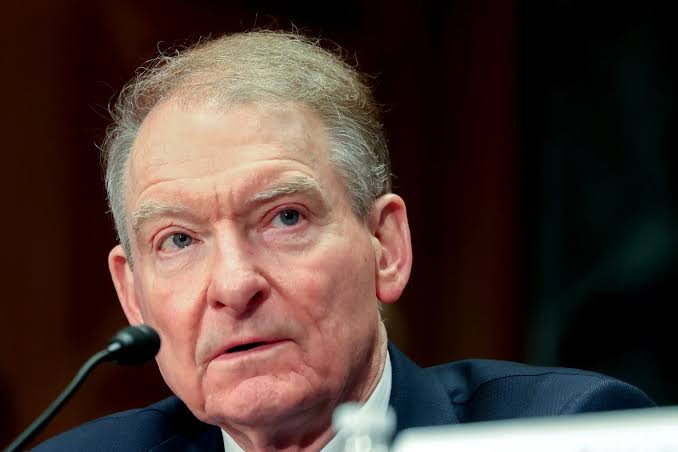
United States Securities and Exchange Commission Chair Paul Atkins has stated that regulators should not panic over declining crypto prices, emphasizing that market volatility is not the responsibility of oversight agencies. His comments came as Bitcoin traded near 66,000 dollars, with broader digital asset markets experiencing continued pressure.

Speaking at ETHDenver alongside Commissioner Hester Peirce, Atkins dismissed the idea that the SEC should intervene in response to short term price swings. He stressed that regulators are not tasked with ensuring that asset prices continuously rise and warned that investors focused solely on upward price movement may face disappointment.

Rather than addressing market declines directly, Atkins outlined the SEC’s broader regulatory agenda under Project Crypto, a collaborative initiative with the Commodity Futures Trading Commission. The initiative aims to develop clearer frameworks for classifying crypto assets, establish rules for tokenized securities trading on automated market makers, and provide guidance on custody arrangements for assets such as stablecoins that are not classified as securities.

The SEC’s current strategy reflects a shift away from the enforcement driven posture of previous years. Atkins noted that the agency has dropped several crypto related cases, ended what critics described as regulation through enforcement, and issued guidance covering mining, staking, and meme coins. The goal, he explained, is to create a regulatory structure that supports innovation without compromising investor protection.

Commissioner Peirce described the market downturn as an opportunity for builders, arguing that regulatory clarity alone does not create value. She emphasized that lasting support in Washington will come from developing products and services that people genuinely need.

Atkins also revealed plans for a temporary innovation exemption that would permit limited trading of tokenized securities on decentralized platforms. The exemption would include volume caps and serve as a testing ground while permanent rules are finalized. He encouraged developers to engage directly with the agency and focus on building meaningful solutions, underscoring that long term innovation matters more than short term price fluctuations.

Bitcoin Network Activity Stalls as Active Supply Levels Off and Volatility Eases

Bitcoin continues to trade in the mid sixty thousand dollar range after retreating significantly from its late 2025 highs. Despite several attempts, it has not managed to regain the key seventy thousand dollar level, and price volatility has gradually cooled.

On chain data shared by Alphractal indicates that Bitcoin’s active supply has plateaued, signaling that fewer coins are moving across the network and overall activity has slowed. Analysts suggest this trend reflects more than just technical market structure. Weaker prices and growing uncertainty appear to be shaping participant behavior, leading many holders to keep their coins idle rather than transact.

This quieter network environment has been described as a phase of social demotivation on chain, characterized by emotional fatigue, reduced engagement, and limited conviction. Historically, such behavioral shifts have often emerged before broader sentiment and price narratives begin to change.

Data from Santiment shows a notable drop in network activity compared with 2021. Unique Bitcoin addresses conducting transactions have declined by 42 percent, while the creation of new addresses has fallen by 47 percent. Although this does not imply that crypto is obsolete or that a prolonged bear market is certain, analysts point to a clear bearish divergence throughout 2025. During this period, total market capitalization reached new highs even as Bitcoin’s on chain utility weakened.

At the same time, large holders have been increasing their exposure. According to CryptoQuant, whale accumulation has accelerated, with more than 200,000 BTC added in recent weeks. While some inflows to exchanges have occurred, which can signal short term selling, overall whale balances have continued to climb.

CryptoQuant’s longer term metric tracking monthly changes in whale held supply shows a recovery from a sharp drop near minus seven percent in mid December. Over the past month, whale holdings have risen by 3.4 percent, increasing from roughly 2.9 million BTC to more than 3.1 million BTC. A similar wave of accumulation was observed during the April 2025 correction, when large buyers absorbed selling pressure and contributed to a rally from 76,000 dollars to 126,000 dollars. With Bitcoin currently trading well below its peak, the present price levels may once again be encouraging strategic accumulation among major holders.

Ethereum Foundation Highlights Post-Quantum Security as a Central Focus in 2026 Protocol Roadmap

The Ethereum Foundation has unveiled its protocol roadmap for 2026, emphasizing post-quantum security, gas limit increases, and a broad reorganization of development efforts into three main tracks focused on scaling, user experience, and Layer 1 security. These changes follow last year’s network upgrades and aim to combine enhanced network capacity with stronger long-term security and improved usability for participants.

Three Tracks of Protocol Development

The Foundation outlined a three-track approach to guide Ethereum’s next phase of development. The Scale track merges previous Layer 1 execution scaling and blob data availability work, with a focus on expanding network capacity. Gas limits are set to rise beyond 100 million per block, building on last year’s increase from 30 million to 60 million. Developers will leverage client benchmarking and block-level access lists to optimize performance, while blob parameters will be further adjusted. Scaling initiatives also include near-term measures like state repricing and history expiry, alongside longer-term ambitions such as statelessness and the introduction of new data structures. The Glamsterdam network upgrade will integrate these scaling components, representing a key milestone in the track’s roadmap.

The Improve UX track centers on protocol-level changes that simplify how users interact with Ethereum, making native account abstraction more widely available and improving interoperability. Building on EIP-7702, which allows externally owned accounts to temporarily execute smart contract code, developers are moving toward smart contract wallets becoming the default option without additional infrastructure or higher gas costs. This track also intersects with post-quantum readiness, providing pathways to move away from ECDSA-based authentication. Further work on the Open Intents Framework aims to enhance interoperability, reduce Layer 1 confirmation times, and shorten Layer 2 settlement durations.

The Harden the L1 track prioritizes preserving Ethereum’s core properties while the network grows. This track emphasizes security, including post-quantum readiness and execution-layer protections, research into transaction and blob data censorship resistance, and expanded testing infrastructure to support more frequent upgrades. Devnets, testnets, and client interoperability will continue to be crucial as protocol changes are deployed at a faster cadence.

Roadmap and Upcoming Upgrades

Looking ahead, the Glamsterdam upgrade is scheduled for the first half of 2026, with the Hegotá upgrade planned for later in the year. These network improvements are expected to increase gas limits, continue blob scaling, enshrine proposer-builder separation, and further advance native account abstraction, censorship resistance, and post-quantum security measures. The Foundation’s roadmap reflects a comprehensive effort to balance scaling, usability, and security, ensuring Ethereum remains resilient and future-ready in an evolving technological landscape.

Ripple and Broader Crypto Market Decline as Bitcoin Slips to 67,000 Dollars

Bitcoin extended its recent weakness, briefly falling below 66,000 dollars before recovering slightly to trade near 67,000 dollars. The asset has struggled to regain strong upward momentum after rebounding from its early February low near 60,000 dollars. Repeated attempts to break above the 71,000 to 72,000 dollar resistance zone have failed, with sellers continuing to pressure the market.

Despite the modest rebound, Bitcoin remains more than 1.5 percent lower on the day. Its market capitalization has dropped below 1.34 trillion dollars, and its dominance over the altcoin market has slipped under 56.5 percent, according to CoinGecko.

Altcoins are also trading lower across the board. Ethereum once again fell below the 2,000 dollar level after a brief move above it. XRP and Solana are among the weakest performers among large cap assets, each losing nearly 5 percent. XRP is hovering just above 1.40 dollars, while Solana has declined to around 82 dollars.

Other major tokens such as Dogecoin, Cardano, BNB, and Chainlink have also posted losses of up to 4 percent. Meanwhile, Zcash dropped more than 8 percent to around 260 dollars, and tokens such as M and Hash recorded double digit declines exceeding 10 percent.

The total cryptocurrency market capitalization has decreased by roughly 50 billion dollars over the past day, bringing the overall market value down to approximately 2.37 trillion dollars.