
Uncategorized

Wintermute Says the Four-Year Crypto Cycle Is Over, Points to Key 2026 Catalysts

Crypto market maker Wintermute believes the long standing four year boom and bust cycle has effectively ended, arguing that today’s market is driven less by historical patterns and more by institutional capital behavior.

In a recent market analysis, the firm said crypto performance is no longer anchored to Bitcoin halving narratives. Instead, concentrated institutional flows now dictate price action meaning a broad-based recovery in 2026 is far from certain and will depend on specific liquidity catalysts.

Institutional Capital Reshapes the Market

Wintermute stated bluntly that the “four-year cycle is dead,” citing its 2025 OTC trading data. Traditionally, gains in Bitcoin would rotate into Ethereum, then large-cap altcoins, and eventually smaller tokens. That capital migration largely broke down last year.

Instead, 2025 was defined by what Wintermute called “extreme concentration.” The launch of spot Bitcoin and Ethereum ETFs brought steady institutional inflows but those funds largely stayed locked within a small group of top-tier assets. Rather than flowing through the broader market, ETF demand created isolated liquidity pools, or “walled gardens.”

As a result, altcoin rallies became shorter and weaker. Wintermute noted that average altcoin uptrends lasted just 20 days in 2025, compared to about 60 days the year before. At the same time, retail traders increasingly focused on equity themes like artificial intelligence, further draining attention and capital from crypto.

What Could Reignite the Market in 2026

Wintermute outlined three potential triggers that could help expand liquidity beyond its current narrow base.

The first is broader ETF and digital asset trust mandates. The firm pointed to early momentum, including filings for Solana and XRP ETFs. It also noted that spot XRP ETFs recently returned to net inflows after a brief pause.

The second catalyst would be a major rally in Bitcoin or Ethereum themselves. A strong move higher could recreate a “wealth effect,” encouraging capital to spill into other digital assets similar to what occurred in 2024. Some analysts estimate a better than even chance of a positive year for Bitcoin if it holds key technical levels.

The third, and least likely, trigger is a resurgence of retail interest in crypto at the expense of other speculative markets. Such a shift would bring fresh inflows and renewed stablecoin issuance.

While prices remain subdued, Wintermute highlighted signs of underlying network growth. For example, Ethereum recorded a new daily high of nearly 394,000 wallet creations on January 11, 2026, driven by lower fees and increased stablecoin activity.

According to Wintermute, crypto’s direction in 2026 will hinge on whether liquidity can broaden again. Market outcomes are now shaped by capital flows not a predictable four-year timetable.

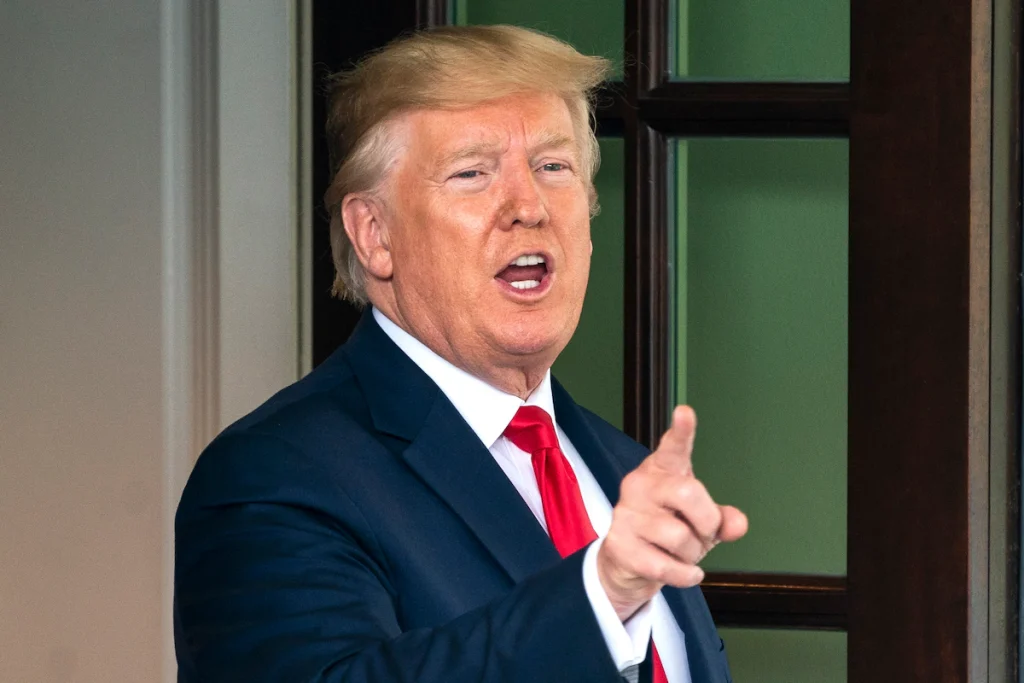
Strategy Adds Over $2B in Bitcoin as Geopolitical Tensions Escalate

Strategy, led by executive chairman Michael Saylor, has expanded its Bitcoin holdings with another major purchase, despite rising global and political uncertainty.

Because US markets were closed on Monday for Martin Luther King Jr. Day, Saylor confirmed the acquisition on Tuesday after previously hinting at it over the weekend. The company bought 22,305 BTC for just over $2.1 billion, paying an average price of $95,284 per coin. This brings Strategy’s total Bitcoin treasury to 709,715 BTC, the largest held by any public company.

The firm has accumulated its position over the past five years at an average cost of roughly $76,000 per Bitcoin, spending close to $54 billion in total. With BTC currently trading near $91,000, Strategy’s holdings are valued at approximately $64.6 billion, leaving the company with more than $10 billion in unrealized gains.

The timing of the purchase stands out, as it comes amid escalating tensions between the US and the European Union over Greenland. The dispute, centered on President Trump’s stated desire to acquire the island for national security reasons, has triggered new tariff measures and added pressure to global markets.

Crypto prices reacted negatively to the uncertainty, with Bitcoin sliding from above $95,000 to below $91,000 in just a few days. Despite the pullback, Strategy’s latest move signals continued confidence in Bitcoin as a long-term asset.

A Year Into the ‘Crypto President’ Era: Bitcoin Slides 15% as Altcoins Collapse

One year after Donald Trump’s inauguration an event many in the industry hailed as the start of a pro-crypto era the digital asset market is largely underwater.

Bitcoin and Ethereum have posted relatively modest declines, but the broader altcoin market has been hit hard. Smaller tokens have plunged between 70% and 90% from their levels on inauguration day, challenging early hopes that a “crypto president” would spark a sustained bull market and regulatory breakthrough.

Market Reality vs. Early Expectations

Data from CoinGecko shows that since January 20, 2025, Bitcoin is down about 15%, trading near $91,000 after peaking above $126,000 in October 2025. Ethereum has fared slightly better, slipping roughly 8% over the year to around $3,100, down from its August 2025 high just below $5,000.

Losses are far deeper across other major cryptocurrencies. XRP has fallen nearly 40% and now trades below $2, while Solana has dropped more than 50% to around $129.

According to analyst Ted Pillows, the downturn extends across the entire market. Large-cap altcoins are down roughly 50% to 60%, mid-cap tokens have lost 70% to 80%, and small-cap and meme coins have been decimated by close to 90%.

This widespread correction stands in stark contrast to the optimism that followed Trump’s election victory in November 2024, when analysts predicted regulatory clarity and a favorable environment for altcoins and DeFi.

Geopolitics Weigh on Crypto Markets

Over the past year, geopolitical and macroeconomic pressures particularly Trump’s aggressive trade stance have repeatedly disrupted market momentum. Ongoing tariff threats against China and the European Union have fueled volatility and capped Bitcoin’s rallies.

One recent example saw nearly $871 million in crypto liquidations in a single day after Trump confirmed new tariffs on several European countries.

Despite the appointment of crypto-friendly officials, including SEC Chair Paul Atkins, broader macro forces have overshadowed regulatory optimism. As Ripple CEO Brad Garlinghouse noted in late 2024, political backing alone is not enough and the market’s performance over the past year has reinforced that reality.

Bitcoin Slips While Gold Hits New Highs as Trump Agrees to Davos Talks

Bitcoin weakened to a fresh weekly low as gold surged to record levels, with escalating geopolitical tensions driving investors toward traditional safe havens.

Uncertainty surrounding Greenland intensified after US President Donald Trump announced new 10% tariffs on eight EU countries that reportedly sent troops to the island in an effort to pressure a potential sale to the US. The move sharply raised tensions between Washington and Europe.

Reports from European media suggest France is pushing the EU to consider deploying its so-called “trade bazooka,” a powerful and previously unused measure that could severely restrict US access to European markets.

Over the past 12 hours, Trump confirmed receiving a message from French President Emmanuel Macron inviting him to a high-level meeting in Paris on Thursday, following the World Economic Forum in Davos. The meeting is expected to include representatives from Ukraine, Denmark, Russia, and Syria.

Trump also said he held a “very good” phone call with NATO Secretary General Mark Rutte regarding Greenland. While agreeing to meet with multiple parties in Davos, Trump reiterated his stance that acquiring the island is “critical for national and global security.”

Markets reacted swiftly. Bitcoin fell from nearly $93,500 to below $91,000, marking its lowest level of the week after failing to break above $95,500 earlier in the day.

Gold, meanwhile, continued its rally, climbing to a new all-time high near $4,730 per ounce. The metal has gained more than $120 since markets reopened after the weekend, underscoring a clear shift toward risk-off assets.

Vitalik Buterin Warns Ethereum’s Growing Complexity Could Jeopardize Its Long-Term Survival

Ethereum co-founder Vitalik Buterin has cautioned that the network’s increasing technical complexity could threaten its ability to endure for the next century. He argues that unless Ethereum prioritizes simplicity over constant feature expansion, its long-term vision may be at risk.

In recent social media posts, Buterin outlined a proposed shift in development philosophy one that embraces deliberate “garbage collection” at the protocol level. This approach would focus on trimming unnecessary components rather than continuously adding new ones.

Ethereum ‘Bloat’ and Its Risks

Buterin expressed concern that excessive protocol “bloat” weakens Ethereum’s security, decentralization, and core principle of trustlessness. He emphasized that true self-sovereignty depends not only on decentralization, but also on how understandable and maintainable the protocol remains.

Even a highly decentralized system, he noted, can fail its trustless ideal if it becomes too complex burdened with massive codebases and multiple layers of advanced cryptography. In such a scenario, users are forced to rely on a small group of specialists to interpret how the system works, new development teams may struggle to maintain it at the same standard, and even experts may find it difficult to fully audit or comprehend. When that happens, users can no longer meaningfully “own” the system.

He also warned that complexity compounds risk. As Ethereum grows, each additional component introduces new points of failure, particularly when interacting with other parts of the protocol in unpredictable ways.

Buterin discouraged developers from aggressively adding specialized features, acknowledging their short-term benefits but arguing they often undermine long-term decentralization and resilience. He added that Ethereum’s upgrade culture contributes to the problem, as backward compatibility tends to reward additions rather than removals, steadily increasing complexity.

A ‘Garbage Collection’ Path Forward

To address these concerns, Buterin proposed reframing Ethereum’s evolution as a continuous garbage-collection process. He suggested measuring progress through simplification benchmarks, such as drastically reducing total lines of code, minimizing reliance on multiple complex cryptographic systems, and strengthening core invariants the protocol can safely depend on.

Examples include recent proposals that limit how storage slots can be modified or cap the maximum cost of transaction processing, both designed to reduce unexpected behavior and improve predictability.

Buterin noted that simplification does not require radical changes all at once. It can happen incrementally by refining existing features, or through major transitions such as Ethereum’s move from Proof of Work to Proof of Stake. He also proposed a “Rosetta-style” backward compatibility model, where rarely used but complex features are removed from the core protocol and reimplemented as smart contracts, preserving access without burdening the base layer.

Overall, Buterin’s message was clear: for Ethereum to last 100 years, it must learn not just how to grow but how to simplify.

$2.17B Pours Into Crypto Before Geopolitical Shock Sparks Market Pullback

Crypto investment products recorded $2.17 billion in net inflows last week, marking their strongest performance since October 2025. The majority of capital entered markets early in the week, signaling renewed investor confidence—before sentiment abruptly reversed on Friday with $378 million in outflows.

The sudden shift followed mounting geopolitical and macroeconomic concerns, including escalating diplomatic tensions linked to Greenland, renewed threats of trade tariffs, and changing expectations around US Federal Reserve leadership. Reports suggesting that Kevin Hassett, viewed as more dovish, may remain in his current role added to market uncertainty.

Bitcoin and Major Tokens Attract Early Demand

Bitcoin captured the lion’s share of inflows, drawing $1.55 billion over the week. Ethereum and XRP also saw substantial interest, pulling in $496 million and $69.5 million, respectively. This occurred despite regulatory noise surrounding the US Senate Banking Committee’s CLARITY Act, which could restrict yield-generating stablecoin products.

Several altcoins posted smaller but positive inflows. XRP-focused products led with $45.5 million, followed by Sui ($5.7 million), Lido ($3.7 million), and Hedera ($2.6 million). Litecoin and Chainlink also attracted modest capital, while multi-asset investment products experienced $12.5 million in net outflows.

US Leads Global Capital Flows

Regionally, the United States dominated crypto fund activity, accounting for $2.05 billion in inflows. European markets also saw strength, with Germany and Switzerland adding $63.9 million and $41.6 million. Canada and the Netherlands posted smaller gains, while Sweden and Brazil recorded net withdrawals.

Risk-Off Sentiment Returns

Market observers say the late-week reversal reflects fragile confidence across risk assets. Mercury co-founder and CEO Petr Kozyakov noted that the correction suggests optimism was stretched. Bitcoin slipped toward $93,000, erasing much of its year-to-date gains, while heavy liquidations rippled through derivatives markets.

As equities also weakened, investors rotated toward traditional safe havens, with gold and silver outperforming amid renewed risk-off conditions.

Ethereum Staking Reaches Record High as Institutions Step In

Ethereum staking has climbed to unprecedented levels, with a growing amount of ETH locked on the Beacon Chain and additional tokens waiting to be staked.

Macro research outlet Milk Road noted on Monday that ETH is becoming “deliberately harder to access.” They explained that staking has hit an all-time high, with millions of Ether queued to be locked up effectively removing it from exchanges and reducing the circulating supply. According to Milk Road, this trend is a constructive long-term signal for potential price growth.

These remarks followed a Token Terminal update showing that Ethereum’s staking ratio has exceeded 30% for the first time in history.

Staking Queue Hits New Highs

A record 36.2 million ETH valued at roughly $115 billion is now staked, accounting for about 30% of Ethereum’s total supply. These locked tokens are currently generating around 2.8% in annual staking rewards, based on data from Ultrasound Money.

Staking conditions appear particularly strong. The validator entry queue has reached its highest level since 2023, with approximately 2.7 million ETH waiting to be staked. At the same time, the exit queue has nearly disappeared, indicating that very few participants are withdrawing their staked ETH, according to Validator Queue data.

Much of the ETH waiting to be staked is reportedly coming from institutional players, including digital asset treasury firms such as BitMine and exchange-traded funds that now support staking rewards.

The official Ethereum account on X echoed this sentiment, stating that Ethereum remains the top platform for global financial institutions. It added that institutional adoption has accelerated in recent months, highlighting 35 examples of firms building on Ethereum shared by Fundstrat’s Tom Lee.

Coin Bureau CEO and co-founder Nic Puckrin described the surge as a “major vote of confidence” in Ethereum, while also urging caution. He pointed out that staking data reflects the number of coins, not the number of participants. A single whale staking one million ETH can appear identical to one million individuals staking one ETH each, despite vastly different implications for market behavior.

“When you hear that 30% of ETH is staked, the key question isn’t just whether that’s bullish,” Puckrin said. “It’s who is staking, how liquid that ETH truly is, and how quickly those stakers could change course.”

ETH Price Loses Steam

Despite the positive staking trends, Ether’s spot price has softened slightly. ETH slipped about 1% on Tuesday during Asian trading hours, falling below $3,200.

Overall, Ether is down roughly 5% since the weekend, as broader markets remain unsettled by the latest escalation in Donald Trump’s global trade war.

Bitcoin Hash Rate Drops Below 1 ZH/s as Miner Profitability Comes Under Pressure

Bitcoin miners are facing renewed profitability challenges as the network hash rate slipped below a key level and mining difficulty is expected to adjust lower.

Bitcoin’s seven-day average hash rate has fallen under 1 zettahash per second (ZH/s) for the first time since September 2025, signaling mounting stress across the mining sector. According to StandardHash CEO Leon Lyu, the shift reflects deeper structural changes in how computing power is being allocated.

Miners Pull Back

In a post on X, Lyu noted that the declining hash rate points to increasing pressure on miners’ margins, with a difficulty reduction of roughly 4.34% expected within days. He attributed the pullback in part to large mining firms redirecting power capacity away from Bitcoin mining toward AI and high-performance computing, where returns are often higher.

Lyu also highlighted the growing role of mining hardware manufacturers. He said Bitdeer is rapidly deploying its own proprietary machines and positioning itself to become the largest miner in North America by hash rate. Meanwhile, Bitmain is reportedly expanding its mining operations through partnerships and secondary channels, even as total network hash rate continues to trend lower.

These shifts come amid intensifying competition for energy between Bitcoin miners and AI data centers. Many publicly listed mining companies have begun repurposing or co-locating infrastructure to support AI workloads, drawn by higher and more stable revenue per megawatt. Regulators and grid operators in the US and Europe have also warned of surging power demand from AI facilities, which often secure long-term electricity contracts—further squeezing miners during periods of low hashprice.

A Challenging Year for BTC Mining

The latest developments follow an especially difficult period for the mining industry. In December, TheMinerMag reported that 2025 marked one of the toughest years in Bitcoin mining’s history, with profit margins reaching record lows. Even large, publicly traded miners struggled to remain profitable as hashprice fell from around $55 to roughly $35, a level the publication described as a long-term floor rather than a temporary dip.

Conditions worsened after Bitcoin retreated from its all-time high near $126,000 in October, adding further strain to mining operations already operating under tight margins.

XRP Longs Wiped for Over $5M as Trump’s Greenland Tariff Fears Shake Crypto

XRP traders faced heavy losses on January 19 after a sharp market pullback linked to renewed U.S.–EU trade tensions following President Trump’s tariff threats over Greenland. The selloff triggered over $5 million in XRP long liquidations, with Binance accounting for more than $1 million, as leveraged traders were caught off guard amid a broader risk-off move in crypto.

The spike in volatility followed reports that European capitals were considering tariffs of up to €93B (~$108B) on U.S. goods in response to Trump’s Greenland remarks. The news came just days after the U.S. confirmed new tariffs on several European countries starting February 1.

Crypto markets reacted quickly: Bitcoin dropped from above $95,000 to below $93,000 within hours, wiping out nearly $500 million in leveraged longs in just an hour. XRP mirrored the market’s fall, amplifying losses for leveraged traders.

At the time of writing, XRP trades around $2.00, down roughly 5% in 24 hours and about 8% over the past two weeks. The token remains modestly higher than last month, up ~2%, and has gained nearly 39% over the past year. Despite recent inflows of $57 million into spot XRP ETFs, price strength has been limited, leaving XRP vulnerable to macro-driven risk-off moves.

Technical analysts had already flagged weakening momentum, noting XRP was trading in a descending channel with buyers showing interest near $2.00 but failing to reclaim higher resistance. The January 18–19 selloff reinforced caution, as macro headlines once again outweighed crypto-specific positives.

4 Factors That Could Shake Crypto Markets This Week

Crypto markets kicked off the week with heightened volatility after US–EU trade tensions escalated. Over the past few hours, markets have reacted sharply to Europe’s retaliation against Donald Trump’s weekend tariff announcement, with the crypto market shedding around $115 billion dropping to $3.21 trillion as Bitcoin slipped below $92,000 on some exchanges.

Trump’s 10% tariffs on eight European countries prompted an emergency EU summit, where French President Emmanuel Macron reportedly urged the bloc to deploy its so-called “trade bazooka,” a mechanism that could restrict US access to European markets.

Further market swings could come from economic data this week. In the US, markets were closed Monday for Martin Luther King Jr. Day, possibly delaying reactions. Key reports, including third-quarter GDP and November’s delayed PCE inflation data, are due Thursday. Policymakers will watch inflation closely, following last week’s CPI report, as the Federal Reserve prepares for its upcoming meeting amid divided opinions on rate cuts.

In Asia, central bank rate decisions in China (Tuesday) and Japan (Friday) will be closely monitored. Around 10% of S&P 500 companies report earnings this week, and the World Economic Forum in Davos also kicks off, adding to market uncertainty.

Crypto Market Moves

Bitcoin has diverged from gold again, falling more than $3,500 in early Asian trading Monday. After consolidating near $95,000 over the weekend, BTC dropped nearly 3% to a weekly low of $92,280 and was struggling to recover at the time of writing. Ethereum saw similar losses but managed to stay just above $3,200.

Altcoins were hit even harder, with XRP, Solana, Dogecoin, and Cardano all down significantly. Monero was a notable exception, rising 10% to $615.