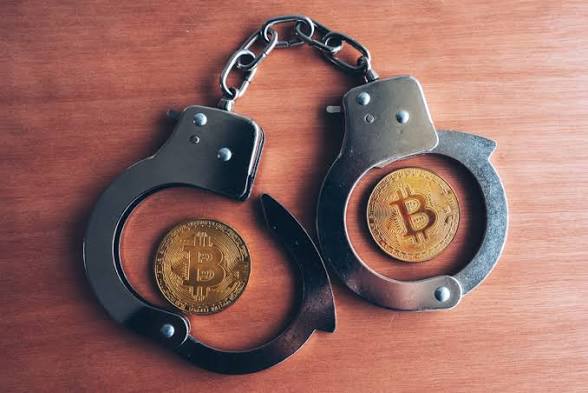
Bitcoin Stalls Near 80,000 as Federal Reserve and ECB Keep Interest Rates Unchanged in Eventful Week

It was a packed week for major economic developments in the United States and globally, including the third Federal Open Market Committee meeting of the year, the release of March PCE inflation figures, and earnings updates from several S and P 500 companies.

Geopolitical tensions also drew attention over the weekend after planned peace discussions between the United States and Iran in Pakistan collapsed, with President Donald Trump canceling the delegation’s visit. He later hosted a gathering for top holders of the TRUMP token and attended a White House event where an alleged security incident occurred, though no one was harmed.

Despite these developments, Bitcoin remained relatively stable, trading within the 77,000 to 78,000 dollar range. Early Monday, the cryptocurrency surged to around 79,500 dollars but quickly faced strong resistance and reversed direction. It initially dropped to 77,500 dollars before sliding further to 76,500 dollars later in the day.

Selling pressure continued, pushing Bitcoin below 76,000 dollars the following day. It attempted a recovery on Wednesday, climbing toward 78,000 dollars ahead of the Federal Reserve’s announcement.

As expected, the Federal Reserve left interest rates unchanged, which triggered another dip in Bitcoin’s price to below 75,000 dollars. By Thursday, the asset recovered slightly to about 76,000 dollars, even after the European Central Bank also decided to maintain its current rates while signaling a possible increase in June.

Even with the week’s volatility, Bitcoin still closed April with its first double digit monthly gain in nearly a year. On May 1, it experienced a modest rise toward 78,000 dollars following reports that the United States and Iran might resume negotiations. Its market capitalization reached approximately 1.56 trillion dollars, while its dominance remained above 58 percent.

Among larger cryptocurrencies, notable weekly gains were seen in BC, PENGU, and DOGE, with additional positive performances from HASH, MORPHO, JST, TAO, and PI.

Market Overview

The total cryptocurrency market capitalization stood at 2.68 trillion dollars, with daily trading volume at 74 billion dollars. Bitcoin traded near 78,100 dollars, showing a slight decline of 0.8 percent. Ethereum hovered around 2,300 dollars, down 1.32 percent, while XRP was priced at 1.39 dollars, reflecting a 3.6 percent drop.

Key Crypto Developments This Week

Strategy slowed its pace of Bitcoin accumulation after previous large scale purchases, acquiring 3,273 Bitcoin for 255 million dollars.

A crypto analyst suggested that the departure of former SEC chair Gary Gensler weakened investor confidence in the market and warned that a potential exit by Federal Reserve Chair Jerome Powell could have a similar effect.

Ripple announced a significant expansion move targeting clients in the Middle East and Africa, including the launch of a new headquarters in Dubai International Financial Center.

A report indicated that a Trump associated entity partnered with a blockchain project allegedly connected to a fraud network, drawing increased scrutiny toward crypto ventures linked to political figures.

Bitcoin spot trading volumes dropped to levels typically seen during bear markets, signaling reduced market participation. However, some analysts believe this decline could present future opportunities.

Longtime Bitcoin critic Peter Schiff claimed validation for his bearish stance after the asset declined by 30 percent since his 2025 sell recommendation.

Charts

This week’s technical analysis highlights include Ethereum, Ripple, Cardano, Binance Coin, and Hyperliquid.#crypto#cryptonews https://coinsignals.net https://t.me/coinsignalpublic

Bitcoin Closes April With Strongest Monthly Surge in a Year as Market Eyes What Comes Next

Bitcoin wrapped up April with its most significant monthly gain in the past year, while Ethereum also finished firmly in positive territory, building on its recovery from March.

After several months of poor performance, Bitcoin began to stabilize in March and then saw a notable rebound in April, recording its first double digit price increase in nearly a year. With both major cryptocurrencies showing renewed strength, attention is now shifting to whether this momentum can continue or if seasonal patterns like the well known sell in May trend will reappear.

Bitcoin Records Its Best Month in a Year

Despite 2025 being widely viewed as a bullish period due to improving regulations in the United States and Bitcoin reaching multiple record highs including surpassing 126,000 dollars in early October, the asset only posted two months with double digit gains, April and May.

Several months during that year ended in losses, including the final quarter as well as February, March, and August. The downward trend continued into early 2026, with January and February closing with declines of 10.17 percent and 14.94 percent, further reinforcing a bearish outlook.

March finally broke that negative streak with a modest gain of 1.81 percent, based on CoinGlass data, although results may vary slightly depending on time zone calculations.

A stronger recovery emerged in April when Bitcoin climbed 11.87 percent, marking its best monthly performance since April of the previous year when it gained more than 14 percent. Historically, April has been one of Bitcoin’s most favorable months, averaging a 13 percent increase since 2013. Only October and November have delivered higher average returns.

May has also tended to produce positive results for Bitcoin, with an average gain of 7.66 percent. While the last two years delivered strong returns, earlier periods saw notable declines, including a sharp drop of more than 35 percent in May 2021, one of the asset’s worst monthly performances in recent history.

Ethereum Also Maintains Positive Momentum

Ethereum followed a similar path, experiencing nine negative months in 2025 and enduring a six month losing streak that began in September and ended in March with a 7 percent gain. April brought further improvement, with the asset rising 7.3 percent.

April ranks as Ethereum’s second strongest month since tracking began in 2016, with an average gain close to 19 percent. Even more encouraging for investors is May, which stands as Ethereum’s best performing month historically, delivering average gains above 28.5 percent.

While historical data suggests that both Bitcoin and Ethereum could perform well in May, market conditions remain uncertain. Past trends do not guarantee future outcomes, especially given ongoing global economic and geopolitical challenges.#crypto#cryptonews https://coinsignals.net https://t.me/coinsignalpublic

Bithumb Secures Temporary Relief as Court Suspends Six Month Ban

Bithumb has obtained short term relief after a court intervened to stop sanctions tied to compliance shortcomings. A court in South Korea has temporarily blocked the six month partial business suspension imposed on the crypto exchange, giving the company room to contest the regulatory decision.

The Second Administrative Division of the Seoul Administrative Court, under Judge Gong Hyeon jin, granted Bithumb’s request to pause enforcement on the same day it was submitted. This decision effectively delays the sanction until the court delivers a final ruling.

Pause on Regulatory Action

The suspension had originally been issued in March by the Financial Intelligence Unit, which also imposed a fine of 36.8 billion won equivalent to 24.6 million dollars. It remains uncertain whether the financial penalty is included in the suspension.

Authorities accused Bithumb of carrying out about 6.65 million breaches of South Korea’s financial laws, particularly under the Act on Reporting and Using Specified Financial Transaction Information. The violations involved repeated failures in verifying customer identities and shortcomings in preventing restricted transactions.

In addition to penalties against the company, regulators issued a warning to Bithumb’s chief executive and imposed a six month suspension on its reporting officer. These issues emerged during inspections of the country’s five leading crypto exchanges including Upbit, Bithumb, Coinone, Korbit and Gopax conducted between 2024 and 2025.

The disciplinary action would have prevented new users from depositing or withdrawing digital assets. Implementation had already been postponed after Bithumb filed an administrative lawsuit along with a request to halt enforcement shortly before the penalty was set to begin.

Promotion Error Sparks Additional Legal Trouble

In a separate issue, Bithumb is dealing with another legal challenge connected to a payout mistake earlier in the year. In April, the exchange requested a court order to freeze 7 Bitcoin that had not been returned after it accidentally distributed Bitcoin instead of Korean won during a February promotion. The error occurred when Bithumb intended to send a total of 620,000 won to 249 users but mistakenly processed the payments in Bitcoin, briefly resulting in unusually large transfers before they were reversed within minutes.

Most of the funds were later recovered after the exchange contacted recipients. However, a small number of users refused to return the remaining assets, prompting Bithumb to seek a provisional seizure. This legal step allows assets to be temporarily locked ahead of a formal civil case.

Some recipients have argued they are not required to return the funds because the mistake originated from the exchange. Legal experts cited in local reports disagree, stating that the situation qualifies as unjust enrichment, meaning individuals who received the funds in error are obligated to return them.#crypto#cryptonews https://coinsignals.net https://t.me/coinsignalpublic
Analyst Warns Leadership Changes Could Undermine Market Confidence

Crypto analyst Benjamin Cowen has argued that declining trust in the digital asset space began after Gary Gensler stepped down from the U.S. Securities and Exchange Commission. He noted that since early 2025, Bitcoin has dropped from around 109,000 dollars to roughly 75,000 dollars, reflecting broader concerns about credibility in the market.

Cowen also cautioned that a similar situation could unfold in traditional finance if Jerome Powell leaves the Federal Reserve under politically charged circumstances.

From Celebration to Market Concerns

According to Cowen, Gensler’s departure was initially welcomed by many in the crypto community. However, he believes it removed a sense of accountability, allowing questionable projects and influencers to operate without meaningful consequences.

He claims that this shift encouraged the rise of speculative assets, including meme coins, which diverted capital away from projects with real utility. As a result, liquidity across the market weakened, and the anticipated strong rally in Bitcoin failed to materialize.

Concerns Over Federal Reserve Independence

Cowen sees a comparable pattern emerging with Powell, whose tenure as Fed chair is nearing its end. Despite expectations that new leadership could introduce more aggressive rate cuts, Cowen warned that aligning the Federal Reserve too closely with political interests could damage its credibility.

He argued that maintaining institutional independence is more important for long term market stability than short term policy benefits such as lower interest rates.

Meanwhile, Kevin Warsh, a nominee supported by Donald Trump, is expected to succeed Powell. Many investors view this transition as positive, anticipating a more accommodative monetary policy.

Uncertainty Around Future Rate Cuts

Crypto commentator Cihan0x.ETH expanded on these concerns, noting that expectations for interest rate cuts have been pushed further into the future, now potentially delayed until 2027. Rising global energy costs, partly linked to geopolitical tensions involving Iran, have contributed to persistent inflation, limiting the Fed’s flexibility.

The Federal Reserve itself has acknowledged that increasing energy prices are a factor influencing inflation, making it more difficult to ease monetary policy regardless of leadership changes.

A Complex Leadership Transition Ahead

Adding another layer of complexity, Powell has indicated he plans to remain on the Federal Reserve board after his term as chair ends. He cited ongoing legal and political pressures as reasons for staying on.

This decision could prevent additional appointments and may create an unusual situation where both a current and former chair serve on the same governing board, potentially complicating decision making within the institution.#crypto#cryptonews https://coinsignals.net https://t.me/coinsignalpublic

Crypto Market Apathy Returns to Levels Seen in Previous Downturns

A well known crypto analyst, Flood, has suggested that sentiment across the digital asset market has fallen to levels similar to those seen between 2019 and 2022. Instead of viewing this as a negative signal, he believes it could present a strong buying opportunity for investors who remain active.

Shift Toward Artificial Intelligence Investments

According to Flood, a significant amount of capital that once flowed into crypto is now being redirected toward Artificial Intelligence ventures. While he acknowledges that this shift makes sense for many investors, he argues that reduced participation in crypto could actually benefit those who stay by lowering competition.

Impact of Past Industry Challenges

Flood pointed out that years of scams and questionable projects have damaged the reputation of the crypto industry, contributing to the current lack of enthusiasm. He described the space as one where value creation has often been overshadowed by negative experiences, leading many participants to exit.

Despite this, he believes the current environment offers a favorable risk to reward balance. With fewer participants competing for opportunities, the potential for outsized returns may actually increase.

Lessons From Previous Market Cycles

The analyst compared today’s conditions to earlier downturns, particularly 2019 and 2022, when many casual investors left the market. While those periods were difficult, they also created opportunities for those who remained engaged. Flood noted that much of his own success came during those quieter phases, even admitting he had considered leaving crypto for traditional finance at the time.

Fewer Participants Could Mean Greater Opportunity

Flood argues that a shrinking market does not necessarily signal weakness but can instead create a more favorable environment for generating returns. With less capital chasing opportunities, the remaining participants may benefit from a larger share of potential gains.

Outlook for Bitcoin and the Broader Market

Looking ahead, he expects Bitcoin to undergo a significant price adjustment within the year. Although he did not provide specific targets, he described such a move as inevitable, suggesting it would quickly shift attention and capital back into the market.

Builders May Benefit From the Downturn

Flood also highlighted that companies continuing to build during this quieter period could emerge stronger once market conditions improve. This perspective aligns with actions taken by major industry figures such as Michael Saylor, whose firm Strategy recently acquired an additional 3,273 Bitcoin, bringing its total holdings to 818,344 BTC.

Meanwhile, long time critic Peter Schiff has pointed to Bitcoin’s price being significantly below last year’s highs as support for his earlier bearish outlook.#crypto#cryptonews https://coinsignals.net https://t.me/coinsignalpublic

Nexo Introduces Zero Interest Credit Option for XRP and SOL Holders

Nexo has expanded its Zero Interest Credit offering to include users within the XRP and Solana ecosystems, giving more investors access to interest free borrowing.

How the Zero Interest Credit Feature Works

The Zero Interest Credit product allows crypto holders to use their assets as collateral in exchange for stablecoin liquidity at zero percent interest over a fixed period. A key advantage is that borrowers are protected from forced liquidation during the loan term, while repayment conditions are clearly defined from the beginning.

Expansion Beyond Bitcoin and Ethereum

Previously, the product was only available to holders of Bitcoin and Ethereum. By extending the service to XRP and SOL, Nexo is opening the offering to a wider group of users.

The company reports strong performance from the product so far, including more than 170 million dollars in total loan volume, a borrower renewal rate of 66 percent, and an average of four renewals per user. About half of the borrowed funds remain on the platform, suggesting that users continue investing while accessing liquidity.

The innovation was also recognized as Consumer Lending Product of the Year at the FinTech Breakthrough Awards in March 2026.

According to Elitsa Taskova, the expansion reflects the company’s forward looking strategy. She noted that after setting a new benchmark for Bitcoin and Ethereum holders, extending the feature to Solana and XRP is a natural progression.

Rising Demand for Crypto Backed Loans

Bitcoin and Ethereum still make up about 70 percent of the total collateral on Nexo’s lending platform, while the remaining share is largely driven by assets such as SOL and XRP. This trend supports the decision to broaden collateral options.

For the new offering, XRP and SOL loans operate at a 30 percent loan to value ratio. Users are required to deposit at least 100 SOL or 5,000 XRP to qualify.

Growing Adoption Across Traditional Finance

Nexo’s move comes at a time when crypto backed lending is gaining traction in traditional finance. Fannie Mae has recently begun accepting cryptocurrency as collateral for mortgages, allowing buyers to leverage holdings like Bitcoin without selling them.

The approach reflects a broader shift in investor behavior, where individuals seek access to liquidity while maintaining exposure to their digital assets.#crypto#cryptonews https://coinsignals.net https://t.me/coinsignalpublic
XRP Sees Surge in Social Buzz Following Major Retail Integration

XRP is experiencing one of its strongest waves of online attention in the past two years, according to data from Santiment. The spike in interest comes after a major development involving a large Japanese retail platform.

Rakuten Integration Expands Access to XRP

Rakuten has introduced a feature that allows users to convert loyalty points directly into XRP. This update opens the door for around 44 million Rakuten Pay users to access the digital asset through a rewards ecosystem valued at more than 23 billion dollars.

Santiment reports that the reaction across social media platforms has pushed XRP’s bullish sentiment to its second highest level in the last 24 months.

How the New Feature Works

Through Rakuten Wallet, users in Japan can now exchange their reward points for XRP, trade it within the app, and spend it at over five million merchant locations nationwide.

The rollout was confirmed by RippleX, which described the launch as one of the largest retail implementations of XRP as a payment option so far.

To encourage adoption, Rakuten Wallet has introduced promotional rewards. Users who purchase at least 30,000 yen worth of XRP receive bonus tokens, while those investing 100,000 yen or more can enter a lottery for larger incentives. An iOS version of the updated application is also expected after the initial Android release.

Why This Matters for Crypto Adoption

The integration is significant because loyalty points are already widely used by consumers, making them an आसान entry point into digital assets. By allowing users to seamlessly convert familiar rewards into a cryptocurrency that can be spent in real world locations, the platform reduces one of the key psychological barriers to adoption.

Ripple Expands Its Global Ecosystem

Ripple has been strengthening its ecosystem beyond this launch. Its stablecoin RLUSD has recently been listed across more than 280 trading pairs on OKX.

The company has also partnered with KBank to explore blockchain based remittance solutions, and continues its expansion in Asia through a collaboration with Kyobo Life Insurance focused on tokenized government bond settlements.

Strong Sentiment but Cautious Outlook

Despite the surge in optimism, Santiment advises patience. The firm noted that such developments do not always lead to immediate price increases. Instead, significant gains tend to occur after the initial excitement fades and market speculation settles.

Santiment emphasized that partnerships and integrations with major companies are key drivers of long term growth, especially after XRP has faced a challenging period, losing around 55 percent of its value over the past nine months.

Current Market Performance

At the time of reporting, XRP is trading at approximately 1.37 dollars. This reflects a decline of more than 2 percent over the past 24 hours and nearly 4 percent over the past week, based on data from CoinGecko.

Although the token has gained about 3 percent over the past month, it still remains far below its all time high of 3.65 dollars reached in July 2025.#crypto#cryptonewshttps://coinsignals.net https://t.me/coinsignalpublic
Crypto Market Update as PI and WLFI Lead Declines While Bitcoin Recovers

Tokens such as WLFI, Pi Network, and DEXE recorded the steepest losses over the past 24 hours, each falling by double digit percentages.

Bitcoin Recovers After Federal Reserve Driven Dip

Bitcoin experienced notable volatility despite the Federal Reserve maintaining interest rates as widely anticipated. The asset dropped to a multi day low just below 75,000 dollars before managing to recover by roughly 1,000 dollars.

At the start of the week, Bitcoin showed strength by climbing from around 77,500 dollars over the weekend to nearly 79,500 dollars on Monday. However, the upward move was short lived as selling pressure quickly erased the gains, pushing the price back down.

The decline continued with another drop to about 76,500 dollars, followed by further weakness on Tuesday when it briefly slipped under 76,000 dollars. A short recovery brought it close to 78,000 dollars ahead of the closely watched FOMC meeting on Wednesday.

After confirmation that interest rates would remain unchanged, Bitcoin fell again, dipping below 75,000 dollars before rebounding slightly. Despite the recovery, it remains down more than 1 percent overall. Its market capitalization now stands near 1.52 trillion dollars, while its dominance over alternative cryptocurrencies is about 58 percent.

Altcoins See Broad Losses While RAIN Moves Higher

Among larger alternative cryptocurrencies, Ethereum declined by around 3 percent to approximately 2,250 dollars. HYPE also dropped by about 2.5 percent, losing its 40 dollar support level.

Other major assets including BNB, XRP, Solana, Cardano, Bitcoin Cash, and Chainlink posted moderate losses between 1 and 2 percent.

WLFI recorded the sharpest drop among the top 100 cryptocurrencies, falling more than 16 percent to around 0.06 dollars following concerns linked to a questionable partnership. PI also declined significantly, losing about 11 percent and dropping to roughly 0.175 dollars after failing to break above the 0.20 resistance level a day earlier.

In contrast, RAIN stood out by moving against the broader market trend, gaining about 6 percent and approaching 0.008 dollars.

Total Market Value Declines

The overall cryptocurrency market capitalization has decreased by more than 60 billion dollars since the previous day, settling at approximately 2.62 trillion dollars.#crypto#cryptonews https://coinsignals.net https://t.me/coinsignalpublic
Ripple Announces Major Expansion for Middle East and Africa Clients

Ripple has revealed a significant update for its customers in the Middle East and Africa, emphasizing that the region has become one of its most important markets in recent years.

Dubai Strengthens Its Position as a Strategic Hub

Six years after opening its first office in Dubai, Ripple is reinforcing its commitment by establishing a regional headquarters in the Dubai International Financial Centre. The move highlights the company’s long term focus on expanding operations across both the Middle East and Africa.

The chief executive of DIFC described Ripple’s expansion as a clear indication that leading digital asset companies trust Dubai as a global center for blockchain innovation.

Growing Demand for Blockchain Solutions

Ripple explained that the new headquarters will strengthen its ability to scale its workforce as demand rises for regulated blockchain based payment and custody services throughout the region.

The company also noted that since launching its regional headquarters in Dubai in 2020, its presence has expanded significantly across the Middle East, which now accounts for a substantial portion of its global customer base.

Regulatory Milestones and Market Progress

In addition to opening offices in Dubai, Ripple previously received in principle approval from the Dubai Financial Services Authority to broaden its activities within DIFC. By 2025, it became the first blockchain payments provider to obtain full licensing from the authority, while its stablecoin RLUSD was officially recognized as a crypto token.

Strengthening Partnerships Across the Region

The new office is expected to enhance support for Ripple’s partners and clients across the Middle East and Africa, including institutions such as Zand Bank, Ctrl Alt, Garanti BBVA, Absa Bank, and Chipper Cash.

Ripple Highlights Regional Growth Potential

According to Reece Merrick, the Middle East has become an increasingly important engine of global growth for Ripple. He explained that the new headquarters reflects the company’s ongoing commitment to contributing to the region’s development.

He added that since its early days in the United Arab Emirates, Ripple has observed strong demand from businesses seeking regulated blockchain powered payment infrastructure, with that demand continuing to rise.

Merrick also noted that expanding the team in Dubai will allow Ripple to provide even greater support to its partners and clients both within the region and internationally.#crypto#cryptonews https://coinsignals.net https://t.me/coinsignalpublic
Report Claims Trump-Linked WLFI Partnered With Project Tied to Alleged Fraud Network

World Liberty Financial, a crypto firm associated with the Trump family, has come under scrutiny after forming a partnership with a blockchain network called AB shortly after major US sanctions targeted more than 140 individuals and entities linked to what authorities described as a large Asian criminal syndicate.

According to reporting from the Wall Street Journal, AB’s activities may be connected to individuals later named in the sanctions, raising concerns about the level of due diligence conducted in the deal.

Controversial Partnership Raises Questions

The agreement, announced on November 12, 2025, granted AB the ability to support World Liberty’s USD1 stablecoin on its blockchain infrastructure. AB described the partnership publicly as a step forward for its decentralized finance and payments ecosystem.

However, the Wall Street Journal reported that AB had also been involved in promoting a planned blockchain themed resort in East Timor, which allegedly had links to individuals recently sanctioned by the US Treasury Department.

That resort venture, operated under AB Digital Technology Resort, was reportedly majority owned by Yang Jian, a Cyprus based individual sanctioned for allegedly assisting Prince Group leadership in developing luxury projects described by US authorities as exploitative investments. Two other executives connected to the project, Yang Yanming and Shih Ting yu, were also sanctioned. All three were later removed from the company following the sanctions announcement, and none have been formally charged.

The broader network under scrutiny includes Prince Group, which US officials allege operated multiple scam compounds and was involved in large scale “pig butchering” schemes, where victims are manipulated through long term online relationships before being defrauded of funds.

Disputed Connections and Responses

AB presents itself as a decentralized organization with entities registered in Ireland and the Cayman Islands. However, investigators identified two key individuals said to be central to its operations: Sui Chenggang, the beneficial owner of its Cayman entity, and Lin Xiaofan, an entrepreneur originally from Guangdong who reportedly introduced Sui to World Liberty representatives.

Sui signed a memorandum of understanding with World Liberty in September 2025 and has stated that the East Timor resort project was never discussed during those negotiations.

World Liberty’s legal representatives maintain that proper due diligence was conducted and that the company had no knowledge of the resort project or the individuals linked to it until early 2026. They also rejected any suggestion of wrongdoing, calling claims of connections to sanctioned individuals inaccurate.

AB has stated separately that the resort initiative stemmed from a different agreement that was later canceled before any major development began.

Ongoing Legal and Regulatory Scrutiny

The controversy adds to growing scrutiny around World Liberty Financial’s operations. The company is also facing a legal dispute with Justin Sun, who alleges that WLFI representatives improperly froze and threatened to destroy his tokens. World Liberty has denied the allegations, stating that the matter will be resolved in court.#cryptp#cryptonews https://coinsignals.net https://t.me/coinsignalpublic