
Ethereum Leaders Launch Nonprofit to Drive Institutional Adoption

A new independent nonprofit organization has been launched to support and accelerate institutional adoption of Ethereum and its broader ecosystem.

Named Ethereum Institutional, the organization was officially announced on Wednesday. Its mission is to act as a trusted and neutral gateway for institutions exploring Ethereum, layer 2 networks, tokenization, stablecoins, and on chain financial markets.

The nonprofit was founded by former Ethereum Foundation Enterprise team members David Walsh, Matthew Dawson, and Marius Smith. Financial backing has come from Bitmine, SharpLink, and Joseph Lubin, the CEO of Consensys.

The launch comes at a challenging time for Ethereum, as the network continues to face market uncertainty, growing skepticism, and price pressure. Despite this, interest in Ethereum remains strong, especially among institutions looking at blockchain as the foundation for future financial systems.

Building a Trusted Institutional Gateway

The team behind Ethereum Institutional believes the ecosystem has long lacked a credible and neutral point of contact for institutions.

According to the founders, institutions need a reliable platform that represents the entire Ethereum ecosystem without bias and provides direct engagement opportunities.

Ethereum Institutional will focus on five core areas: institutional engagement, market intelligence, Ethereum marketing, requirements discovery, and industry events. The goal is to better understand institutional needs and help translate those requirements into real Ethereum based solutions.

David Walsh stated that Ethereum has consistently remained the most credible, neutral, liquid, and battle tested foundational layer in the crypto industry. However, he noted that the ecosystem lacked a dedicated independent organization focused on institutional go to market efforts.

He explained that institutions repeatedly expressed the need for an honest and neutral partner they could directly engage with. Ethereum Institutional aims to fill that gap with long term support and independence.

Tom Lee, chairman of Bitmine, said the nonprofit is expected to play an important role in driving institutional adoption across the Ethereum ecosystem.

The launch follows closely behind the introduction of Ethlabs, another nonprofit established by Ethereum developers and supported by companies managing Ether treasury operations.

Ethereum Foundation Releases Guide for Governments and Institutions

At the same time, the Ethereum Foundation has published a new educational guide titled Ethereum Basics for Governments and Institutions.

The guide serves as a non technical introduction to Ethereum, explaining how the network works, its governance structure, and its value as neutral public infrastructure. It also highlights Ethereum’s advantages over centralized systems, particularly in areas such as resilience, security, and resistance to misuse.

The Ethereum Foundation said the guide was created to help governments and institutions better understand Ethereum’s core principles and how it differs from traditional and centralized infrastructure.#crypto#cryptonews https://coinsignals.net https://t.me/coinsignalpublic


UK Investors File $200 Million Lawsuit Against Binance and Former CEO Changpeng Zhao

Binance and its former CEO, Changpeng Zhao, are facing a major lawsuit in the United Kingdom as nearly 1,700 investors seek approximately $200 million in damages.

The group lawsuit, filed in London’s High Court, accuses Binance of selling high risk cryptocurrency derivative products to retail investors without proper authorization. According to the claimants, Binance offered products such as leveraged tokens, options, futures, and contracts between late 2019 and 2020 without approval from the UK’s Financial Conduct Authority.

The investors argue that these derivatives qualify as specialized investments under the Financial Services and Markets Act. They claim Binance continued offering these complex financial products even after regulatory restrictions were introduced.

The lawsuit also alleges that Binance actively promoted these products through advertising campaigns, social media content, online materials, and email marketing.

Hannah Sharp, who represents the claimants, stated that her clients suffered substantial financial losses, with some losing tens of thousands of dollars and others losing millions. She added that the legal team is committed to holding both Binance and Zhao accountable.

Binance has acknowledged the legal action but has not directly addressed the allegations. In a statement, the company said it would not comment on ongoing litigation and intends to defend itself through the appropriate legal process.

This lawsuit adds to Binance’s growing list of regulatory and legal challenges worldwide. The company has recently struggled with regulatory approval in Europe, including difficulties securing a crypto license within the European Union.

Although Binance initially indicated it might reduce services in the region, Zhao later reaffirmed the company’s commitment to the European market and stated that it plans to pursue licensing through alternative jurisdictions.

The pressure on crypto firms has increased after the European Securities and Markets Authority instructed unauthorized digital asset companies to shut down operations by July 1 if they failed to secure licensing under MiCA regulations.

Meanwhile, UK regulators continue to maintain a cautious stance toward cryptocurrency. The FCA has repeatedly warned that crypto investments carry significant risks and recently introduced new rules requiring firms to meet stronger financial safety standards, comply with anti money laundering regulations, prevent market abuse, and improve consumer protection.#crypto#cryptonews https://coinsignals.net https://t.me/coinsignalpublic

Where Are the Billions From Bitcoin ETFs Going?

The recent weakness in Bitcoin may not be driven by fading investor appetite for risk, but rather by capital shifting toward faster growing sectors such as artificial intelligence.

U.S. spot Bitcoin ETFs continued to record heavy outflows on June 30, with investors withdrawing $223 million. This marked the ninth consecutive day of outflows.

Overall, Bitcoin ETFs saw $4.51 billion leave during June, making it their largest monthly outflow since launching in January 2024.

Capital Is Moving, Not Disappearing

Tim Sun, Senior Researcher at HashKey Group, believes the bigger issue is not simply that money is leaving Bitcoin ETFs, but where that capital is being redirected.

According to Sun, if investors were moving funds into cash or short term bonds, it would suggest a temporary defensive strategy while waiting for macroeconomic uncertainty to ease.

Instead, capital flows this year indicate institutional investors are reallocating funds into sectors such as artificial intelligence, semiconductors, and the GPU supply chain.

Sun argues that the market has not lost its appetite for risk. Rather, investors are becoming more selective about which high growth sectors they prefer.

He explained that Bitcoin and AI related stocks share several characteristics, including high volatility, long duration exposure, and strong narrative driven momentum.

However, institutional investors currently favor AI and semiconductor companies because those businesses can convert revenue growth and capital investment into measurable business results much faster than Bitcoin can generate returns through market narratives alone.

As a result, Sun believes current ETF outflows reflect a temporary decline in Bitcoin’s short term attractiveness relative to AI and semiconductor investments, rather than a collapse in long term confidence in crypto.

He described the current trend as a reallocation of capital within risk assets, with Bitcoin becoming less attractive than AI and semiconductor opportunities for now.

Still, Sun noted that Bitcoin could regain institutional interest if the AI trade becomes overcrowded and faces a correction, or if macro liquidity conditions improve.

Another Concern: Strategy’s Buying Power

ETF outflows are not the only challenge facing Bitcoin.

Strategy, the largest corporate holder of Bitcoin, is also facing increasing pressure around its financing model.

Sun said one of the market’s biggest concerns is the simultaneous weakening of two major sources of marginal Bitcoin demand that previously supported the rally.

On one side, ETFs have shifted from steady inflows to persistent outflows.

On the other, investors are reassessing Strategy’s ability to continue funding large scale Bitcoin purchases.

According to Sun, the key risk is not necessarily that Strategy could trigger a major market crash, but that its capacity to maintain the same pace of Bitcoin accumulation may weaken.

The market is now closely watching whether Strategy will need to adjust its financing schedule, rebuild cash reserves, reduce its buying activity, or pause purchases entirely.

Interestingly, Sun noted that a slowdown in Strategy’s buying may not be entirely negative.

He argued that if Strategy purchases less Bitcoin, it could reduce the market distortion created by its aggressive financing and buying model.

In that scenario, Bitcoin may have a better chance of finding stable price support based on genuine supply and demand rather than relying heavily on ETF inflows and large corporate purchases.#crypto#cryptonews https://coinsignals.net https://t.me/coinsignalpublic

Ripple Joins OpenUSD Initiative, but Questions Remain About Impact on XRP

Ripple has joined the OpenUSD (OUSD) consortium as a launch integration partner, becoming part of a stablecoin initiative backed by more than 140 companies across payments, banking, fintech, and crypto.

Despite the significance of the partnership, questions remain about how much value Ripple and XRP will gain from the initiative.

According to crypto analyst WrathofKahneman, OpenUSD will initially launch on Solana, Stellar, Base, and Polygon, but not on the XRP Ledger. This has led many traders to question Ripple’s long term strategy within the consortium and whether XRP stands to benefit.

Ripple’s Role in OpenUSD

In a July 1 post on X, WrathofKahneman described OpenUSD as a consortium backed dollar stablecoin built to solve common business challenges. The project offers fee free minting and redemption, removes volume limits, and allows partners to share earnings generated from reserve assets after management fees.

Open Standard, the independent organization overseeing OpenUSD, confirmed the stablecoin is expected to launch later this year.

The initiative has attracted major players including Visa, Mastercard, Stripe, Coinbase, BlackRock, Google, and Bybit.

The analyst believes OpenUSD may partly represent a strategic challenge to Circle and its USD Coin business.

Following Stripe’s acquisition of Bridge earlier this year, WrathofKahneman suggested OpenUSD could help Stripe reduce reliance on Circle by creating neutral payment infrastructure with shared economics.

This model could create pressure on Circle because a stablecoin backed by many stakeholders may be harder to compete with than a traditional single issuer structure.

What Does This Mean for XRP?

According to WrathofKahneman, Ripple likely joined the consortium because it could not afford to be excluded from a major stablecoin payments network.

Since Ripple’s core business revolves around payment infrastructure, participation in OpenUSD helps the company stay relevant even if the stablecoin is not initially launched on the XRP Ledger.

The analyst also noted that Ripple’s business model would likely remain strong even if OpenUSD reduces some revenue potential for Ripple USD.

They added that there is limited overlap between RLUSD and OpenUSD. While OpenUSD is designed for broader commercial use, RLUSD mainly serves settlement needs within Ripple’s ecosystem.

As for XRP, the potential upside remains uncertain. WrathofKahneman suggested that XRP’s value would benefit only if economic activity eventually flows into the XRP Ledger through OpenUSD.

That means XRP could gain if OpenUSD is launched on XRPL in the future, though that remains uncertain.

The analyst believes this possibility may explain why Ripple chose to join the consortium early, even without direct XRPL support at launch.

Stablecoin Competition Shifts Toward Infrastructure

OpenUSD enters a market where competition is increasingly focused on infrastructure rather than individual tokens.

Payment firms and stablecoin issuers are now competing to build the networks that power digital payments, rather than simply promoting specific stablecoins.

This trend became even clearer earlier this month when Mastercard expanded support for multiple stablecoins, including Ripple USD and USD Coin, across networks such as XRPL, Ethereum, Solana, Arbitrum, and Base.

According to Mastercard, this move reflects its strategy of positioning itself as a neutral infrastructure provider rather than aligning with a single stablecoin issuer.#crypto#cryptonews https://coinsignals.net https://t.me/coinsignalpublic

Bitcoin Begins July Below $60K While Cardano Shows Signs of Recovery

Bitcoin remains under heavy pressure as bears continue to dominate the market, with the leading cryptocurrency briefly falling to the $58,000 level.

June was a difficult month for Bitcoin, with the asset losing nearly 20 percent of its value. Although July has historically been a strong month for Bitcoin, the new month has started on a weak note, with BTC still trading well below the key $60,000 mark.

Many altcoins have followed Bitcoin’s downward move and posted additional losses, although Cardano has emerged as one of the few major gainers.

Bitcoin Remains Under Pressure

Bitcoin’s recent decline has been driven by several major factors, including the prolonged bear market across the crypto sector, weakening institutional demand, and uncertainty linked to ongoing tensions in the Middle East.

On June 30, Bitcoin attempted to reclaim the important $60,000 psychological level, but bullish momentum faded quickly. Sellers regained control, pushing prices lower once again.

At the time of writing, Bitcoin is trading near $58,900, reflecting a daily decline of about 1.5 percent.

Historically, July has often delivered strong performance for Bitcoin, so market participants are watching closely to see whether a recovery can still develop in the coming weeks.

However, several bearish indicators continue to point toward the possibility of further downside, with many analysts suggesting the market has not yet reached its cycle bottom.

Following the latest decline, Bitcoin’s market capitalization has dropped to around $1.18 trillion, while its dominance over the altcoin market remains above 56 percent.

Cardano Rejoins the Top 20

Most altcoins have mirrored Bitcoin’s weakness over the last 24 hours, recording modest losses.

Ethereum has slipped by 0.5 percent, while Hyperliquid has declined by around 2 percent.

Among the worst performers in the top 100 cryptocurrencies, LAB recorded the sharpest drop at 27 percent, followed by Audiera with a 7 percent decline.

Despite the broader weakness, a few altcoins have managed to move higher.

Cardano gained 4 percent and climbed back to $0.15. Its market capitalization rose above $5.6 billion, helping it reenter the list of the 20 largest cryptocurrencies by market value.

Other altcoins posting gains today include WhiteBIT Coin, up 15 percent, JPT, up 13 percent, Stellar, up 12 percent, and CC, which gained 5 percent.

The total cryptocurrency market capitalization remains largely unchanged at approximately $2.1 trillion.#crypto#cryptonews https://coinsignals.net https://t.me/coinsignalpublic
Bitcoin Whales Continue Selling, but a Rare Signal Suggests a Market Bottom Could Be Near

As Bitcoin dropped to a 21 month low of $58,100, on chain data suggests a growing divide between large holders and retail investors.

According to data from Santiment, wallets holding between 10 and 10,000 BTC reduced their combined holdings by 0.37 percent since June 15. This indicates that whales and large investors have continued selling during the recent downturn.

In contrast, wallets holding less than 0.01 BTC increased their holdings by 0.51 percent over the same period. This suggests smaller investors are continuing to buy during the decline.

Rare Bottom Signal Emerges

Santiment noted that this divergence reflects growing confidence among retail investors, many of whom appear to believe the market is approaching a bottom and see the current dip as a buying opportunity.

At the same time, larger investors remain cautious and have yet to resume meaningful accumulation. According to Santiment, Bitcoin and the wider crypto market may need more time before establishing a clear bottom unless whales return to buying.

Meanwhile, crypto analyst Ali Martinez highlighted a rare on chain signal that has historically appeared near major market bottoms.

His analysis shows that approximately 10.45 million BTC are currently being held at a loss, while around 9.60 million BTC remain in profit. This marks the first time in the current cycle that Bitcoin supply in loss has exceeded supply in profit.

This crossover suggests that more than half of Bitcoin’s circulating supply is now underwater, indicating that much of the speculative excess has already been removed from the market.

Historically, this pattern has only appeared a few times over the last 15 years.

The first occurrence happened in September 2011, with Bitcoin finding its bottom by November before entering a new bull market.

A second crossover appeared in September 2014 and remained active until October 2015, just before another major rally began.

The same signal emerged again in November 2018, ahead of a bull market that started in March 2019.

During the March 2020 market crash, the signal lasted only 17 days before Bitcoin recovered sharply in April.

Martinez noted that the current crossover began in June 2026 and remains active. While these periods have historically lasted anywhere from a few weeks to several months, he believes Bitcoin is currently in what he describes as a strong accumulation zone.

Macro Factors Still Matter

Despite encouraging on chain signals, broader macroeconomic conditions may still determine the market’s next major move.

Ryan Lee, Chief Analyst at Bitget, said stronger external catalysts are still needed to support a sustained recovery.

These could include improved macroeconomic data, renewed inflows into Bitcoin exchange traded funds, easing geopolitical tensions, or stronger institutional demand.

Lee emphasized that upcoming U.S. inflation data could be especially important because it may influence expectations around Federal Reserve policy.

He explained that crypto markets remain highly sensitive to interest rate expectations, with Bitcoin, Ethereum, and altcoins still trading like liquidity driven risk assets.

If inflation remains elevated, the Federal Reserve may delay rate cuts and maintain tighter monetary policy for longer. That scenario could continue putting pressure on crypto markets by reducing investor risk appetite, tightening liquidity, and making non yielding assets less attractive.#crypto#cryptonews https://coinsignals.net https://t.me/coinsignalpublic
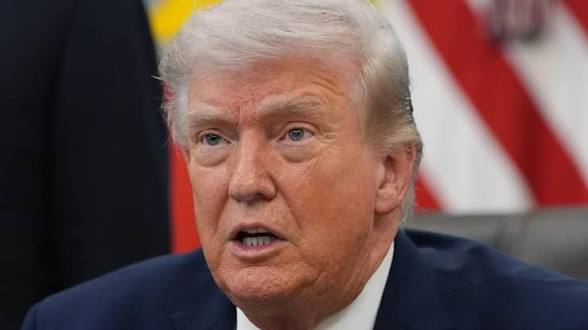
What Is OpenUSD (OUSD)? New Stablecoin Gains Attention With Backing From Visa, BlackRock, Coinbase, and 140+ Companies

OpenUSD (OUSD) has quickly become one of the most talked about topics in the crypto market following the announcement of a consortium backed stablecoin supported by more than 140 companies.

Developed by Open Standard, the stablecoin is expected to launch later this year. Its promise of zero fee minting, shared reserve earnings, and collaborative governance has sparked strong interest across both financial and crypto sectors.

Growing Excitement Around OpenUSD

According to recent findings from Santiment, participation from major financial institutions and crypto firms has driven intense market discussion. OpenUSD has become one of the most widely discussed developments in crypto, alongside conversations around The Black Bull whale activity and Markets in Crypto-Assets licensing.

Market participants are actively debating key issues such as custody, transparency, liquidity, and whether another large stablecoin can realistically challenge dominant players like USD Coin and Tether.

The growing attention follows the official launch announcement from Open Standard, the independent body overseeing OpenUSD.

According to the project’s official announcement, OUSD is designed to improve global money movement while solving several common problems businesses face when using traditional stablecoins.

Although stablecoins have become increasingly valuable because they enable faster, cheaper, and programmable digital payments, many businesses still face challenges such as high minting and redemption costs, limited access to reserve generated revenue, and reliance on centralized issuers for product development.

Core Features of OpenUSD

OpenUSD is built around three key principles.

First, businesses can mint and redeem OUSD without fees or volume limits.

Second, participating partners will share earnings generated from reserve assets after operational costs and management fees are deducted.

Third, governance will be managed collectively through Open Standard, with partner organizations participating in decision making rather than leaving control to a single issuer.

This governance structure is intended to align decision making with the broader interests of the ecosystem.

Open Standard confirmed that more than 140 businesses have already committed to supporting or using OpenUSD. The list includes major firms such as Visa, Stripe, Mastercard, American Express, Coinbase, BlackRock, BNY, Standard Chartered, Intercontinental Exchange, Bybit, Solana, Base, OKX, and Ripple.

Samara Cohen, Global Head of Market Development at BlackRock, said stablecoins could play a major role in the future of digital markets when supported by reliable infrastructure and practical use cases. She described OpenUSD as an important step toward expanding access to tokenized value and internet native payment systems.

Could OpenUSD Pressure Circle?

The announcement of OpenUSD appears to have affected sentiment around Circle, the issuer of USD Coin.

On Tuesday, Circle’s stock, CRCL, fell 17.55 percent and closed at $62.63.

Sam Ruskin, a former research analyst at Messari, noted that OpenUSD’s structure could create real competitive pressure for Circle.

He suggested the new stablecoin model may force Circle to expand revenue sharing, strengthen distribution partnerships, or diversify its broader stablecoin strategy.#crypto#cryptonews https://coinsignals.net https://t.me/coinsignalpublic

New Federal Filing Shows Donald Trump Holds More Than $50 Million in Bitcoin in Cold Storage

A newly released federal financial disclosure has revealed that U.S. President Donald Trump owns more than $50 million worth of Bitcoin stored in a cold wallet. The actual amount could be significantly higher, as the filing only reports values within broad ranges.

The 927 page disclosure, published by the U.S. Office of Government Ethics, lists the Bitcoin under CIC Digital LLC as a cryptocurrency wallet containing virtual Bitcoin keys held in cold storage. The filing places the value in the highest reporting category, listed as over $50 million, meaning no exact figure is provided beyond that threshold.

Trump’s Bitcoin Holdings

According to the filing, the Bitcoin is held through the Donald J. Trump Revocable Trust, with Trump listed as the sole beneficiary. The trust also controls his ownership stake in Trump Media & Technology Group, the parent company of Truth Social.

The disclosure indicates that Trump’s Bitcoin is stored in cold storage, meaning the private keys are kept offline rather than on internet connected systems or cryptocurrency exchanges. This method is commonly used to improve security and reduce exposure to online threats.

Bitcoin is only part of the broader digital asset portfolio held by CIC Digital LLC.

The filing also lists an Ethereum wallet valued between $5 million and $25 million, a staked Ethereum position through Coinbase that generated $510,808 in validator rewards, a USD Coin holding worth between $5 million and $25 million, along with a smaller dollar based wallet.

Based on the disclosed ranges, the combined reported value of Trump’s Bitcoin and Ethereum holdings alone exceeds $100 million.

Crypto Earnings Exceed $1 Billion

The disclosure also highlights the scale of Trump’s crypto related income during the reporting period.

According to the filing, World Liberty Financial generated more than $500 million from governance token sales and other crypto products. Meanwhile, CIC Digital LLC reportedly generated over $635 million from sales of Trump branded meme coins launched shortly before his inauguration.

Taken together, Trump’s crypto related earnings exceeded $1 billion during his first year back in office.

White House Responds to Conflict Concerns

The disclosure has sparked renewed scrutiny over potential conflicts of interest tied to Trump’s growing involvement in digital assets.

Responding to the criticism, White House spokesperson Anna Kelly rejected claims of wrongdoing. She stated that neither Trump nor his family has engaged in conflicts of interest and said they have no intention of doing so.

Kelly added that all actions taken by President Trump and his administration are aimed at serving the best interests of the American people. She also dismissed allegations from critics and media outlets as repeated political attacks.#crypto#cryptonews https://coinsignals.net https://t.me/coinsignalpublic

Crypto Influencer Nick O’Neill Says He Sold Unsolicited Token Sent to Him

Crypto influencer Nick O’Neill has come under scrutiny after revealing that he intentionally sold a community created token after developers transferred 60 percent of its total supply to his wallet.

The situation has divided the crypto community. Some traders criticized his actions, while others argued he had no responsibility to support or promote a token launched without his knowledge or approval.

O’Neill Explains Decision to Sell

The controversy began after the Fibonacci account on X shared a clip from O’Neill’s Choose Rich Live show on YouTube. In the clip, O’Neill discussed The Black Bull, a token named after crypto influencer Ansem.

He noted that ANSEM had climbed 40 percent and reached a market cap of more than $120 million after Ansem hinted at weekly airdrops. O’Neill also highlighted that Ansem reportedly controlled 60 to 65 percent of the token supply and fees through a public wallet valued at around $50 million.

Despite the token’s growth, O’Neill expressed doubts about its long term sustainability. He pointed to bearish chart patterns and weakening buyer interest, suggesting the token could struggle to maintain momentum.

In a now deleted post, someone suggested O’Neill could also benefit greatly if he controlled a similar percentage of a token’s supply. Responding before the post was removed, he admitted that such a scenario would be highly profitable.

However, he later made his position clear to his nearly 286,000 followers on X, stating that he would not support any token created in his name except the original RICH meme coin.

O’Neill stated that he would sell any token launched using his name unless it was the original RICH token. He also revealed that he had already sold another token recently.

After criticism intensified, O’Neill clarified that the token in question, called I Choose Rich Everytime, was independently created and distributed before a large share was sent directly to him.

The team behind the token, operating under the name Reserve, accused him of quickly selling the tokens after receiving them. O’Neill did not deny this. Instead, he argued there was no reason to support another community made token when an existing cryptocurrency already represented his brand.

He added that if he truly wanted to launch a token, he would handle the process himself rather than rely on unknown third parties.

Comparisons to ANSEM Fuel Debate

Some supporters encouraged O’Neill to embrace the token, believing it could achieve success similar to ANSEM. Others defended his decision, arguing he had every right to sell the tokens since he had never agreed to endorse or promote them.

One supporter compared the situation to receiving free company shares. Since O’Neill made no promises regarding the asset, they argued he was free to sell at any time.

Meanwhile, recent reports from CryptoPotato revealed that the creator of The Black Bull transferred 650 million tokens, worth roughly $71 million at the time, directly to Ansem’s wallet at no cost while personally taking only $5,500.

According to on chain analysts, this distribution pattern raised concerns about a possible coordinated promotional strategy. Market watchdogs, including Rugcheck, also warned that concentrated ownership increased the risk of price manipulation.#crypto#cryptonews https://coinsignals.net https://t.me/coinsignalpublic

Bitcoin May Drop Into the $40,000 Range Before Reaching Bottom, Say Bitfinex Analysts

Analysts at Bitfinex believe Bitcoin may still have further downside before reaching the bottom of the current bear market cycle. Based on on chain data and historical market trends, they expect Bitcoin’s decline could continue into the $40,000 range before a recovery begins.

According to the latest Bitfinex Alpha report, Bitcoin could fall further by the end of 2026 as more investors continue exiting the spot market.

Potential Decline Into the $40,000 Range

In previous market cycles, Bitcoin has consistently fallen by at least 70 percent from its all time highs before reaching a market bottom. During the 2022 bear market, Bitcoin dropped 78 percent from its peak of $69,000. In 2018, it declined by 86 percent from highs near $20,000.

Using these historical drawdown patterns and the average duration between market peaks and bottoms, analysts believe Bitcoin may continue its downward trend into the $40,000 range. Bitcoin is currently down 53.9 percent from its all time high of $126,000. A drop into the $40,000 range would push total losses to roughly 68 percent.

Analysts also estimate that Bitcoin could reach its bear market bottom in the fourth quarter of 2026, especially when considering historical price behavior in relation to moving averages.

Despite Bitcoin breaking below key support levels over the weekend, analysts say its broader market structure remains unchanged. At around $60,000, Bitcoin is trading below the True Market Mean of $77,000, which reflects the average cost basis of active investors. This level is often seen as the dividing line between bullish and bearish market conditions. As long as Bitcoin remains below this threshold, the market is expected to stay in bearish territory.

Spot Demand Remains Weak

After falling below the $61,500 support level and reaching a new bear market low of $58,136 last week, analysts now identify $53,400 as the next major support level.

The move toward $58,000 highlights weakening spot demand. This weakness is reflected in selling from short term holders, outflows from exchange traded funds, the breakdown of digital asset treasury activity, and increasing negative gamma pressure.

Unlike previous market declines, Bitcoin’s recent drop below $60,000 did not trigger major liquidations or significant open interest flushes. This suggests the selloff was driven more by sustained spot market selling rather than leveraged market activity.

With the market’s main source of demand currently absent, Bitcoin may continue to struggle and remain under pressure in the coming weeks.

Analysts noted that the market needs a strong return of spot demand before Bitcoin can establish a solid floor and begin moving higher.

If you want it shorter, more professional, or more news-style, I can adjust it.#crypto#cryptonews https://coinsignals.net https://t.me/coinsignalpublic