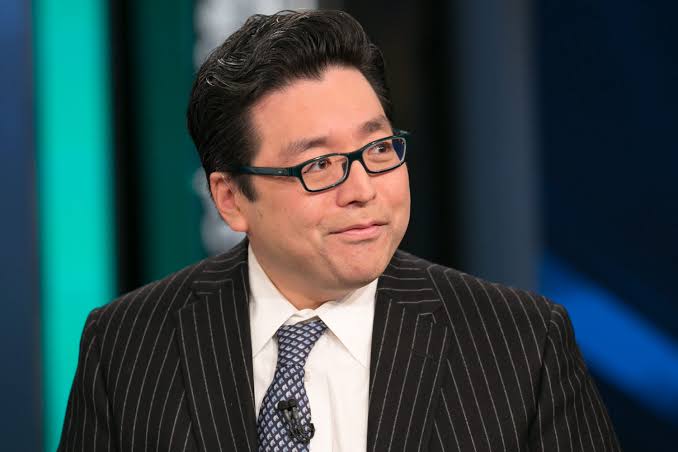
Tom Lee Led BitMine Launches MAVAN Ethereum Staking Platform

BitMine, chaired by Tom Lee, has announced the launch of a new Ethereum staking platform called MAVAN, short for Made in America Validator Network.

The company, now recognized as the largest holder of Ethereum, currently has more than 100,000 ETH staked and recently increased its total holdings to over 4,660,000 tokens following its latest purchase.

MAVAN platform goes live

According to the company’s announcement, MAVAN is designed as a high quality staking solution for institutional clients, with a strong focus on security, performance, and reliability. The platform uses infrastructure based in the United States for clients that require domestic validation, while also supporting a globally distributed system to serve users worldwide.

Initially created to manage BitMine’s own Ethereum treasury, the platform will now expand to support institutional investors, custodians, and partners seeking advanced staking infrastructure.

Tom Lee described MAVAN as an important milestone in the company’s broader strategy to build a leading global staking and blockchain infrastructure platform. He added that, given BitMine’s position as the largest Ethereum holder, MAVAN is expected to quickly become the largest Ethereum staking platform after its launch.

The company also plans to expand into other proof of stake networks and continue developing blockchain infrastructure through 2026, including work on on chain vaults and next generation client technologies.

BitMine continues to expand its holdings

Earlier this week, BitMine confirmed another Ethereum purchase, bringing its total holdings to 4,660,903 ETH. In addition to its Ethereum position, the firm holds 196 Bitcoin, along with a 200 million dollar stake in Beast Industries and a 95 million dollar stake in Eightco.

Despite recent declines in Ethereum’s price, which have placed its position under pressure, BitMine’s total assets are valued at approximately 11 billion dollars, including more than 1 billion dollars held in cash.#crypto#cryptonews https://coinsignals.net https://t.me/coinsignalpublic

Analyst Suggests Bitcoin Could Fall Toward 46,000 Dollars as Mining Costs Decline

Bitcoin may be heading toward a lower price floor as the estimated electricity cost required to mine one BTC continues to decline, according to analyst Ted Pillows.

This development is strengthening expectations that Bitcoin could drop below 50,000 dollars, with projections pointing to levels last seen in 2024.

Mining costs indicate possible downside

The concept of electric cost refers to the estimated energy expense needed to produce a single Bitcoin. Based on Pillows’ analysis, this cost has now fallen below 50,000 dollars and could decrease further toward 45,000 dollars.

He believes this trend suggests Bitcoin may eventually dip under 50,000 dollars, with a potential bottom forming between 46,000 and 48,000 dollars, aligning with lows recorded in August 2024.

This outlook is supported by traders on Kalshi, who are currently forecasting a similar bottom near 48,000 dollars. However, not all analysts agree on a bearish short term outlook.

For instance, Ali Martinez recently identified a right angled descending broadening wedge pattern on Bitcoin’s one hour chart. This type of formation is often interpreted as a bullish reversal signal, with a potential upside target near 75,700 dollars if a breakout occurs.

Meanwhile, Merlijn The Trader pointed out that Bitcoin has entered the dollar cost averaging zone on the Rainbow Chart for the fourth time in its history. According to this perspective, previous entries into this zone have been followed by strong long term rallies, suggesting accumulation may be underway again.

Geopolitical tensions continue to influence price

Pillows’ bearish outlook comes at a time when Bitcoin’s price movements are being heavily influenced by global political developments rather than purely technical indicators. The asset recently dropped below 68,000 dollars after Donald Trump threatened action against Iran’s power infrastructure amid ongoing tensions.

Bitcoin later climbed above 71,000 dollars after Trump signaled a delay in those actions and claimed that discussions between the two sides had been constructive. However, Iranian officials denied that such talks took place, leading to renewed uncertainty and another dip below 70,000 dollars.

At the time of writing, Bitcoin is moving back toward 71,000 dollars and has gained around 8.5 percent over the past month.

Previously, Martinez described the range between 65,636 dollars and 70,685 dollars as a no trade zone, noting that more than 1.7 million BTC had been exchanged within that band. With both buyers and sellers holding firm, he suggested that a decisive move will only occur once the price clearly breaks above or below this range.

At present, the market is facing mixed signals. Declining mining costs and prediction market data suggest further downside risk, while technical patterns continue to support the possibility of a recovery.#crypto#cryptonews https://coinsignals.net https://t.me/coinsignalpublic
XRP Maintains Bearish Structure as Analysts Question Potential for Trend Reversal

XRP has shown little movement in recent trading, holding around 1.42 dollars on Wednesday. With no strong catalyst driving momentum, the asset continues to face rejection at higher levels.

Market analysts suggest that further downside may occur before any meaningful shift in trend takes place.

Bearish outlook points to lower levels

Crypto analyst CasiTrades explained that XRP is still moving within a broader bearish wave pattern. According to this view, the asset is currently forming a subwave two within a larger wave five decline, with a projected downside target near 0.87 dollars. This structure remains intact unless XRP falls below 1.36 dollars and establishes a new low.

Within this formation, wave B extended further than expected, reaching the 0.786 retracement level at 1.38 dollars, though it still falls within acceptable limits. The projected target for wave C has now been adjusted lower to 1.485 dollars, aligning with the 0.5 retracement level, instead of the earlier estimate of 1.51 dollars based on the 0.618 retracement.

Looking at a wider timeframe, repeated rejection at resistance over the past month increases the likelihood that XRP could revisit lower support zones around 1.09 dollars and 0.87 dollars before any potential recovery. This outlook would only change if the asset breaks above and holds beyond 1.65 dollars or reaches those lower support levels.

Institutional flows show weakness

On the institutional side, XRP spot exchange traded funds have begun to see outflows after months of steady inflows following their late 2025 launch. Data compiled by SoSoValue shows that these funds recorded net outflows of 30.12 million dollars in March 2026. Although there were brief inflows earlier in the month, overall momentum weakened as time progressed.

Amid ongoing discussions about institutional adoption, David Schwartz stated that he does not support artificially encouraging the use of XRP when it is not the most efficient solution. He emphasized that any cost advantage tied to the asset should come from genuine efficiency rather than incentives designed purely to drive adoption.

He added that the preferred approach is to reduce risks and remove barriers for users adopting XRP and related technologies, while using discounts or incentives only when they reflect real benefits or help encourage early adoption in a meaningful way.#crypto#cryptonews https://coinsignals.net https://t.me/coinsignalpublic

Ethereum Holds Near Break Even Level as Resistance Limits Further Gains

Ethereum is trading close to 2,180 dollars after recording modest daily gains, though it remains down 6.3 percent over the past week. Market volatility has eased somewhat, but uncertainty persists due to conflicting statements about discussions involving the United States and Iran.

With its realized price acting as a ceiling, Ethereum is finding it difficult to move higher.

Resistance at realized price

According to analyst Darkfost, Ethereum is currently moving within a short term range. Its price is hovering near the average realized price of about 2,300 dollars, suggesting that many holders are sitting near their break even point. Based on standard deviation bands, the upper projected level of the realized price is around 5,300 dollars, while the lower bound is estimated near 1,150 dollars.

Ethereum is currently positioned near the middle of this range. In present market conditions, the realized price is acting as resistance, meaning some investors may see this level as a chance to exit without losses.

Additional on chain data shared by Wise Crypto highlights a growing battle between large holders and accumulating investors, bringing key price levels into focus. The 2,027 dollar range has emerged as a crucial support level, while Ethereum recently moved above a previous resistance near 2,148 dollars. The analyst noted that maintaining strength above this level could help restore upward momentum, while a drop below support may push the price down toward 1,928 dollars.

Earlier in the week, analyst Ali Martinez identified a strong accumulation zone between 2,000 and 1,800 dollars. Ethereum’s MVRV ratio has also fallen below 0.8, a level that has historically indicated undervaluation and previous market bottoms. This aligns with the formation of an ascending triangle on the weekly chart, while a recent bullish signal from the Supertrend indicator suggests the possibility of a trend reversal after a prolonged consolidation phase.

Staking activity reaches new highs

On the staking front, Everstake reported that Ethereum may be entering a new stage of growth. The total amount of ETH locked in staking has reached an all time high, with approximately 38 million ETH currently staked. This reduces the number of tokens available for trading in the open market.

According to the firm, the shrinking liquid supply combined with steady demand is creating conditions that could support stronger price performance moving forward.#crypto#cryptonews https://coinsignals.net https://t.me/coinsignalpublic

Analyst Says CLARITY Act Could Benefit Circle Despite 20 Percent Stock Drop

Circle Internet Group, the company behind USD Coin, experienced a sharp decline in market value on March 24, losing about 4.6 billion dollars after its CRCL stock dropped roughly 20 percent. The stock closed near 101 dollars after opening above 126 dollars.

The decline followed a draft revision to the CLARITY Act that aims to prevent crypto platforms from passing stablecoin yield on to users.

Market reaction may have been premature

The proposed update to the CLARITY Act would stop digital asset firms from offering yield on stablecoins, whether directly or indirectly. However, it still allows incentives tied to user activity, such as loyalty programs, promotional deals, or subscription benefits, provided that regulators in the United States agree on what qualifies as acceptable rewards.

CRCL shares began trading slightly above 126 dollars and briefly rose to 127 dollars before news of the proposal surfaced. The stock then fell sharply to around 98.31 dollars, according to market data, and made only a modest recovery to about 101 dollars by the end of the session.

After the steep single day drop, several analysts suggested the market reaction may have exaggerated the impact of the policy change. Simon Dedic described the movement as a classic sell the news scenario, noting that insiders had likely already positioned themselves during a six week rally that pushed the stock from about 50 dollars to nearly 133 dollars.

He argued that the CLARITY Act could actually strengthen Circle’s position by reinforcing its current business model. Circle already earns revenue by retaining the yield generated from USDC reserves, and under the proposed rules, it could continue doing so while pointing to regulation as the reason it does not share that yield with users. Dedic described the situation as highly favorable for Circle and suggested the price drop could present an opportunity for long term investors.

Jose Fabrega shared a similar perspective, emphasizing that USDC has never offered yield to users. He maintained that Circle’s profitability remains intact and that the company still has strong growth potential.

He also noted that decentralized finance platforms and real world asset protocols could benefit the most from the rule change, as investors seeking yield may shift their funds into those ecosystems rather than holding stablecoins. This shift could still lead to increased demand for USDC indirectly.

Stablecoins moving toward practical use

The broader outlook for stablecoins is not entirely negative. Data highlighted by XWIN Research Japan shows that the number of active stablecoin addresses has reached record levels, indicating growing real world adoption.

Analysts suggest that without yield features, stablecoins may evolve into core financial infrastructure, serving roles in payments, settlement, and collateral rather than acting primarily as investment tools.#crypto#cryptonews https://coinsignals.net https://t.me/coinsignalpublic
SIREN Surges Again with Triple Digit Gains Despite Scrutiny as Bitcoin Returns to 71,000 Dollars

SIREN continues to attract attention with extreme volatility, climbing back above the 2.00 dollar level even as scrutiny around the project increases.

Bitcoin dropped below 69,000 dollars yesterday amid ongoing uncertainty linked to tensions in the Middle East. However, it recovered by more than 2,000 dollars and is now trading around 71,000 dollars again.

Most large cap altcoins have remained relatively slow on a daily basis, except for XLM and HYPE, both of which have recorded gains of more than five percent.

Bitcoin returns to 71,000 dollars

Just over a week ago, Bitcoin was rejected at 76,000 dollars, and the correction that followed pushed its price significantly lower. This decline may have been influenced by the Federal Reserve’s decision to maintain current interest rates, as well as escalating tensions in the Middle East. As a result, Bitcoin fell to 69,000 dollars last Thursday.

Although it rebounded to 71,000 dollars over the weekend, it declined again after Donald Trump issued new threats toward Iran, particularly as traditional futures markets opened on Sunday evening. However, the price surged on Monday after Trump stated that military actions against Iran’s power plants would be paused, claiming that both sides had reached an agreement.

Iranian officials denied these claims, causing Bitcoin to pull back once more. It dropped to 69,000 dollars yesterday but has since rebounded to 71,000 dollars at the time of writing, despite continued uncertainty surrounding the situation.

Bitcoin’s market capitalization has climbed back to 1.425 trillion dollars, while its dominance over altcoins remains steady at 56.5 percent.

SIREN shows renewed momentum

SIREN has been the most volatile altcoin in recent days. The artificial intelligence focused token surged to a new all time high of 3.65 dollars after recording consecutive triple digit gains, then dropped by more than 70 percent yesterday. It has since rebounded sharply, rising by over 100 percent in the past day to reach 2.20 dollars at the time of writing. This comes despite growing community concerns about its purpose and the distribution of its holders.

Meanwhile, Ethereum is trading close to 2,200 dollars after a modest daily increase. BNB is nearing 650 dollars, while XRP continues to hold support at 1.40 dollars. Solana is back above 90 dollars, and HYPE has gained more than six percent to surpass 40 dollars. XLM has posted the strongest performance among large cap assets, reaching 0.18 dollars after an eight percent increase.

The total cryptocurrency market capitalization has increased by approximately 20 billion dollars in one day and now stands near 2.53 trillion dollars.#crypto#cryptonews https://coinsignals.net https://t.me/coinsignalpublic

Ripple Expands in Asia as RLUSD Aims to Improve Settlement Efficiency

Ripple is continuing its global expansion, focusing on the use of its RLUSD stablecoin to improve the speed of cross border payments. This latest development follows its recent push into the Australian market, where the company is promoting RLUSD as a settlement tool for institutional use.

According to a recent report, the company associated with XRP has partnered with supply chain finance firm Unloq. The goal is to replace traditional manual trade finance systems with a more efficient solution built on the XRP Ledger.

Testing RLUSD in Singapore’s Financial Sandbox

Ripple plans to explore whether RLUSD can eliminate the slow manual processes that have delayed cross border trade for many years. To carry out this test, the company will use BLOOM, a regulatory sandbox operated by the Monetary Authority of Singapore.

BLOOM is designed to expand settlement capabilities for tokenized bank liabilities and regulated stablecoins. Through this initiative, Ripple and Unloq will pilot a system where payments in cross border trade are processed automatically once certain conditions are met, such as confirmation of shipment.

RLUSD, which was introduced in December 2024, is primarily targeted at institutional users. It currently has a market value of nearly 1.5 billion dollars, placing it among the top stablecoins globally.

Both companies highlighted that traditional trade finance relies heavily on manual verification, paperwork, and correspondent banking networks, which can take days or even weeks to complete. Their joint approach uses Unloq’s SC plus platform to combine trade obligations, settlement rules, and financing workflows into a unified system, while RLUSD handles the transfer of funds on the XRP Ledger.

Expansion Strategy Extends to Australia

This initiative also reflects Ripple’s broader expansion strategy. Recently, the company announced plans to strengthen its presence in Australia by applying for an Australian Financial Services License.

Ripple aims to obtain this license through the acquisition of BC Payments Australia Pty Ltd, pending final approval. If successful, this would allow the company to operate a regulated platform that enables financial institutions, fintech firms, and businesses to move funds more efficiently across borders.#crypto#cryptonews https://coinsignals.net https://t.me/coinsignalpublic

Gold Struggles as a Safe Haven During Market Turmoil

During periods of geopolitical tension and economic uncertainty, investors typically turn to gold as a reliable safe haven. This time, however, the trend appears to be different.

Gold prices have dropped significantly, falling by about 8 percent this week. Instead of acting as a stable store of value, the metal has behaved more like Bitcoin, showing unexpected volatility.

The price of gold is now about 15 percent below its late January peak of 5,500 dollars per ounce. By Wednesday, it had declined to a ten week low of 4,550 dollars, based on data from GoldPrice.

Analysts at Bloomberg noted that gold was expected to provide protection during the Iran conflict but instead declined along with other assets.

Changing Behavior in a Traditionally Stable Asset

Such sharp movements are more commonly associated with crypto markets rather than gold. Analysts pointed out that gold does not always move independently of other assets. When liquidity becomes tight, it can behave similarly to riskier investments.

Eric Balchunas described gold as an unreliable hedge in the current environment. He compared it to Bitcoin, noting that while both can be unpredictable, Bitcoin tends to show a stronger relationship with stock market movements. He added that both assets should be evaluated over longer time periods rather than short term fluctuations.

Earlier in the week, gold advocate Peter Schiff argued that the case for gold should strengthen during times of war. He pointed to expectations of rising government deficits in the United States, increasing food and energy costs, a potential recession, higher unemployment, and broader financial instability.

Despite these arguments, market behavior suggests that investors are not reacting as expected. Reports from CNBC indicate that gold has entered bear market territory, with a stronger US dollar and higher Treasury yields reducing its appeal.

Bitcoin ETFs Show Resilience

At the same time, Bitcoin related investment products are showing strength. According to Balchunas, Bitcoin exchange traded funds have recorded inflows of about 2.5 billion dollars this month and are close to recovering earlier losses for the year.

He highlighted the resilience of these funds despite a 40 percent price decline over the past six months and significant negative media coverage.

For comparison, he noted that when gold experienced a similar 40 percent drop about a decade ago, roughly one third of investors exited the market.

Currently, Bitcoin is trading around 70,000 dollars and has been moving within a sideways range since early February. Even so, the pattern of gradually higher peaks and higher lows suggests a potentially positive trend.#crypto#cryptonews. https://coinsignals.net https://t.me/coinsignalpublic

Solana’s Builder Debate and the Foundation’s Response

The Solana Foundation, along with affiliated groups like Monke Foundry, distributes tens of millions of dollars in grants every year.

This week, a broader public discussion emerged around how well Solana supports its builders. Vibhu Norby responded with a detailed statement, highlighting that startups from the Colosseum program have collectively raised about 650 million dollars. He also pointed to the availability of tens of millions in grants that do not require equity, along with Solana’s strong performance in social media reach and engagement.

His response came after criticism about founder entitlement expanded into a larger debate about whether the Foundation is doing enough to support developers.

Support Initiatives from the Foundation

In a post shared on March 24, Norby addressed what he described as major inaccuracies in online discussions. He explained that projects from the Colosseum accelerator alone have secured over 650 million dollars in venture funding. He also noted that the ecosystem hosts multiple hackathons each year, including three since January, with prize pools worth millions.

He added that initiatives such as Superteam provide grants of up to 10,000 dollars. Early stage founders can access additional funding, including up to 50,000 dollars for participants from Y Combinator who are building on Solana.

The ecosystem also includes a 2 million dollar prediction markets fund created in partnership with Kalshi. There are also open ended grants for open source and public good projects, with average funding amounts around 40,000 dollars.

Norby emphasized that the Foundation and affiliates such as Metaplex, Wormhole, and Bonk collectively distribute tens of millions in funding each year without taking ownership stakes.

On the promotion side, the Foundation has supported over 300 companies within the ecosystem on X since the start of the year. As an example, a live event at mtndao helped the team behind Tapestry gain thousands of new app downloads after their Demo Day presentation was shared and highlighted.

Norby also mentioned that the organization produces extensive content, including ten regular podcasts and hundreds of videos annually. It also runs a creative network of more than 50 influencers called Luminaries. These efforts have helped Solana lead other blockchain networks in impressions and engagement on platforms like X and LinkedIn.

Debate Around Founder Attitudes

Earlier in the week, a Solana developer named Chase argued that some founders in the ecosystem had become too comfortable and entitled.

The comment sparked mixed reactions. Investor Mike Dudas described the Foundation’s tone as unusual, noting that few projects reached their expected peaks during the last market cycle. He added that most founders he encountered were still working hard and remained highly motivated.

Austin Federa agreed that complacency could be an issue but said it was not limited to founders. He suggested that it had also affected the Foundation and parts of the core development community. Chase later clarified that his criticism was not directed at builders who are actively working without expecting external support.

Market Context

After a period of decline that brought SOL into the mid 80 dollar range, the token was trading close to 92 dollars at the time of writing. This reflected a gain of about 4 percent over the previous 24 hours and roughly 8 percent over the past month. Despite this recovery, the token remains down more than 34 percent compared to a year ago and is still nearly 69 percent below its all time high of 293 dollars, which was reached just over a year ago.#crypto#cryptonews https://coinsignals.net https://t.me/coinsignalpublic

CLARITY Act Proposal Limits Bank Like Features on Crypto Platforms While Preserving Certain Rewards

A new legislative draft under the CLARITY Act could prevent crypto platforms from operating in ways similar to traditional banks, while still allowing certain types of user incentives to continue.

Representatives from the crypto industry and the banking sector met again on Capitol Hill this week to review updated language aimed at reaching a compromise after months of negotiations. A central issue remains whether platforms should be allowed to offer rewards tied to stablecoin holdings.

New Rules Target Interest Like Stablecoin Rewards

Crypto journalist Eleanor Terrett shared details from the discussions on X, noting that the latest proposal would clearly prohibit platforms from offering stablecoin rewards that resemble interest payments, whether directly or indirectly.

According to sources, the restriction would apply across the entire industry, covering all digital asset service providers and their affiliated entities. The aim is to eliminate any workaround that could allow platforms to introduce products that function like interest bearing accounts tied to stablecoins.

At the same time, the proposal allows for activity based rewards, provided they are not structured as interest. These would include incentives tied to user engagement such as loyalty programs, promotional offers, and subscription benefits.

The draft also assigns responsibility to regulators including the U.S. Securities and Exchange Commission, Commodity Futures Trading Commission, and the U.S. Department of the Treasury to jointly define what qualifies as acceptable rewards and to establish enforcement guidelines.

Mixed Reactions From Industry Participants

Feedback from industry stakeholders has been divided. Some participants noted that the latest draft differs significantly from earlier discussions involving the White House. They also raised concerns about the use of the economic equivalence standard, arguing that its vague wording could allow regulators to interpret the rules more strictly.

There are also worries that certain provisions may restrict how rewards can be linked to user balances or transaction activity, making it more difficult for crypto platforms to design competitive incentive programs. Overall, these critics view the proposal as more limited and restrictive than expected.

However, other industry figures believe the draft represents a balanced outcome. They argue that it preserves the ability to offer transaction based incentives while preventing stablecoins from functioning like traditional interest earning deposit accounts.

One source cited by Terrett suggested that the proposal may be the most practical compromise available, especially when compared to earlier versions such as the Tillis Alsobrooks draft, which was considered more restrictive. Bank representatives are expected to review the updated text in the coming days.#crypto#cryptonews https://coinsignals.net https://t.me/coinsignalpublic