The Institutional Shift: Why 74% of Large Investors Are Optimistic About Crypto

Nearly half of institutional investors say they are now focusing more on risk control, liquidity, and position sizing.

A survey conducted by EY-Parthenon in partnership with Coinbase and released on March 18 shows that three out of four institutional investors expect cryptocurrency prices to rise over the next year.

The results indicate that recent market declines have not weakened confidence but have instead encouraged more disciplined strategies among large investors.

Key Insights From the Data

According to the report, 73 percent of respondents plan to increase their crypto investments in 2026, while 74 percent believe prices will climb within the next 12 months. At the same time, 49 percent said they are placing greater importance on managing risk, maintaining liquidity, and carefully sizing their positions due to ongoing market volatility.

The findings also show that regulated investment vehicles have become the preferred entry point. About 66 percent of participants already hold spot crypto exchange traded funds or exchange traded products, while 81 percent said they prefer gaining exposure through regulated channels.

Stablecoins are also gaining traction beyond theoretical use. The survey found that 86 percent of investors are either already using them or exploring their use for cash management and transferring funds. Many firms are also introducing formal policies around counterparty risk and reserve transparency to integrate stablecoins into their financial systems.

This trend aligns with recent developments such as Mastercard acquiring BVNK for 1.8 billion dollars on March 17, a move aimed at strengthening cross border payments and business transactions.

Tokenization is following a similar growth path. Over the past year, the proportion of asset managers interested in tokenizing their own assets increased from 40 percent to 64 percent. In addition, 63 percent of investors said they are open to investing in tokenized assets, while 61 percent believe tokenization will significantly influence trading, clearing, and settlement processes within the next three to five years.

A recent example includes Kraken partnering with Nasdaq to develop tokenized equities through its xStocks product, which has already processed more than 25 billion dollars in transactions.

Regulation Remains a Key Factor

The survey highlights that regulation plays a dual role in shaping investor behavior. Among institutions planning to increase crypto exposure in 2026, 65 percent cited clearer regulations as a primary motivation. At the same time, 66 percent identified regulatory uncertainty as their biggest concern.

When asked where clearer guidance is most needed, 78 percent pointed to market structure. This was followed by digital asset firm licensing at 56 percent and tax treatment at 54 percent.

There has been some progress in this area. The United States introduced the GENIUS Act last year, establishing the first federal framework for stablecoins. In addition, the Securities and Exchange Commission has recently issued guidance on tokenized securities and revived Project Crypto in collaboration with the Commodity Futures Trading Commission to promote a more coordinated regulatory approach to digital assets.#crypto#cryptonews https://coinsignals.net https://t.me/coinsignalpublic

CZ Challenges Negative Narratives and Predicts U.S. Could Emerge as a Global Crypto Hub

Changpeng Zhao, widely known as CZ, has pushed back against negative portrayals of the cryptocurrency industry while sharing his outlook on its future growth.

As the founder and former chief executive of Binance, he has observed the sector’s rapid evolution over the past decade. According to Zhao, the industry still has significant room to expand, particularly through increased institutional involvement and wider mainstream acceptance.

Responding to Criticism and Media Coverage

Zhao shared his views during an interview with The Digital Chamber, an American organization that recently hosted the DC Blockchain Summit. He spoke remotely with the group’s founder and board chair, Perianne Boring.

A major focus of the discussion was how the media portrays the crypto space. Zhao argued that coverage is often inconsistent and fragmented, with traditional outlets frequently presenting a narrow and sometimes inaccurate perspective. He added that different stakeholders tend to push their own narratives, which contributes to a more complicated and often negative overall picture.

Addressing how these narratives affect him personally and his company, Zhao stated that much of the information circulating about both himself and Binance is misleading. He pointed to U.S. court cases that have been dismissed due to insufficient evidence as support for his position. He also noted that crypto focused media tends to better understand his perspective, partly because of his active communication on X. In contrast, his limited interaction with traditional media may have contributed to misunderstandings and misrepresentation.

Prospects for the U.S. as a Crypto Leader

As part of efforts to address public perception, Zhao revealed that he is working on a memoir expected to be released in the coming months. He began writing it while serving time in 2024 after admitting to violations related to anti money laundering regulations. He expressed confidence that public perception of the crypto sector will improve as adoption continues to grow.

Zhao also commented on the political climate in the United States, noting that the current administration has faced criticism for its support of cryptocurrency. He suggested that some opposition is politically motivated. Despite this, he believes the country has the potential to become a leading global hub for digital assets.

According to Zhao, achieving this goal will require stronger competition and better infrastructure, which would help attract deeper liquidity comparable to international markets. He pointed out that users in the United States still lack access to some of the most competitive crypto services and pricing available globally. With regulatory frameworks gradually improving, he concluded that the country’s position in the global crypto landscape will strengthen once competition reaches a higher level.#crypto#cryptonews https://coinsignals.nethttps://t.me/coinsignalpublic

FBI Alerts Public to Fake Token Scam on Tron Network

As blockchain systems become more secure and difficult to breach, cybercriminals are shifting their focus toward exploiting users instead of attacking the underlying code.

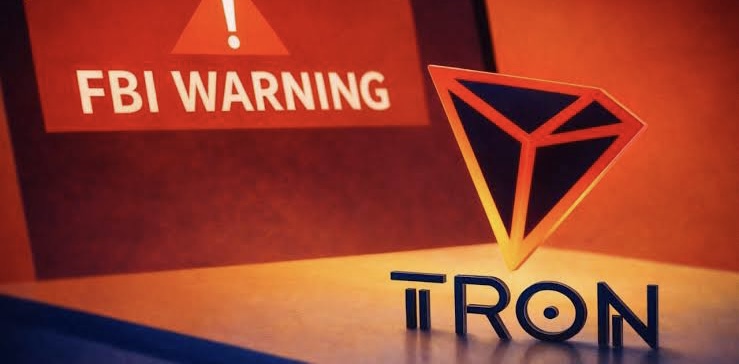
The Federal Bureau of Investigation has issued a warning to users on the Tron network about a fraudulent token posing as an official message from the agency.

In a March 19 post shared by its New York field office on X, the FBI described an ongoing phishing campaign designed to trick individuals into revealing personal information and granting access to their crypto wallets by mimicking an official investigation notice.

Scam Specifically Targets Tron Users

According to the agency, scammers are distributing a harmful TRC20 token labeled “FBI message.” The message urges recipients to complete an AML verification process or face the risk of having their assets restricted. It then directs users to a fraudulent website that asks them to provide sensitive personal details.

The FBI advised recipients to avoid clicking the link or sharing any information. It also encouraged anyone who may have already submitted their details to report the incident to its Internet Crime Complaint Center.

This warning aligns with earlier findings from AMLBot, which reported a similar tactic in October 2025 targeting Tron wallets. According to the firm, attackers monitor blockchain activity to identify wallets impacted by Tether freezes. Once identified, victims receive a “Survey” token containing a link to a fake recovery platform designed to resemble legitimate communication.

Users who follow the link are prompted to check their wallet status and connect it to the platform. They are then asked to pay a fee in TRX. After this step, the attackers silently gain control by updating permissions, allowing them to access the wallet and eventually seize funds when they become available.

Growing Shift Toward User Focused Crypto Attacks

The emergence of these fake FBI tokens highlights a broader trend in crypto related fraud. A recent report by Nominis on March 14 revealed that while total losses from crypto exploits dropped significantly in February 2026, attackers are increasingly relying on social engineering techniques rather than technical vulnerabilities.

According to the report, many recent incidents involved phishing links, counterfeit platforms, and deceptive transaction approvals. These strategies rely on tricking users into granting access or revealing confidential data.

One recent case occurred on March 1 involving Bitrefill, where attackers drained several hot wallets and stole digital gift card inventory. The company later confirmed that the breach happened after hackers obtained compromised login credentials from an employee’s laptop. Investigators linked the attack to North Korean actors.

Security experts note that as blockchain technology becomes more resilient, attackers are adapting by targeting human behavior. The FBI’s warning reinforces that impersonation tactics, especially those involving trusted authorities or law enforcement agencies, remain a serious risk for cryptocurrency users.#crypto#cryptonews https://coinsignals.net https://t.me/coinsignalpublic
Bitcoin Registers One of Its Largest Difficulty Drops in 2026 as Hash Rate Stays Under 1 ZH/s

The hash rate remains more than 20 percent below the record level reached last year.

Bitcoin’s price is not the only aspect of the broader BTC ecosystem that has faced challenges in recent months. Another major component of the network, mining difficulty adjustments, has now fallen to a monthly low.

At the same time, the hash rate has declined by about 20 percent in less than a month, suggesting that many miners have powered down their machines.

Mining Difficulty Falls

When creating the world’s largest blockchain network, Satoshi Nakamoto introduced a self regulating system designed to keep bitcoin mining times consistent at around ten minutes regardless of how many miners participate. This adjustment occurs every 2,016 blocks, roughly every two weeks. When miner participation rises, the difficulty increases, and when participation drops, it decreases. This mechanism ensures that new bitcoin issuance remains predictable.

The most recent adjustment happened early over the weekend and lowered mining difficulty by 7.76 percent. This marks the second largest single drop in nearly a year. More concerning is that seven of the last ten adjustments have been negative. Of the three increases, two were smaller than 1 percent. The only notable rise occurred on February 19, when difficulty climbed by 14.73 percent.

On chain data indicates that the next adjustment is expected around April 3. Current estimates suggest a slight increase to nearly 135T from the present 133.79T. Mining difficulty reached its peak in late October 2025 at 155T, meaning the current level is more than 13 percent lower.

Hash Rate Remains Below 1 ZH per Second

Hash rate is another key indicator of the Bitcoin network’s overall health. It represents the estimated number of hashes generated per second by miners attempting to solve blocks.

In simple terms, a higher hash rate means more miners are active on the network, which strengthens its security. Data from CoinWarz shows that hash rate peaked above 1.28 ZH per second in late September last year before dropping to a range between 1.2 ZH per second and 900 EH per second. Severe storms in North America briefly pushed it down to 700 EH per second in late January, though it recovered quickly.

Despite the rebound, the hash rate remains below 1 ZH per second, placing it roughly 22 percent beneath its all time high recorded in 2025.#crypto#cryptonews https://coinsignals.nethttps://t.me/coinsignalpublic

SIREN Surges 90 Percent to New Record as Bitcoin Falls Below 70k

SIREN has emerged as the standout performer today, sharply rising while most altcoins posted declines between 5 and 8 percent.

Amid escalating tensions in the Middle East, Bitcoin faced rejection near 71,000 dollars and dropped to a three week low of around 68,000 dollars.

The broader altcoin market followed the downturn. Ethereum slipped below 2,100 dollars, XRP fell under 1.40 dollars, and HYPE dropped below 40 dollars after losing nearly 5 percent.

Bitcoin Hits Multi Week Low

After briefly dipping toward 70,000 dollars last weekend, Bitcoin started the week strong and climbed to a six week high of 76,000 dollars after breaking above 74,000 dollars. However, the rally was short lived, with the price returning to around 74,000 dollars by midweek.

Volatility increased around the FOMC meeting. Bitcoin fell by roughly 3,000 dollars ahead of the event but rebounded to 72,000 dollars after the Federal Reserve kept interest rates unchanged. However, comments from Jerome Powell suggesting no rate cuts in 2026 triggered another decline, pushing the price below 69,000 dollars.

Although Bitcoin recovered slightly and reached 71,000 dollars on Saturday, renewed geopolitical concerns following statements from Donald Trump sent it lower again overnight. The asset is now struggling near 68,000 dollars.

Altcoins Decline While SIREN Defies the Trend

Ethereum has dropped more than 300 dollars from its weekly high of 2,400 dollars, with a further decline in the past day pushing it below 2,100 dollars. XRP also failed to hold its momentum after being rejected at 1.60 dollars and is now trading below 1.40 dollars.

Other major altcoins including Solana, Cardano, Dogecoin, Binance Coin, and Chainlink have recorded losses ranging from 2 to 4 percent over the past day.

HYPE is among the weakest performers, falling close to 5 percent to around 38 dollars. Zcash declined by about 7 percent, while Aave, Polkadot, and Sui dropped between 3 and 4 percent.

In contrast, SIREN has significantly outperformed the market. The AI focused cryptocurrency built on the BNB Chain surged by 90 percent in 24 hours, reaching a new all time high above 1.70 dollars.

Overall, the total cryptocurrency market capitalization has decreased by nearly 200 billion dollars since its peak earlier in the week and now stands at approximately 2.43 trillion dollars.#crypto#cryptonews https://coinsignals.net https://t.me/coinsignalpublic

Crypto Markets Remain in Extreme Fear as Bitcoin Hits Three Week Low

Market sentiment across the cryptocurrency space continues to reflect deep fear, with a widely followed index dropping to 10 even though Bitcoin remains well above its February low.

For nearly two months, fear and at times extreme fear have dominated the crypto market. The latest decline in sentiment followed a fresh drop in Bitcoin’s price, along with most altcoins, as the market moved down toward 68,000 dollars.

Persistent Fear Despite Higher Prices

The Fear and Greed Index uses multiple data points to measure investor sentiment around Bitcoin, though it often reflects the broader market as well. Factors such as volatility, trading volume, social media activity, Bitcoin dominance, and search trends all contribute to the score.

The index ranges from 0, which signals extreme fear, to 100, which represents extreme greed. Earlier in 2026, the metric climbed above 60 when Bitcoin was approaching 100,000 dollars in mid January. However, sentiment quickly declined in the weeks that followed as the rally lost momentum.

The index fell to a multi year low of 5 in early and mid February when Bitcoin dropped to around 60,000 dollars, its lowest level in over a year. Although the price has since recovered and is now about 15 percent higher than that bottom, the index remains firmly in extreme fear territory at a reading of 10.

Could Fear Signal a Market Turn

The latest drop in sentiment aligns with Bitcoin’s recent price decline. After trading above 70,000 dollars on Saturday, the asset quickly fell toward 68,000 dollars following renewed geopolitical tensions, leaving the market in a fragile state.

Despite the negative outlook, prolonged periods of fear have historically been followed by market reversals. Bitcoin has often moved against prevailing sentiment, surprising investors who expect continued declines.

This pattern echoes the well known principle shared by Warren Buffett, who advised being cautious when others are overly optimistic and taking opportunities when fear dominates. While this is not financial advice, the current environment of sustained fear and uncertainty could set the stage for a potential shift in market direction.#crypto#cryptonews https://coinsignals.net https://t.me/coinsignalpublic

XRP ETF Weekly Flows: Mixed Signals and What Could Come Next

There is some positive news for XRP exchange traded funds, although momentum remains weak and the asset faced rejection during the week.

Spot exchange traded funds tracking the performance of XRP managed to finish the week with net inflows, marking the first positive week in March. However, the figures were modest and fell far short of earlier performance.

At the same time, XRP attempted a breakout during the week but failed to sustain it, eventually moving back down toward where it started.

Positive but Underwhelming Performance

In the early days of XRP exchange traded funds, momentum was strong. The first product, Canary Capital’s XRPC, launched in mid November and set a record for debut day trading volume in 2025. Four additional funds followed, and together they recorded an extended period of consistent inflows lasting more than a month.

By the end of the year, these funds had attracted over one billion dollars. Net inflows reached 666.61 million dollars in November and 500 million dollars in December. However, sentiment shifted soon after. January 7 marked the first day of net outflows, followed by several more negative sessions.

As a result, total inflows dropped sharply to 15.59 million dollars in January and 58 million dollars in February. March has been even weaker so far, with more than 31.5 million dollars withdrawn from the funds.

The latest week brought a small improvement, ending with positive inflows for the first time this month. Still, the total was only 636,480 dollars, far below the millions recorded in previous periods. In addition, there was no activity on March 18 and March 19, with zero inflows reported on both days.

XRP Price Movement Stalls

XRP joined the broader market rally in the middle of the week, rising from around 1.42 dollars to a monthly high above 1.60 dollars. However, the upward move was quickly halted, and the price pulled back to about 1.55 dollars.

Market conditions weakened further in the following days, especially in the last 12 hours, pushing XRP below 1.40 dollars before a slight recovery.

Despite this bounce, the asset has erased its weekly gains and is now trading near the same level as it was at the start of the week.

Market analyst Ali Martinez commented on the price action, noting that a move toward the ascending trendline shown in his chart could present a strong buying opportunity for XRP.#crypto#cryptonews https://coinsignals.net https://t.me/coinsignalpublic
Bitcoin Falls to $68K After Trump Issues Warning to Iran Over Strait of Hormuz

The value of liquidated leveraged positions surged to $240 million within a single hour as the market reacted sharply.

After a relatively calm Saturday that saw Bitcoin hold above $70,000, the market turned volatile overnight, with the price dropping toward $68,000 for the first time since March 9.

The decline followed strong remarks from Donald Trump, who warned Iran of serious consequences if it does not reopen the Strait of Hormuz.

Escalation in Geopolitical Tensions

Recent developments suggest shifting signals from Washington. Earlier reports from Axios indicated that Trump was seeking a point of contact within Iran’s leadership to begin negotiations aimed at easing tensions.

However, the tone later changed when Trump publicly issued a direct warning, stating that if Iran failed to fully reopen the Strait of Hormuz within 48 hours, the United States would target and destroy key power infrastructure, beginning with its largest facilities.

Analysts at The Kobeissi Letter highlighted how dramatically the president’s stance appeared to shift within a short period of time.

Bitcoin Reacts With Sharp Decline

Bitcoin responded quickly to the escalating situation in the Middle East. The asset had been trading above $70,000 and briefly approached $71,000 before dropping significantly.

On some exchanges, the price fell below $68,000, while platforms such as Bitstamp and Binance recorded lows near $68,200, marking a three week low.

The broader cryptocurrency market followed the downward trend. Ethereum dropped below $2,100, while XRP slipped under $1.40 before seeing a slight recovery.

During the selloff, liquidations across leveraged positions exceeded $240 million within an hour, reflecting the intensity of the sudden market move.#crypto#cryptonews https://coinsignals.net https://t.me/coinsignalpublic
Investigators Raise Alarm Over Coinbase Page Requesting Seed Phrases as Tool Is Removed

Security researchers raised concerns about a Coinbase page that prompted users to enter their recovery phrases, warning that it could be easily copied and misused on fake websites due to the absence of a proper sitemap.

Coinbase has since removed the “legacy recovery” tool after blockchain investigators highlighted the risk that it could be exploited to trick users into revealing their seed phrases.

The situation has renewed debate about how certain platform design decisions may conflict with established crypto security practices.

Concerns Surround Coinbase Recovery Page

The issue came to light on March 18 when Cos, founder of SlowMist, questioned why a Coinbase hosted page was asking users to input their 12 word recovery phrases in plain text. Screenshots shared showed a Coinbase Commercial withdrawal interface instructing users to paste their mnemonic phrase and even suggesting retrieving it from Google Drive backups.

Soon after, on chain investigator ZachXBT warned that the page could be leveraged by attackers as a social engineering tool, especially since it was hosted on an official Coinbase domain.

He raised concerns that threat actors could use the page to target Coinbase users by exploiting trust in the platform.

Another member of the SlowMist team, 23pds, pointed out technical weaknesses, noting that the page lacked a proper sitemap and could be easily duplicated. According to them, attackers could replicate the interface and deploy it on lookalike domains to trick users into sharing sensitive information.

Additional concerns focused on user behavior. A user known as Kieran argued that the tool contradicted one of the most fundamental rules in crypto security, which is to never share or enter a recovery phrase on any website. They warned that having such a feature on an official page could make phishing attempts appear more legitimate.

A Coinbase team member named Alex confirmed that the tool had been removed and said the company is working on a safer alternative. They also acknowledged the feedback and emphasized their commitment to maintaining high security standards.

At the time of reporting, the page had been taken down and replaced with a message indicating that the service was unavailable.

Rising Risk of Social Engineering Attacks

The concerns raised by ZachXBT and the SlowMist team reflect broader trends in crypto security.

Data from Nominis shows that in February, total losses from cryptocurrency scams and exploits dropped by nearly 87 percent. However, the report also highlights a shift in tactics, with attackers increasingly targeting individuals rather than focusing on technical vulnerabilities.

According to the firm, recent attacks rely more on phishing schemes and deceptive prompts than on flaws in code. As these methods become more common, reducing opportunities for manipulation remains critical, especially in cases where platform features could unintentionally make such attacks easier to execute.#crypto#cryptonews https://coinsignals.net https://t.me/coinsignalpublic
Stablecoins Are Reshaping Traditional Finance: Insights from Ripple’s 2026 Industry Survey

Stablecoins have emerged as a major area of focus, with 74 percent of executives viewing them as effective tools for unlocking working capital and improving treasury operations.

Ripple has published results from its 2026 Digital Asset Survey, revealing that cryptocurrencies are now widely regarded as essential infrastructure in global finance. According to the report, 72 percent of institutions believe that offering digital asset solutions is necessary to stay competitive.

The survey collected responses from more than 1,000 finance executives working in banks, asset management firms, fintech companies, and corporations. The findings show a clear transition from earlier skepticism to active integration of digital assets into core financial activities.

Growing Role of Stablecoins in Treasury Management

Stablecoins stand out as a leading area of interest due to their practical benefits in managing cash flow. About 74 percent of executives believe they can help unlock trapped working capital and strengthen treasury operations beyond simple payment use cases.

Currently, fintech companies are leading adoption by using stablecoins for everyday payments and collections. At the same time, many traditional financial institutions are exploring partnerships to gain access to these capabilities and incorporate them into their existing systems.

Beyond stablecoins, tokenization efforts highlight the importance of custody as a key requirement for institutions entering the digital asset space. Approximately 89 percent of respondents evaluating service providers place strong emphasis on secure storage and custody solutions.

Priorities differ across sectors. Banks tend to focus on lifecycle management and advisory services before issuance, while asset managers place more importance on distribution channels and reaching a wider client base.

Strong Emphasis on Security and Integrated Solutions

Institutions apply strict standards when selecting partners, prioritizing security certifications and clear regulatory compliance. Technical support and industry expertise are also important, with many respondents preferring platforms that provide a full range of integrated services.

This preference extends to platform design, as more than half of respondents favor solutions that combine custody, compliance, and operational tools within a single system. Such integration helps simplify infrastructure as institutions expand their digital asset strategies.

Ripple noted that the industry is moving past the question of whether to adopt digital assets and is now focused on how to implement them effectively. The report indicates that the market is entering a more mature stage driven by execution rather than experimentation.

Overall, the findings suggest a growing alignment between digital assets and traditional financial systems. As regulatory frameworks evolve and infrastructure continues to improve, institutions are preparing to broaden their use of stablecoins, tokenized assets, and custody services.#crypto#cryptonews https://coinsignals.net https://t.me/coinsignalpublic