
Analyst Says XRP Must Break Key Level to Reverse Bearish Trend

XRP is currently attempting to move above the 200 exponential moving average and the 1.55 dollar level. According to market analyst EGRAG CRYPTO, a confirmed weekly close above this point would signal short term strength for the asset.

Despite the recent attempt to rally, XRP continues to trade within a descending channel that has shaped its price movement for several months. Because of this structure, the broader trend remains corrective unless the token manages to break above 2.20 dollars and shift the overall pattern to a bullish one.

XRP Attempts to Move Above the 200 EMA

In a post shared on X on March 4, EGRAG CRYPTO explained that XRP is attempting to push above its 200 EMA. However, the analyst emphasized that the price is still moving within a descending channel on the weekly chart.

According to the analysis, a weekly close above 1.55 dollars would weaken the current downward pressure. A stronger move above 2.20 dollars would invalidate the bearish market structure and could open the door for a rally toward the 2.70 to 3.60 dollar range.

If XRP fails to regain the 1.55 dollar level, the analyst expects the price to decline toward about 1.26 dollars. There is also the possibility of a deeper move toward macro support between 0.95 and 0.85 dollars. In another update, the analyst estimated a probability of about 55 to 65 percent for a deeper support test and a 35 to 45 percent chance that the asset could break out earlier.

EGRAG emphasized that market structure should take priority over emotions, noting that the descending channel still defines the overall trend.

Derivatives Activity Shows Market Cooling

The current technical situation comes as activity in both derivatives and spot markets has declined. Market analyst Amr Taha previously reported that XRP futures open interest has fallen by about 70 percent since October 2025, dropping to around 203 million dollars.

Data from Binance also shows that open interest on the platform has slipped below 270 million dollars, levels last seen in April 2025 before a significant rally. Historically, such reductions in leveraged positions have sometimes occurred near local market bottoms as excess leverage is cleared, although this does not guarantee an immediate recovery.

Price Movement Shows a Fragile Recovery

At the time of writing, data from CoinGecko indicates that XRP has risen by about 4 percent in the past 24 hours and roughly 3 percent over the past week after bouncing from a recent low near 1.27 dollars.

However, the token remains down more than 12 percent over the last 30 days and approximately 40 percent over the past year. It also trades more than 61 percent below its all time high of 3.65 dollars recorded in July 2025.

The latest recovery has taken place within a 24 hour price range between 1.34 and 1.42 dollars, with XRP’s market capitalization holding near 86 billion dollars.

For now, traders are closely watching whether the weekly close will hold above 1.55 dollars. A clear move beyond 2.20 dollars would change the current chart structure described by EGRAG. If the price fails to remain above the 200 EMA, the descending channel is likely to remain intact and lower support levels could come back into focus.#cryptonews https://t.me/coinsignalpublic https://coinsignals.net


Vitalik Buterin Calls for Ethereum to Support “Sanctuary Technologies” to Resist Digital Control

Vitalik Buterin, co founder of Ethereum, has proposed expanding the network’s vision beyond decentralized finance by supporting what he calls sanctuary technologies. He described these as open source digital tools that allow people to live, communicate, work, and collaborate in ways that remain resilient to political or corporate pressure.

Buterin’s Vision for Sanctuary Technologies

In a recent social media post, Buterin explained that sanctuary technologies could create stable digital environments that reduce the impact of power struggles while enabling forms of cooperation that cannot easily be controlled or weaponized. His proposal comes after a year of conversations in which many people raised concerns about growing government surveillance, rising geopolitical conflicts, expanding corporate influence, declining quality across major technology platforms, social media becoming increasingly combative, and the growing influence of artificial intelligence.

Buterin noted that some members of the community believe Ethereum has not significantly improved the lives of individuals dealing with these pressures, particularly in areas such as freedom, privacy, digital security, and community driven organization.

To address these concerns, he suggested developing sanctuary technologies as a practical approach. Rather than attempting to dominate existing systems, these tools would allow individuals and institutions to function in ways that are less vulnerable to outside influence. In this framework, Ethereum would provide a shared digital environment without a single owner, where users could coordinate activities and build lasting social and economic networks.

He clarified that the goal is not to reshape the world entirely around Ethereum or move every financial and governance system onto blockchain infrastructure. Instead, Buterin described the concept as reducing the possibility that any winner in global power struggles gains complete control while also lowering the risk that those who lose face total collapse.

Recognizing Ethereum’s Limits

Buterin also addressed the argument that Ethereum should focus only on financial applications. While he acknowledged the importance of financial freedom, he argued that finance alone cannot resolve larger challenges related to power structures, surveillance, and social division.

He emphasized that Ethereum cannot fix every global issue by itself. Attempting to do so would require a level of centralized authority that conflicts with the principles of decentralization. Instead, the network’s real strength lies in enabling durable digital systems that can support the development of sanctuary technologies.

As examples of technologies that promote greater freedom and independence, Buterin mentioned Starlink, open weight large language models that run locally, the secure messaging platform Signal, and Community Notes used on social platforms.

He concluded by encouraging stronger coordination across the entire technology stack, including wallets, applications, operating systems, and hardware. He also emphasized the importance of focusing on people who genuinely need these protective technologies and collaborating with partners both inside and outside the cryptocurrency industry.#cryptonewshttps://t.me/coinsignalpublic https://coinsignals.net

Crypto Markets Took the Lead After US Iran Strike, Says Bitwise CIO

According to Matt Hougan, the chief investment officer of Bitwise Asset Management, the recent military strike by the United States on Iran demonstrated the growing influence of cryptocurrency and blockchain based markets. With most traditional financial exchanges closed at the time, crypto platforms became the primary venue for market activity and price discovery.

Donald Trump announced the strikes early on Saturday, February 28, 2026, at a time when financial markets in the United States, Europe, and Asia were not operating. As a result, blockchain markets that operate continuously became the main environment where traders could react to the news, execute trades, and assess the market impact. Hougan said the situation demonstrated how crypto markets can respond instantly and lead global trading activity when traditional markets are inactive.

Blockchain Markets Respond Quickly to Geopolitical Events

The decentralized trading platform Hyperliquid recorded strong trading activity as market participants reacted to the developments. The platform offers perpetual futures contracts, including products linked to crude oil prices. According to Bloomberg, the oil related perpetual contracts on Hyperliquid were among the earliest indicators of market sentiment during the weekend.

The platform’s native token, HYPE, rose by roughly 30 percent over the weekend, showing how assets connected to the exchange reacted rapidly to geopolitical volatility.

Several other digital assets also experienced a surge in activity. Tokenized gold products such as Tether Gold (XAUT) recorded more than 300 million dollars in trading volume within a single day. Prediction markets and crypto futures markets also saw significant increases in trading as participants adjusted their expectations in response to the rapidly evolving situation. These developments highlighted the increasing role of blockchain platforms in providing price discovery during periods when traditional markets are closed.

A Potential Shift Toward On Chain Finance

Data from blockchain analytics companies indicated that large amounts of capital moved out of crypto exchanges in Iran shortly after the strike was announced. Millions of dollars in digital assets were withdrawn from Iranian platforms within a short period, demonstrating how quickly cryptocurrency markets can react to geopolitical uncertainty.

Hougan suggested that events like these may encourage broader adoption of on chain financial infrastructure beyond the crypto industry’s traditional user base. He explained that institutional investors may find it difficult to ignore tools such as stablecoin wallets and decentralized trading platforms. Ignoring these systems could place them at a disadvantage in markets that respond immediately to global developments.

The situation also reflects a larger trend in global finance. When conventional financial systems are unavailable, blockchain based markets that operate continuously can become the main environment for price signals and capital movement. Over time, this dynamic could significantly influence how global markets respond to sudden geopolitical or economic shocks.#cryptonews https://t.me/coinsignalpublic https://coinsignals.net
Bitcoin Climbs to Monthly High Above $73,000 as Buying Pressure Increases

Bitcoin has surged to its highest level in a month, rising above 73,000 dollars and signaling a strong breakout in the market. The cryptocurrency has gained more than 10,000 dollars since tensions between the United States and Iran escalated.

The rally has surprised many market observers because it comes at a time of significant geopolitical tension in the Middle East. Some analysts have even described the situation as a potential war after military operations involving the United States and Israel targeted Iran over the weekend.

Following the initial attacks, Bitcoin dropped sharply to around 63,000 dollars as markets reacted to the uncertainty. Iran quickly responded with strikes against several countries in the region. Reports also indicated that Iran’s Supreme Leader was killed during the attacks. Despite this development, Iran has continued its retaliatory actions, while Donald Trump suggested that the conflict could continue for up to four weeks.

Bitcoin Reverses Its Trend

Rather than continuing to decline, Bitcoin began recovering later on Saturday and climbed back to around 68,000 dollars. The asset later faced resistance and slipped to about 66,000 dollars during the following days.

In the past several hours, however, the cryptocurrency resumed its upward momentum. Bitcoin added more than 5,000 dollars in roughly half a day and pushed above 73,000 dollars, reaching its highest price level in about a month. Compared with its low on Saturday when the attacks first began, the digital asset has now gained more than 10,000 dollars.

Whale Activity Drives the Rally

According to market analyst CW, the Bitcoin cumulative volume delta indicator shows strong buying pressure in the market. The data suggests that large investors, often referred to as whales, are responsible for much of the current demand rather than retail traders.

The analyst also pointed out that the surge coincides with the end of a week long holiday period in China. With trading activity returning, major exchanges such as Binance and OKX are reportedly recording significant net buying of Bitcoin.

Another market commentator known as Daan Crypto Trades described the latest move as a strong breakout so far. However, he warned that the bullish momentum must hold. In his view, Bitcoin should remain above the 71,500 dollar level because a drop below that point could signal weakness in the current rally.#cryptonews https://t.me/coinsignalpublic https://coinsignals.net
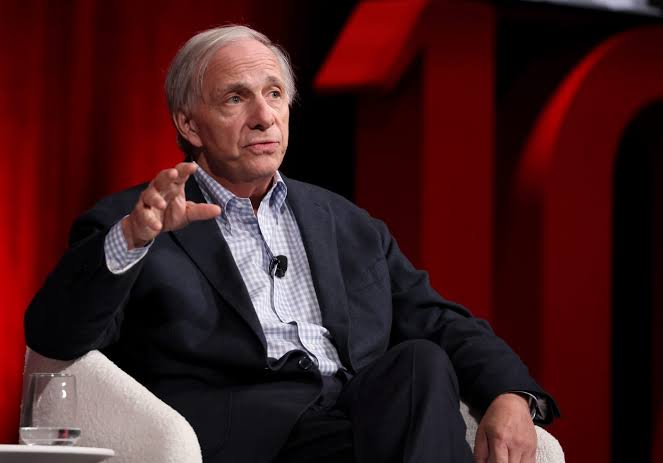
Ray Dalio Questions Bitcoin’s Safe Haven Status and Rejects Comparisons With Gold

Billionaire investor and founder of Bridgewater Associates, Ray Dalio, has again expressed skepticism about Bitcoin. This time he challenged the idea that the digital asset should be viewed in the same way as Gold, arguing that Bitcoin does not function as a true safe haven.

During an interview on the All-In Podcast, Dalio said that Bitcoin has not demonstrated the same safe haven qualities historically associated with gold. He acknowledged that the cryptocurrency has gained significant attention as a potential form of money but warned that it still faces several long term risks. His remarks come as global financial markets respond to geopolitical tensions linked to the ongoing tensions between the United States and Iran.

Dalio Explains Key Differences Between Bitcoin and Gold

Dalio emphasized that there are fundamental differences between Bitcoin and gold that influence how institutions view the two assets. One major issue he pointed out is the lack of privacy in Bitcoin transactions. Because activity on the blockchain can be monitored and potentially influenced by external parties, Dalio believes central banks and large financial institutions may be hesitant to hold the cryptocurrency.

In contrast, institutions have continued to accumulate gold because it is widely recognized as a reliable store of value and a hedge against inflation. Dalio stressed that gold is not merely a speculative asset as many people assume. Instead, he described it as one of the most established forms of money and noted that it ranks as the second largest reserve asset held by central banks around the world.

He also pointed out that gold does not face some of the technological risks associated with Bitcoin. Dalio referenced concerns about the potential impact of advances in quantum computing on the Bitcoin network. Although Bitcoin has attracted growing attention, particularly from individual investors who see it as an alternative form of money, Dalio argued that its market remains relatively small and more concentrated compared with the global gold market.

Dalio’s position reflects the complicated relationship he has had with Bitcoin over the years. He was once strongly critical of the cryptocurrency but later softened his stance around 2021 and gained some exposure to it. Even so, he continues to view gold as the superior financial asset and believes Bitcoin does not yet measure up to it.

Market Performance During the US Iran Tensions

Despite Dalio’s criticism of Bitcoin’s safe haven reputation, the cryptocurrency has held up relatively well since tensions escalated between the United States and Iran. On March 3, the day Dalio made his remarks, gold declined by about six percent during trading hours, falling from 5,377 dollars to 5,039 dollars according to data from TradingView. Over the same period, Bitcoin dropped by about 3.7 percent.

The price movements of the two assets on that day raise questions about Dalio’s argument because gold experienced a larger decline during a crisis that investors typically expect it to protect against.#cryptonews https://t.me/coinsignalpublic https://coinsignals.net

Kraken Becomes the First Crypto Firm to Obtain a Federal Reserve Master Account and Why It Is Important

Kraken has secured a limited purpose master account from the Federal Reserve, marking a major step for the cryptocurrency sector and strengthening its integration with traditional financial systems.

The digital asset industry has reached an important infrastructure milestone that pushes it closer to mainstream adoption and greater alignment with conventional finance.

Kraken’s banking division, Kraken Financial, has been granted access to a limited purpose master account by the United States Federal Reserve Bank of Kansas City. Although the account comes with certain restrictions, the approval represents a meaningful change in how crypto companies interact with the traditional financial system.

For many years, cryptocurrency firms have struggled to obtain stable banking relationships, whether due to regulatory pressure or initiatives like Operation Chokepoint 2.0. With this new development, Kraken now has a direct connection to the core infrastructure used to move US dollars.

What Is a Federal Reserve Master Account

A Federal Reserve master account is essentially the central bank account used by eligible financial institutions in the United States. Every bank that participates in the national payment system holds one. These accounts allow institutions to settle transactions directly through the Federal Reserve, access the Fedwire interbank payment network, and maintain balances with the central bank that support settlement and payment operations.

In simple terms, the account enables financial institutions to transfer money securely across the financial system. Until now, no cryptocurrency related company had been granted direct access to this infrastructure.

Why This Development Is Significant

At first glance, this may seem surprising because one of the main promises of cryptocurrency is to remove intermediaries. However, most crypto businesses, including exchanges, still depend on traditional banks to process fiat currency.

Typically, the process works as follows. A user deposits US dollars into a partner bank. The bank sends the funds through the Federal Reserve’s payment network. The exchange then credits the user’s trading account.

This process introduces several friction points including counterparty risk, operational delays, and the possibility of accounts being suddenly closed.

With its newly approved master account, Kraken Financial can connect directly to the Federal Reserve’s payment infrastructure without relying on those intermediaries. This allows for direct settlement, faster movement of fiat currency, reduced counterparty risk, and stronger institutional credibility.

There is an important limitation, however. The account granted to Kraken is classified as limited purpose. It is not fully equivalent to the master accounts held by commercial banks. As a result, Kraken cannot earn interest on reserves held at the Federal Reserve and does not have access to the Federal Reserve’s lending facilities.

The development also comes at a time when United States President Donald Trump criticized traditional banks and financial institutions for actions he believes threaten the progress of the Genius Act and the CLARITY Act.

Trump stated that the Genius Act is being undermined by banks and emphasized that this situation is unacceptable. He also argued that the United States needs to finalize market structure reforms quickly so Americans can generate more returns on their money.

What This Means for the Crypto Industry

Although the approval currently applies only to Kraken, it sets an important precedent that could shape the future of the cryptocurrency sector.

Direct access to the Federal Reserve’s payment system effectively connects a crypto company to the same financial infrastructure used by the global banking system. Over time, the industry has become increasingly institutionalized through developments such as the approval of exchange traded funds, the rise of digital asset treasury companies, and broader participation from traditional financial institutions.

Kraken’s master account with the Federal Reserve may not appear dramatic at first glance, but it sends a strong signal that major players in finance are gradually moving crypto closer to the center of the global financial system.#cryptonews https://t.me/coinsignalpublic https://coinsignals.net

Bitcoin Approaches 70k Dollars Again While Ethereum Tests 2K

Bitcoin experienced another volatile 24 hour stretch, briefly falling below 66200 dollars before rebounding and moving back toward the 70000 dollar level.

Most alternative cryptocurrencies are also slightly higher on the day. Ethereum is hovering around 2000 dollars, BNB is trading near 640 dollars, and Solana has gained more than 2 percent.

Bitcoin Moves Toward 70000 Once More

Last Thursday, Bitcoin climbed to 70000 dollars for the first time in more than a week but quickly faced selling pressure and turned lower. By Friday it was trading near 68000 dollars before sliding under 65000. A modest recovery to 66000 followed on Saturday morning, yet renewed tensions in the Middle East pushed the price down to 63000.

Instead of extending losses as geopolitical uncertainty intensified, Bitcoin rebounded strongly to above 68000 after reports surfaced that Iran’s Supreme Leader had been killed. The rally stalled, however, and the price slipped back to 65000 by Monday.

A sudden surge then lifted the asset past 70000 within minutes, an uncommon hourly move. That breakout was rejected, sending Bitcoin back to 66200. Continued swings have since carried it close to 70000 again, although some analysts warn that significant resistance remains ahead.

Bitcoin’s market capitalization has risen to nearly 1.4 trillion dollars, and its dominance over alternative coins has increased to 57 percent, according to CoinGecko.

Ethereum Tests 2000 as XDC Leads Gainers

Among larger cryptocurrencies, most gains have been more moderate compared with Bitcoin. Ethereum has climbed slightly above 2000 dollars. BNB is holding around 640 dollars and maintains a higher market capitalization ranking than XRP. Solana and Bitcoin Cash are both up about 2 percent. Meanwhile, Dogecoin, Cardano, Hedera, and Celsius have posted daily declines between 1 and 3 percent.

Aave has recorded the largest drop among major tokens, falling 6 percent to 113 dollars. In contrast, XDC Network has surged 9 percent to trade near 0.035 dollars, with Internet Computer and Jupiter also posting strong gains.

The total cryptocurrency market capitalization has added nearly 100 billion dollars since yesterday’s low and now stands at approximately 2.44 trillion dollars, based on data from CoinGecko.#cryptonews https://t.me/coinsignalpublic https://coinsignals.net
Market Turmoil: Why KOSPI Has Plunged 12 Percent

South Korea’s main stock index suffered a dramatic selloff in its latest trading session, falling more than 12 percent. The sharp decline marks a major escalation in recent volatility and comes as geopolitical tensions tied to the conflict in Iran continue to unsettle global markets.

Steepest Drop Since 2008

As of Wednesday, KOSPI was down over 12 percent, after losing another 7 percent in the previous session. The combined losses represent the index’s worst stretch since the 2008 global financial crisis.

Both KOSDAQ and KOSPI triggered emergency circuit breakers on the Korea Exchange, leading to 20 minute trading suspensions.

Speaking to CNBC, Lorraine Tan, Asia director of equity research at Morningstar, said the downturn can largely be traced to the heavy concentration of individual stocks within the Korean market. She explained that the selloff appears to reflect profit taking after a strong rally, combined with a broader shift toward risk aversion. Tan also noted rising concerns that the pace of artificial intelligence data center expansion could slow because of their significantly higher energy requirements compared with traditional facilities.

Analysts have further emphasized that South Korea’s economy is particularly sensitive to oil price movements, which adds to its vulnerability during periods of instability in the Middle East.

Broader Market Pressure

Equity markets elsewhere in Asia are also feeling the strain. Japan’s primary index, the Nikkei 225, has fallen more than 5 percent over the past two days.

In contrast, US markets have shown signs of stabilization following official statements from involved parties aimed at calming tensions.

Cryptocurrency markets have remained relatively steady. Bitcoin has gained about 0.6 percent in the past 24 hours, while most alternative coins are trading within a narrow range between losses of 1 percent and gains of 1 percent. According to CoinMarketCap, total crypto market capitalization stands near 2.3 trillion dollars, reflecting a modest decline of 0.1 percent on the day.#cryptonews https://t.me/coinsignalpublic https://coinsignals.net

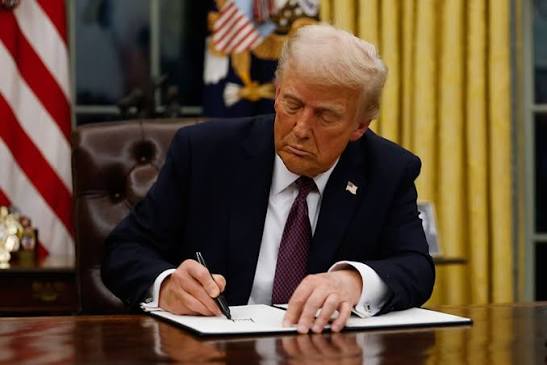
Donald Trump Criticizes Banks and Calls for Passage of CLARITY Act

President Donald Trump has accused major banks of working to weaken the GENIUS Act and blocking progress on the CLARITY Act in order to safeguard their profits. His comments place him squarely in the middle of the growing debate over whether crypto platforms should be allowed to offer yield style rewards on stablecoins.

The dispute centers on concerns from traditional lenders that allowing such rewards could drive customers away from conventional deposit accounts.

Trump Responds to Banking Opposition

In a post on Truth Social, Trump described the situation as a threat to American financial innovation. He argued that the GENIUS Act was being undermined by banks and insisted that market structure legislation must be finalized quickly so Americans can earn more on their savings.

The GENIUS Act, enacted in July 2025, established the first federal regulatory framework for stablecoins but prohibited issuers from paying interest directly to token holders. However, it did not clearly address whether third party platforms such as Coinbase could share yield with users.

Banking groups have pushed lawmakers to close what they see as a gap through the CLARITY Act, a broader bill designed to define regulatory oversight for digital assets. Their lobbying created friction with parts of the crypto sector. In January, Coinbase chief executive Brian Armstrong withdrew support for the legislation ahead of a Senate markup, citing proposed changes that would block passive yield on stablecoins.

The White House set a March 1 deadline for stakeholders to reach an agreement, though no public compromise had been announced by that date. Trump urged banks to reach a deal with the crypto industry, saying cooperation would serve the best interests of the American public.

Earlier this year, Geoff Kendrick, global head of crypto research at Standard Chartered, warned that stablecoins could draw as much as 500 billion dollars in deposits away from banks by 2028, with regional lenders in the United States particularly vulnerable.

Crypto Leaders Applaud While Critics Push Back

Trump’s comments were welcomed by several figures in the digital asset industry. Brad Garlinghouse, chief executive of Ripple, described the remarks as a clear message about protecting the interests of Americans.

Senator Cynthia Lummis called on Congress to act swiftly to pass the measure. Eric Trump, who co founded World Liberty Financial, accused major banks of panicking over the prospect of losing ground in digital finance.

Not everyone in the crypto space agrees. Charles Hoskinson, founder of Cardano, criticized the proposal harshly, arguing that its regulatory structure would automatically classify new projects under Securities and Exchange Commission oversight and push innovation abroad. He warned that while established tokens might be protected, future American crypto ventures could struggle under the framework.

His position contrasts with Garlinghouse’s view that regulatory clarity is preferable to continued uncertainty and that the industry must prioritize progress over perfection.#cryptonews https://t.me/coinsignalpublic https://coinsignals.net

Why Has Bitcoin Fallen 50 Percent Despite Rising Global Liquidity

Bitcoin has dropped 50 percent from its all time high within four months, even as global liquidity has expanded. The move challenges the widely held belief that Bitcoin’s price closely tracks overall liquidity conditions.

Chris Tipper, chief economist and strategist at the Ainslie Group, described the disconnect as striking and in need of explanation. According to data from Ainslie Wealth, global liquidity has risen by roughly 5 trillion dollars since Bitcoin peaked in October and now stands near 190 trillion dollars.

Tipper noted that much of this increase has come from the People’s Bank of China, which injected about 1 trillion dollars in 2025 and is expected to add a similar amount this year.

Chinese Liquidity Flows Into Gold Instead of Bitcoin

Because Bitcoin remains banned in China, that liquidity does not flow into the cryptocurrency. Instead, it is directed toward gold reserves, domestic infrastructure projects, and the broader real economy.

Tipper argued that when the Chinese contribution is excluded and only Western liquidity is considered, the picture changes significantly. Western liquidity momentum peaked in October and has slowed since then, which aligns more closely with Bitcoin’s price correction.

Gold markets reacted differently. The precious metal reached record highs in late January and is currently trading about 5 percent below that peak. In Tipper’s view, the divergence between gold and Bitcoin can be explained by this split in liquidity flows.

He suggested that if Western liquidity begins to accelerate again, whether due to action from the Federal Reserve in response to market stress, a weakening dollar, or another disruptive event that prompts intervention, Bitcoin could have substantial room to rebound.

Bill Barhydt, chief executive of Abra and chairman of Algorand, pointed to the US Dollar Index as a rough indicator of Western liquidity conditions. The index has rebounded in recent days following escalating military strikes in Iran. After falling to 97.5 in late February, it climbed to 99.6 on Tuesday, according to TradingView. A stronger dollar typically puts pressure on Bitcoin and other risk assets.

Bitcoin Price Outlook

Bitcoin slipped below 67,000 dollars during late trading on Tuesday before recovering to around 68,500 dollars by Wednesday morning in Asia.

The asset continues to face strong resistance near the 70,000 dollar level. A sustained move higher may depend on an improvement in Western liquidity conditions, potentially through interest rate cuts or renewed monetary expansion from the Federal Reserve.#cryptonews https://t.me/coinsignalpublic https://coinsignals.net