
Bybit Recovers 300 Million Dollars for Users With AI Driven Fraud Prevention

Bybit says it helped recover 300 million dollars for thousands of users as crypto related fraud continued to surge across the industry. The exchange credited the results to its artificial intelligence powered fraud detection system, which is designed to step in before customers lose their funds.

Security Initiative Delivers Results

Sharing findings from its 2025 Security Initiative, Bybit stated that it intercepted 300 million dollars in impersonation scams and other fraudulent activity using a newly deployed AI based risk framework.

The announcement comes as digital asset crime remains a major concern. Data from Chainalysis shows that 17 billion dollars in crypto was lost to scams and fraud schemes in 2025.

According to the exchange’s report, 500 million dollars in withdrawals were flagged for review during the fourth quarter alone. Of that total, 300 million dollars was successfully intercepted and returned, safeguarding the funds of more than 4,000 users.

Over the same period, Bybit’s in house AI systems detected 350 high risk investment scam addresses using on chain analytics, protecting 8,000 individuals from potential withdrawal losses. The company also blocked more than 3 million credential stuffing attempts connected to account takeover schemes throughout 2025.

In addition, the platform automatically marked 350 suspicious wallet addresses and manually tagged another 600 through internal investigations. These actions prevented an estimated 1 million dollars in imminent fraud losses.

David Zong, Head of Group Risk Control at Bybit, said the firm aimed in 2025 to turn risk management into an active and intelligent safeguard by combining artificial intelligence with blockchain monitoring tools.

He explained that integrating AI driven on chain tracking with intelligence from partners such as TRM Labs, Elliptic, and Chainalysis not only protected Bybit customers but also helped identify patterns within fraudulent networks.

Three Tier Risk Protection Model

Bybit organizes potential scam threats into three escalating levels while maintaining smooth trading for legitimate users.

At the lowest risk level, the platform relies on large scale data analysis to spot unusual behavior, such as bulk withdrawals to newly created addresses. Automated surveys then assist the Risk Operations team in deciding whether to blacklist suspicious destinations.

For medium risk cases, real time alerts are triggered during withdrawal attempts. These may involve accounts flagged in credential stuffing databases or linked to questionable wallet addresses, prompting users to review transactions that could be influenced by social engineering.

At the highest risk level, wallet addresses tied to confirmed scams face immediate withdrawal suspension along with a mandatory one hour cooling off period.

The report concluded by outlining broader monitoring standards that could benefit the wider industry. These include an anti credential stuffing engine, real time AI pattern recognition to detect pig butchering schemes, an intelligence hub integrating tools from TRM Labs, Elliptic, and Chainalysis, and a cross chain tracing framework for tracking illicit funds from start to finish.#cryptonews https://t.me/coinsignalpublic https://coinsignals.net
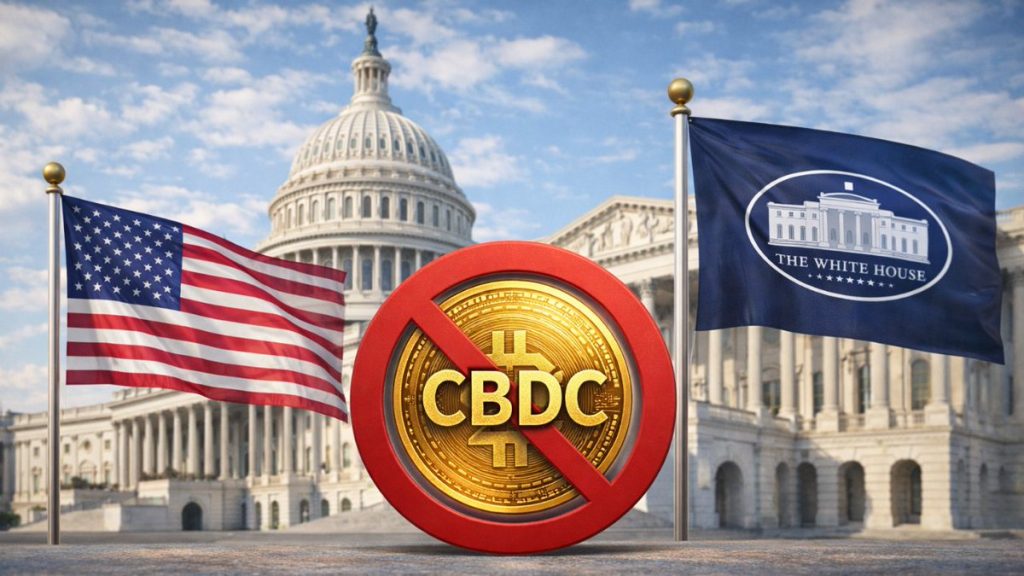

United States Senate Advances Housing Reform Bill That Includes CBDC Ban

The United States Senate has moved forward with the 21st Century ROAD to Housing Act, a wide ranging measure that combines housing policy reforms with restrictions on central bank digital currencies. The legislation cleared a key procedural vote by a margin of 84 to 6, reflecting strong bipartisan backing for changes to both housing and digital money policy.

According to Burgess Everett, congressional bureau chief at Semafor, the lopsided vote is a rare show of unity in today’s political climate.

Housing Expansion Effort Paired With Digital Currency Limits

In addition to its provisions on digital assets, the bill seeks to address housing shortages across the country. Lawmakers aim to reduce regulatory delays, increase the supply of homes, and limit the growing influence of large institutional investors in the single family rental market. The proposal also looks to streamline financing and development processes nationwide to make housing more affordable and accessible.

Supporters argue that the broad support for the measure reflects a shared urgency to tackle rising housing costs.

A key element of the legislation is its restriction on central bank digital currencies. The bill would prohibit the Federal Reserve from issuing a digital dollar through 2030. The ban would apply to any such currency created directly by the central bank or distributed through financial intermediaries.

The provision was added after House conservatives called for stricter limits on digital asset initiatives during negotiations. Rather than advancing separate crypto legislation, lawmakers incorporated the restriction into the broader housing package.

Officials at the Federal Reserve have previously stated that any move toward a central bank digital currency would remain in the research phase and require congressional approval before implementation. Even so, the inclusion of the ban has reignited debate over privacy, payment systems, and regulatory oversight in the United States.

The White House Backs the Bill Amid Ongoing Debate

The White House has expressed support for the measure, indicating that President Trump’s advisers would recommend that he sign the bill if it reaches his desk. The endorsement highlights the unusual cross party alignment behind the proposal, even though many Democrats have opposed placing limits on Federal Reserve research into digital currencies.

Before becoming law, the legislation must still clear additional procedural steps, including reconciliation with the House version. It remains uncertain whether the digital currency restriction will remain intact in the final draft, leaving the crypto sector closely monitoring developments. #cryptonews https://t.me/coinsignalpublic https://coinsignals.net

XRP Open Interest Drops to Yearly Low as Traders Weigh Impact on Price

Open interest in XRP futures has fallen sharply, declining 70 percent from its peak five months ago to reach 203 million dollars on March 3, 2026. The pullback brings positioning back to levels last seen in April 2025, just before the token staged a strong upward move.

The contraction in outstanding futures contracts has prompted debate about whether the market is clearing out excessive leverage once again.

Open Interest Decline Reflects April 2025 Pattern

According to data shared by market analyst Amr Taha, XRP’s combined open interest slid from 660 million dollars in October 2025 to 203 million dollars this week.

Binance, the largest marketplace for XRP derivatives, recorded open interest below 270 million dollars, a level last observed on April 8, 2025. Activity has also slowed on smaller exchanges. Bitfinex now holds roughly 4.3 million dollars in XRP open contracts, while BitMEX accounts for about 3 million dollars.

Taha noted that similar periods in the past have often coincided with local price bottoms, as leveraged positions were forced out and market conditions reset.

Open interest measures the total number of active futures and perpetual contracts that remain unsettled. When it drops alongside falling prices, it typically indicates that traders are closing positions voluntarily or being liquidated as margin pressure builds. Taha said the current environment suggests a wave of forced liquidations combined with traders exiting positions rather than fresh speculative buying.

Market Stress and Exchange Inflows Add Pressure

The derivatives reset comes amid heightened geopolitical uncertainty. On March 2, analyst Darkfost reported that 472 million XRP, valued at about 652 million dollars, moved onto Binance following military strikes by the United States and Israel on Iran.

Large transfers to exchanges can point to potential selling activity, increasing downward pressure on spot prices. During the weekend volatility, XRP fell from 1.43 dollars to 1.27 dollars. The decline allowed BNB to overtake it once more as the fourth largest cryptocurrency by market capitalization.

Volatility Climbs as Price Weakens

Separate figures highlighted by Arab Chain on March 2 show XRP’s 30 day realized volatility on Binance climbing to 1.16, the highest reading since March 2025.

Realized volatility reflects the annualized standard deviation of daily returns over a 30 day window. A level of 1.16 signals that daily price movements have expanded significantly compared with recent months.

At the time of writing, XRP was trading near 1.35 dollars, down almost 2 percent over the past 24 hours. The token has fallen roughly 17 percent in the last month and about 50 percent over the past year. It also remains 63 percent below its record high of 3.65 dollars reached in July 2025.

Despite the weakness, there may be reason for cautious optimism. Taha observed that the April 2025 drop in Binance open interest aligned with a major bottom near 1.80 dollars, which was followed by a powerful rally that eventually carried XRP to its latest all time high.#cryptonews https://t.me/coinsignalpublic https://coinsignals.net

U.S. Court Dismisses Long Running Scam Token Lawsuit Against Uniswap Labs

A federal court in the United States has thrown out a class action lawsuit that accused Uniswap Labs of enabling the trading of fraudulent tokens on its decentralized platform. The case, which lasted more than four years, was dismissed with prejudice.

In a filing with the U.S. District Court for the Southern District of New York, Judge Katherine Polk Failla explained that the plaintiffs did not sufficiently demonstrate that the defendants were aware of the alleged fraud. She also found that the complaint failed to show that Uniswap Labs and its founder, Hayden Adams, knowingly assisted or played a meaningful role in carrying out the scam.

Uniswap Prevails in Class Action Case

When the lawsuit was first filed in April 2022 and later amended in September 2022, the plaintiffs raised 14 claims against Uniswap, Adams, and other parties. They argued that the defendants should be held responsible for scam tokens created and traded through the Uniswap protocol.

Their reasoning centered on the fact that the individuals behind the fraudulent tokens were unidentified. The plaintiffs claimed that Uniswap operated as a marketplace for these assets and earned transaction fees from their trading activity. They further alleged that by creating smart contracts tied to the protocol’s native token UNI, the defendants effectively acted as unregistered broker dealers.

In August 2023, the court dismissed the first amended complaint, stating that it did not present a valid claim under federal securities laws. Judge Failla said the effort to hold the defendants accountable for investor losses was not persuasive. Although the plaintiffs appealed, the appellate court upheld much of the lower court’s ruling in February 2025 and allowed the plaintiffs another opportunity to revise their complaint.

Court Finds No Plausible Claims

The second amended complaint, filed in May 2025, shifted its focus to alleged violations of state law. By that stage, all other defendants had been dismissed except Uniswap and Adams. In July, the remaining defendants moved to dismiss the case under the Federal Rules of Civil Procedure.

In her final ruling, Judge Failla stated that even after three attempts, the plaintiffs had not presented credible claims against Uniswap. She noted that even if the defendants had known about the fraudulent conduct, the complaint still failed to show that they provided substantial assistance to the alleged scammers.

Following the decision, Adams described the outcome as a good and sensible result.#cryptonews https://t.me/coinsignalpublic https://coinsignals.net

NEAR Surges 15% in a Day as Bitcoin Falls Below 67,000 Dollars

NEAR led daily gains with a remarkable 15 percent jump, reaching 1.37 dollars, while MORPHO and ENA also posted strong increases. M was the worst performer, losing about 9 percent.

Bitcoin experienced extreme volatility on Monday. The asset briefly reached a multi‑week high of just over 70,000 dollars before encountering resistance and dropping approximately 3,000 dollars. Larger-cap altcoins mirrored this movement but largely ended the day near their previous levels. HYPE rose by nearly 5 percent to around 32 dollars, while XMR faced notable losses.

Bitcoin Faces Repeated Resistance at 70,000

The volatility began Saturday morning when the United States and Israel launched multiple strikes against Iran, causing Bitcoin to fall from 67,000 dollars to 63,000 dollars. Although Iran responded with regional attacks, Bitcoin quickly recovered to just above 68,000 dollars following reports of Iran’s Supreme Leader’s death.

After legacy financial markets opened, Bitcoin dipped further but stayed above 65,000 dollars. Then, in under an hour, it surged approximately 5,000 dollars from 65,200 to a high of 70,150 dollars on Bitstamp. The rally occurred ahead of former President Trump’s speech on the Iranian situation, in which he stated the U.S. maintained control but cautioned that the conflict could continue for weeks. Bitcoin encountered resistance once again at 70,000 dollars, retraced to 68,500 dollars, and has recently dropped below 66,500 dollars. Its market capitalization now sits at 1.33 trillion dollars, with a dominance of 56.4 percent over altcoins according to CoinGecko.

Altcoins Show Mixed Performance

Ethereum surpassed 2,000 dollars yesterday but could not hold the level and currently trades near 1,950 dollars. BNB approached 650 dollars but failed to break through, while XRP declined from 1.45 to 1.35 dollars. Among larger-cap altcoins, ADA, XMR, DOGE, HBAR, and XLM suffered the greatest losses. HYPE performed strongly, gaining nearly 5 percent.

The overall cryptocurrency market capitalization has dropped by almost 100 billion dollars since yesterday, now totaling approximately 2.36 trillion dollars.

NEAR clearly emerged as the top performer, with MORPHO and ENA following, while M lagged behind.

Wall Street Connects With XRPL as Ripple Expands Through DTCC Integration

A notable development linking traditional finance and blockchain infrastructure has emerged after the Depository Trust and Clearing Corporation added Hidden Road Partners CIV US LLC to its NSCC Market Participant Identifiers directory.

The update, effective March 2, 2026, enables Ripple Prime to channel institutional post trade activity directly onto the XRP Ledger. The move represents a significant step in connecting established clearing systems with blockchain based settlement.

XRPL Extends Its Reach Into Traditional Finance

According to a DTCC notice issued on February 27, 2026, the change forms part of broader participant updates covering insurance processing as well as OTC, corporate, municipal, and unit investment trust products.

Hidden Road is now listed under clearing broker code 0443 with executing broker designation HRFI and is authorized specifically for OTC transactions. This inclusion opens the door for Ripple Prime to merge conventional clearing infrastructure with settlement on the XRP Ledger.

Through this setup, Ripple Prime can combine the NSCC’s centralized clearing, risk management, and settlement capabilities with the speed and low cost structure of the XRPL. The integration has the potential to shorten settlement cycles and enhance capital efficiency within a financial system that processes more than two quadrillion dollars in transactions each year.

Ripple strengthened its institutional strategy in April 2025 by acquiring Hidden Road for 1.25 billion dollars, one of the largest deals in the history of digital assets. The firm was rebranded as Ripple Prime in October 2025 and now operates as a multi asset prime brokerage offering clearing, financing, and OTC spot trading services for XRP and the RLUSD stablecoin.

Before the acquisition, Hidden Road handled roughly 3 trillion dollars in annual clearing volume for more than 300 institutional clients across foreign exchange, derivatives, and digital assets. Ripple has stated plans to transition post trade processes onto the XRP Ledger and use RLUSD as collateral to improve cross margining between traditional markets and crypto markets.

Industry Reaction and Broader Updates

Ripple chief technology officer emeritus David Schwartz commented on social media that the development appears significant, highlighting its potential implications for wider adoption of the XRP Ledger. Market observers believe the integration could improve settlement efficiency and expand institutional access while embedding blockchain technology more deeply into United States financial infrastructure.

The DTCC notice also referenced additional participant changes. Summit Wealth Group is set to join insurance processing on March 9, 2026, while U.S. Securities International Corp. has shifted its clearing broker relationship. At the same time, firms such as Azzad Funds and Bain Capital Private Credit have exited, with clearing responsibilities reassigned to maintain operational continuity.

Charles Hoskinson Calls CLARITY Act a Dangerous Bill for Crypto Innovation

Cardano founder Charles Hoskinson has sharply criticized the CLARITY Act, describing the proposed United States crypto market structure legislation as deeply flawed. He warned that the bill would treat most new digital assets as securities by default and grant the Securities and Exchange Commission sweeping authority that could hinder the industry for years.

His remarks highlight an increasing divide within the crypto sector as lawmakers attempt to finalize regulatory rules ahead of the upcoming midterm election cycle.

Concerns Over Security by Default Framework

During a March 3 broadcast on YouTube, Hoskinson delivered a detailed critique of H.R. 3633, formally known as the Digital Asset Market Clarity Act of 2025. He argued that the proposal creates what he sees as a regulatory trap by automatically categorizing newly launched tokens as investment contract assets under SEC oversight.

According to Hoskinson, this framework would have applied to projects such as XRP and Ethereum at their inception and would similarly affect any future blockchain protocol launched in the United States. He contended that transitioning from security status to classification as a digital commodity under the Commodity Futures Trading Commission would involve complex and potentially prohibitive regulatory hurdles.

Hoskinson identified several areas where, in his view, the SEC could use its rulemaking authority to keep projects classified as securities indefinitely. These include subjective measures of decentralization and value attribution standards that he believes would be difficult to satisfy. He argued that the bill does not adequately reflect the current realities of the crypto industry.

Although established networks like Cardano and XRP might receive exemptions under transitional provisions, Hoskinson warned that future American crypto startups could be forced to launch abroad to avoid regulatory uncertainty, which he said would damage domestic innovation.

Industry Divisions and Legislative Gridlock

The CLARITY Act passed the House of Representatives in 2025 but has stalled in the Senate. A March 1 deadline set by the White House for stakeholders to resolve differences expired without a publicly announced agreement.

While Hoskinson’s objections focus on structural elements of the bill, he noted that one of the primary sticking points in Washington involves stablecoin reward mechanisms. Banking industry representatives have argued that certain provisions could encourage deposit outflows from traditional financial institutions.

The debate has exposed divisions within the crypto industry. Ripple chief executive Brad Garlinghouse has expressed optimism about the bill’s prospects and argued that regulatory clarity is preferable to continued uncertainty. Ripple chief technology officer David Schwartz also suggested that imperfect legislation may still be better than having no framework at all.

Hoskinson disagreed with that perspective, asserting that poorly designed legislation could codify regulatory approaches he believes were harmful to the industry under former SEC Chair Gary Gensler.

Analysts Point to Dramatic Market Reversal as Bitcoin Reclaims 70,000 Dollars

Bitcoin climbed back to the important 70,000 dollar psychological level, touching 70,125 dollars during late Monday trading on Coinbase, according to TradingView data. The asset encountered resistance similar to what was seen on February 25 and later eased to around 68,000 dollars during Tuesday morning trading in Asia.

Crypto analyst Bull Theory described the move as an insane reversal in market conditions. Just a day earlier, extreme fear and panic dominated sentiment when United States futures opened on Sunday night. Since then, both stock and crypto markets have staged a strong recovery.

The analyst argued that markets are less troubled by negative headlines than by uncertainty. According to this view, the reported death of Iran’s Supreme Leader Ayatollah Ali Khamenei did not create fresh chaos but instead reduced ambiguity, allowing markets to quickly reprice risk.

Bitcoin Defies Traditional Risk Off Expectations

Macro commentary platform Milk Road noted that conventional risk off strategies would suggest Bitcoin should be falling under current geopolitical stress. However, if Bitcoin continues to diverge from traditional risk assets during prolonged tensions, it could strengthen its narrative as digital gold.

Fundstrat’s Tom Lee also expressed optimism, stating that despite war related concerns, he expects equities to finish March higher.

Analyst CrediBull Crypto compared the current setup to 2022 when Russia invaded Ukraine. He pointed out that the invasion coincided with a local market bottom after months of decline, followed by a one month rally of roughly 40 percent before prices resumed their broader downtrend. He emphasized that panic selling during such events often leads investors to exit at local lows.

On chain data appears to support a calmer outlook. CryptoQuant analyst Moreno observed that selling pressure from recent buyers is easing. Despite escalating geopolitical tensions involving Iran, data shows no significant increase in exchange inflows from short term holders. There has been no major wave of profit taking or capitulation from this typically reactive group.

Santiment reported a sharp rise in positive social sentiment as Bitcoin threatened to dip below 65,000 dollars, suggesting that market participants quickly shifted from fear to optimism. However, discussions remain heavily focused on the conflict involving Iran, Israel, and the United States, indicating that volatility could persist as new developments emerge.

Broader Crypto Market Outlook

Total cryptocurrency market capitalization has increased by 2.6 percent, reaching approximately 2.42 trillion dollars. Bitcoin has driven much of the advance, while Ether has reclaimed the 2,000 dollar level and is trading slightly above it. Gains among other altcoins have been relatively modest compared to the two largest digital assets.

$1 Billion Returns to Crypto Funds, Ending a Five-Week, $4 Billion Outflow Run

Crypto investment products recorded about $1 billion in net inflows over the past week, halting a sequence of five straight weeks that saw roughly $4 billion leave the market, according to the latest digital asset fund flow report from CoinShares. 

This rebound was not driven by any single macroeconomic event. Instead, analysts said that earlier price weakness, technical resets, and renewed accumulation from large Bitcoin holders helped reverse the trend.  Investors appear increasingly focused on finding entry points rather than reducing their exposure. 

Bitcoin Leads Inflows

Most of the capital returning to crypto products went into Bitcoin, with funds tied to the leading cryptocurrency drawing about $881 million last week. Ethereum also drew notable interest, bringing in approximately $117 million, its strongest weekly inflow since mid-January. Solana-based products added around $53.8 million, contributing to a solid year-to-date performance. Chainlink saw smaller gains, while short Bitcoin products saw minimal inflows. 

Regional Investment Trends

The majority of new investments came from the United States, which accounted for about $957 million of the total. Other regions including Canada, Germany, and Switzerland also saw positive capital flows, while smaller amounts entered funds in additional markets. 

Market Context

The inflow turnaround occurred amid broader market conditions marked by range-bound prices and ongoing geopolitical tensions, especially in relation to developments involving Iran. This environment has triggered some liquidation in leveraged positions but has not had a dramatic impact on overall investor positioning. 

Despite the recent rebound, both Bitcoin and Ethereum remain in net outflow territory for the year so far. Still, the return of fresh capital into crypto funds marks a notable shift from the extended outflow trend and suggests that institutional and large-scale participation is improving relative to recent weeks. 

Buterin Identifies Ethereum State Tree and Virtual Machine as Key Bottlenecks and Suggests Major Architectural Changes

Vitalik Buterin has outlined a series of execution layer upgrades that could significantly transform Ethereum’s underlying structure. The co founder of Ethereum argued that substantial changes to the network’s state tree and virtual machine are required to address what he considers the primary obstacles to efficient proof generation.

In a post on X, Buterin explained that the state tree and the virtual machine together create more than 80 percent of the limitations affecting proof efficiency. He described them as essential areas to target if Ethereum aims to support scalable client side proving and zero knowledge applications.

Proposed Changes to Ethereum Architecture

Buterin referenced EIP 7864, a proposal developed by Guillaume Ballet and others, which would replace Ethereum’s current hexary Keccak based Merkle Patricia Tree with a binary tree that uses a more efficient hashing approach. He stated that this adjustment could shorten Merkle branches by roughly four times, lowering bandwidth usage and significantly reducing the cost of verifying branches on the client side.

Such an improvement could cut data expenses for tools like Helios and private information retrieval systems by a factor of four. Proof generation efficiency might also increase by three to four times due to shorter branches alone. Buterin suggested that further gains could be achieved by moving to alternative hash functions such as BLAKE3, which is estimated to be three times more efficient than Keccak. A Poseidon based variant could potentially deliver improvements of up to one hundred times, although additional security analysis would be necessary.

The proposed binary structure would also organize storage slots into pages containing between 64 and 256 slots. This design would enable more efficient loading and modification of adjacent storage, potentially saving more than 10,000 gas per transaction for applications that access early storage slots. Buterin added that a prover friendly state tree would allow zero knowledge applications to integrate directly with Ethereum’s state rather than maintaining separate trees. It could also simplify the overall architecture and support metadata enhancements for future state expiry mechanisms.

In addition to the state tree redesign, Buterin proposed eventually transitioning from the Ethereum Virtual Machine to a RISC V based virtual machine. He characterized this shift as a longer term and non consensus goal, yet expressed strong confidence that it would become the logical next step once planned state upgrades are completed.

Transition Plan and Compatibility

According to Buterin, a RISC V based virtual machine would offer greater execution efficiency, improved compatibility with proof systems, and a simpler design. He noted that many existing proof systems are already built in RISC V and that a functional interpreter could be implemented in just a few hundred lines of code.

He outlined a gradual transition strategy. The new virtual machine would first be introduced for precompiles. Developers would then gain the ability to deploy contracts directly on it. Eventually, the existing Ethereum Virtual Machine would be phased into a compatibility layer implemented as a smart contract within the new framework.

Under this approach, users would maintain full backward compatibility aside from potential changes in gas costs. Buterin suggested that any such adjustments would likely be offset by broader scaling improvements over time.

This proposal follows closely on the heels of Buterin’s recently introduced roadmap for quantum resistance, which included plans to replace consensus layer BLS signatures with hash based alternatives such as Winternitz variants.