
coinsignals

Corporate Bitcoin Treasury Strategy Enters a New Phase as Some Firms Begin Selling Holdings

The corporate Bitcoin accumulation trend is no longer moving in one direction. After years of companies aggressively raising capital to build BTC reserves, a growing number are now reducing their holdings or reassessing their strategies, signalling a shift in the market.

Over the past two years, publicly traded firms embraced Bitcoin treasury strategies, positioning themselves as leveraged ways for investors to gain exposure to the cryptocurrency. As Bitcoin rallied, many of these companies saw their share prices trade well above the value of the BTC on their balance sheets, with some recording remarkable gains in a short period.

That momentum, however, appears to be changing.

Corporate Sellers Begin to Emerge

Strategy, the largest corporate Bitcoin holder and the company that popularised the treasury model, remains central to the conversation. The firm began accumulating Bitcoin around six years ago and accelerated its purchases following the US presidential election in late 2024. Investors became accustomed to weekly announcements of multi million and even billion dollar Bitcoin acquisitions.

The pattern shifted after Strategy recorded a small Bitcoin sale during the second quarter, followed by a much larger disposal of more than 3,500 BTC in early July. Since then, the company has paused additional purchases while rebuilding its US dollar reserves. Although it has not sold any further Bitcoin in recent weeks, analysts argue that its first sale marked a significant turning point, even if the company remains committed to its long term Bitcoin strategy.

Satsuma Technologies has taken a far more decisive step. The UK listed Bitcoin treasury company has received shareholder approval to sell its remaining 668 BTC, return most of the proceeds to investors, delist from the London Stock Exchange, and effectively wind down its Bitcoin treasury business. The company had already sold 579 BTC in December to raise approximately $50 million to meet convertible loan obligations.

Selling pressure has also increased among Bitcoin miners. Reports indicate that mining firms collectively sold a record 32,000 BTC during the first quarter of the year, adding further supply to the market.

Another notable development came from Twenty One Capital, where founder Jack Mallers stepped down as chief executive to focus on Strike. While his departure does not necessarily indicate that the company will liquidate its Bitcoin holdings, it raises questions about the firm’s future direction. Mallers cited major disagreements with the board, suggesting a broader restructuring as the company reassesses how it can generate value beyond simply holding Bitcoin.

Which Companies Could Be Next?

Metaplanet, often referred to as Asia’s version of Strategy, rapidly expanded its Bitcoin holdings over the past few years, transforming both its business and share price. However, the prolonged market downturn severely impacted the company, with its stock losing nearly 90% of its value at one stage.

The company paused Bitcoin purchases for several months before returning to the market with an acquisition of 2,823 BTC in early July. Since then, it has remained quiet, although there are currently no clear signs that it plans to reduce its holdings.

Smaller Bitcoin treasury companies may face greater challenges. Businesses trading below their net asset value, carrying high debt burdens, generating limited operating income, or facing shareholder pressure may find it increasingly difficult to maintain large Bitcoin reserves.

Nakamoto Inc. is one example. The company sold around 5% of its Bitcoin holdings in March before disposing of another 600 BTC in June, highlighting the financial pressures some treasury firms are beginning to face.

A New Chapter for Corporate Bitcoin Treasuries

The recent wave of sales does not necessarily signal the end of the corporate Bitcoin treasury model. Instead, it reflects the transition to a more demanding market environment where companies must balance cryptocurrency exposure with sustainable business operations.

The era in which every treasury announcement centred on another major Bitcoin purchase appears to be fading. Going forward, firms with strong operating businesses, healthy cash flow, and manageable debt are likely to be best positioned to maintain their Bitcoin strategies, while weaker companies may be forced to sell assets, restructure their finances, or rethink their approach altogether.#crypto#cryptonews https://coinsignals.net https://t.me/coinsignalpublic


Worldcoin Slides 10% Despite $52.5M Funding as Bitcoin Struggles to Hold $64k

The broader crypto market remains under pressure over the weekend, with Worldcoin posting the steepest losses despite announcing a fresh funding round. Bitcoin has also failed to regain momentum after slipping below the $64,000 mark, while most major altcoins continue to trade in negative territory.

Bitcoin Loses Momentum Below $64K

Although Bitcoin enjoyed a strong rally earlier in the week, its gains have largely faded. After falling to $63,750 on Monday, the leading cryptocurrency surged to a monthly high of $67,000 on Tuesday, driven by renewed spot ETF inflows and continued accumulation by large investors.

The rally, however, proved short lived. Bitcoin retreated to around $64,750 on Thursday before briefly recovering by roughly $1,000 on Friday morning.

Another rejection soon followed, continuing the pattern seen on recent Fridays. Selling pressure intensified after US President Donald Trump warned the European Union about the possibility of new tariffs, sending Bitcoin down by approximately $2,000.

Since then, the cryptocurrency has struggled to regain strength and was trading near $64,000 at the time of writing. Its market capitalisation has fallen to around $1.285 trillion, while its market dominance has edged higher to 56.3%.

Worldcoin Leads Market Decline

Worldcoin’s WLD token emerged as the biggest loser among major cryptocurrencies, dropping more than 10% to around $0.34. The decline came despite the project announcing a successful $52.5 million funding round aimed at expanding its World ID infrastructure.

Other notable underperformers included ONDO, which fell 7%, LIT with a 6.3% decline, and ZEC, which lost 6% as it slipped further below the $500 level.

Most large cap cryptocurrencies also posted modest losses. Ethereum dropped below $1,860, XRP traded beneath the key $1.10 support level, Solana declined to around $74, and HYPE slipped to $57.

Monero stood out as one of the few gainers on the day. The privacy focused cryptocurrency rose roughly 2.4%, lifting its price to around $365.

Overall, the cryptocurrency market shed approximately $20 billion in value over the past 24 hours, bringing the total market capitalisation down to about $2.28 trillion, according to CoinGecko.#crypto#cryptonews https://coinsignals.net https://t.me/coinsignalpublic

Ethereum Bear Market May Have Reached Its Bottom as Analyst Targets $7k

Some market watchers still believe a move toward $2,000 could be nothing more than a bull trap before Ethereum experiences one last decline.

Pseudonymous crypto analyst NoName believes Ethereum has entered the price range where previous bear markets have historically found their bottom. According to the trader, a sequence of four consecutive lower highs suggests the prolonged downtrend may finally be ending.

Despite the prevailing bearish sentiment, NoName has continued accumulating ETH during the downturn, maintaining a long term price target of $7,000. The analyst argues that the same market psychology that fuelled enthusiasm when Ethereum traded near $4,900 is now driving excessive pessimism below $2,000, even though the network itself has seen no fundamental deterioration.

Analyst Identifies Historical Bottom Zone

In a post published on Friday, NoName highlighted Ethereum’s steady decline through four lower peaks, beginning at $4,957, followed by $3,400, then $2,460, and most recently $1,950. The trader described this as a classic bearish structure, noting that the pattern has pushed ETH into the $1,300 to $1,900 range, which has historically served as a market floor.

Rather than relying solely on technical analysis, NoName emphasised investor psychology. The analyst pointed out that Ethereum was widely celebrated at nearly $5,000, yet many now dismiss it as a failed project below $2,000 despite little changing fundamentally. According to NoName, such extreme pessimism often appears near major market bottoms, although any recovery is likely to be gradual and volatile.

Additional bullish indicators emerged the same day. Analyst Ali Martinez highlighted a positive crossover between Ethereum’s MVRV ratio and its 160 day moving average, a signal that has preceded several significant recoveries by indicating the end of distribution phases.

Meanwhile, Arab Chain reported that Ethereum’s 30 day average funding rate on Binance climbed to approximately 0.00339, its highest level in six months, while ETH traded around $1,920. The increase points to improving market sentiment, although funding rates remain below levels that have previously signalled overheated conditions.

At the time of writing, CoinGecko data showed Ethereum trading just under $1,900. The cryptocurrency has gained nearly 12% over the past month but remains about 62% below its all time high of $4,946 reached last August. After retreating from a seven week high near $1,950 earlier in the week, ETH must reclaim the $2,000 level to strengthen bullish momentum.

Not All Analysts Agree

CryptoQuant offered a more cautious assessment on Thursday. While Ethereum was trading roughly 17% below its realised price, the analytics platform noted that only two of its five historical bottom indicators had reached extreme levels. According to the firm, a full capitulation event has yet to occur.

Even so, large investors have continued accumulating ETH. Blockchain tracker Lookonchain identified a wallet that acquired 27,000 ETH valued at approximately $52 million through Galaxy Digital’s OTC desk. Meanwhile, BitMEX co founder Arthur Hayes purchased another 644 ETH, increasing his total acquisitions over the previous eight days to 3,270 ETH.

Institutional demand has also remained strong. Spot Ethereum ETFs have attracted more than $408 million in inflows this month, while prediction market participants on Kalshi currently expect ETH to reach around $3,200 before the end of the year.

However, not every analyst shares NoName’s outlook. Market analyst Nonzee expects Ethereum to rally toward $2,000, or even $2,200 if Bitcoin climbs to $70,000, but believes that move would represent a bull trap rather than the start of a sustained breakout. The analyst still expects ETH to fall into the $900 to $1,300 range before beginning a longer term recovery. Even so, Nonzee’s ultimate price target also stands at $7,000.#crypto#cryptonews https://coinsignals.net https://t.me/coinsignalpublic

Has Bitcoin Already Reached Its Bottom? Grayscale Says Macro Trends Now Matter More Than Market Cycles

Grayscale believes Bitcoin may have already found its cycle low, arguing that macroeconomic conditions have become more influential than the traditional four year cycle.

The debate over Bitcoin’s current market phase remains divided between those who believe the cryptocurrency still follows its historical four year cycle and those who argue that the market has evolved beyond that framework.

Grayscale is among the firms supporting the latter view.

Macroeconomic Factors Take Center Stage

Supporters of the four year cycle theory argue that Bitcoin’s halving events continue to dictate long term price movements. Based on previous cycles, Bitcoin has typically bottomed about one year after reaching a market peak and roughly two and a half years after a halving, with average drawdowns of around 80%.

Using that historical pattern, some analysts believe Bitcoin could still fall further before finding its bottom in September or October.

Grayscale, however, argues that Bitcoin has matured into an asset class that increasingly responds to broader macroeconomic conditions rather than relying solely on its historical cycle.

The asset manager noted that previous bear markets coincided with slowing economic growth and rising real interest rates. It also pointed out that this year’s downturn has unfolded alongside changing expectations surrounding US Federal Reserve policy and persistently higher real yields.

According to Grayscale, Bitcoin could establish its market bottom once macroeconomic conditions begin to improve. The firm added that if the Federal Reserve avoids additional interest rate hikes while economic growth remains stable, Bitcoin may have already completed its decline, eliminating the need for another major leg lower despite what the traditional four year cycle would suggest.

More Analysts See Signs the Bottom Is Already In

Grayscale is not alone in questioning whether Bitcoin has already reached its lowest point.

Crypto trader Killa said Bitcoin’s current market structure suggests the bottom may already be in place, although he remains evenly split because the timing does not perfectly match previous cycles.

According to the trader, Bitcoin has already swept the previous low and completed the same five wave corrective structure observed during earlier bear markets. He acknowledged, however, that prior cycles typically lasted around 365 days before reaching their final bottom, while the current correction would have concluded in roughly 260 days.

Even so, Killa argued that assuming every market cycle must follow the same timeline is a mistake. Instead, he believes Bitcoin is more likely to continue forming higher lows than to set significantly lower ones.

Earlier this week, crypto analyst Ali Martinez highlighted that Bitcoin’s monthly chart is displaying the same combination of technical signals that appeared near the end of the 2015, 2019, and 2022 bear markets. Although Martinez noted that on chain indicators such as MVRV and CVDD still leave room for a decline toward the $40,000 to $50,000 range, he said the current setup has historically marked a favorable accumulation zone with an attractive risk to reward profile for long term investors.

Crypto analyst Doctor Profit echoed a similar view, warning that traders waiting for a textbook four year cycle bottom in September or October could miss the next major market move. While he acknowledged that Bitcoin could revisit the $54,000 area, he does not expect the asset to fall below $50,000 and believes the current price range already presents a compelling opportunity for gradual accumulation.#crypto#cryptonewshttps://coinsignals.net https://t.me/coinsignalpublic

Ethereum Eyes Another Rally as Bullish Indicator and Whale Buying Strengthen the Outlook

Ethereum’s latest technical structure has historically signaled the end of distribution phases, while large investors continue accumulating millions of dollars worth of ETH.

Ethereum has gained around 16% over the past month, and crypto analyst Ali Martinez believes the asset is approaching a technical milestone that has previously preceded significant price recoveries.

According to Martinez, Ethereum’s Market Value to Realized Value (MVRV) ratio is close to crossing above its 160 day simple moving average, a signal that has historically aligned with bullish market reversals.

Bullish Signals Continue to Build

The MVRV Momentum indicator tracks the relationship between investors’ unrealized profits and its medium term trend. Martinez explained that when the daily MVRV ratio rises above the 160 day moving average, it typically signals the end of capitulation and the beginning of a new accumulation phase.

This is the first time the indicator has approached such a crossover in 2026. Over the past three years, similar signals have consistently marked the conclusion of distribution periods before Ethereum entered strong recovery phases.

Meanwhile, whale activity continues to reinforce the optimistic outlook. Blockchain tracking platform Lookonchain reported that an anonymous investor acquired 27,000 ETH worth approximately $52.03 million through Galaxy Digital’s over the counter trading desk after remaining inactive for three months.

BitMEX co founder Arthur Hayes has also expanded his Ethereum holdings. According to BSCN, Hayes recently purchased an additional 644.34 ETH valued at roughly $1.25 million, bringing his total acquisitions over the past eight days to 3,270 ETH. The latest purchase follows an earlier $2.53 million Ethereum buy and comes alongside several other multimillion dollar ETH purchases and staking transactions reported this week.

Prediction markets also remain optimistic. Whale Insiders reported that traders on Kalshi expect Ethereum could climb to as high as $3,210 before the end of the year.

On chain data further supports the bullish case. Approximately one million ETH, valued at nearly $2 billion, has been withdrawn from centralized exchanges over the past month, reducing exchange balances to their lowest level in ten years. Lower exchange reserves are generally viewed as a positive sign because they reduce immediate selling pressure.

Institutional demand has also remained strong, with spot Ethereum exchange traded funds attracting more than $380 million in net inflows so far this month.

Not Every Analyst Expects an Immediate Breakout

Despite the growing number of bullish signals, some analysts remain cautious in the short term.

Crypto analyst Nonzee believes Ethereum may still stage one more rally before experiencing a larger correction. He expects ETH to retest $2,000, with a possible extension toward $2,200 if Bitcoin reaches $70,000. However, he views that move as a potential bull trap rather than the beginning of a sustained breakout.

Based on his market roadmap, Ethereum could spend between seven and ten days in a distribution phase before declining into a final bottoming range between $1,300 and $900, which he considers an attractive long term accumulation zone.

Even with his cautious near term outlook, Nonzee continues to project that Ethereum could eventually reach $7,000 over the longer term.#crypto#cryptonews https://coinsignals.net https://t.me/coinsignalpublic

Analyst Says AI Investment Boom Is Keeping Bitcoin Trapped Around $65k

Rising Treasury yields and a stronger US dollar continue to pressure Bitcoin as investors favor income generating assets over cryptocurrencies.

Bitcoin has struggled to establish momentum above the $65,000 level, and market analyst Wise Crypto believes the surge in artificial intelligence investment is one of the main reasons.

Although Bitcoin briefly climbed above $66,000 earlier this week, the rally quickly lost strength. According to Wise Crypto, capital is increasingly flowing into AI related companies instead of cryptocurrencies, while persistent inflation and elevated bond yields continue to weigh on risk assets.

Capital Continues to Favor AI

In a post on X, Wise Crypto pointed out that spot Bitcoin exchange traded funds have recorded seven consecutive days of net inflows totaling just under $1 billion. However, that figure remains modest compared with the $6.9 billion that exited the same funds during May and June.

At the same time, major technology companies are expected to spend between $190 billion and $205 billion on artificial intelligence infrastructure this year. Nvidia’s data center revenue has surged 92% compared with a year ago, while AI focused stocks have gained roughly 69% since January.

By comparison, Bitcoin has declined about 25% over the same period.

“Capital is flowing to AI, not crypto,” Wise Crypto wrote, adding that two year Treasury yields near 4.3% and ten year yields around 4.6% have strengthened the US dollar and reduced investor appetite for riskier assets.

At the time of writing, Bitcoin was trading near $65,400, down about 0.6% over the previous 24 hours after fluctuating between $65,300 and $66,300 during the day. Over the past week, BTC has traded within a range of approximately $62,500 to $66,900. Despite gaining nearly 5% over the past month, the cryptocurrency remains around 45% below its all time high of nearly $126,000 reached last October.

Wise Crypto believes Bitcoin will require lower inflation, declining bond yields, and stronger buying demand before it can decisively break out of the $60,000 to $70,000 trading range.

Another analyst, Ted Pillows, echoed that view in his latest market update, pointing to Brent crude trading near $94 per barrel following renewed US and Iran tensions, along with the ten year Treasury Inflation Protected Securities real yield reaching approximately 2.31%, its highest level since the pandemic. He argued that these factors continue to weigh on non yielding assets such as Bitcoin.

Rather than chasing another move toward $66,500, Ted Pillows said he would prefer to see the $64,000 support level hold before turning more optimistic.

Key Bitcoin Levels Remain in Focus

Analyst Michaël van de Poppe said Bitcoin has already entered its target buying zone and noted that remaining above the 21 day moving average keeps the door open for additional short term gains. He identified $68,000 as the next major resistance level, with a successful breakout potentially paving the way toward $73,000.

Meanwhile, Axel Adler highlighted that spot Bitcoin ETFs have attracted $439 million in inflows so far this week. He also observed that the Coinbase discount, which has persisted for 78 days, is beginning to narrow.

Looking further ahead, EGRAG CRYPTO identified a developing double bottom pattern that would require a weekly close above $83,000 to confirm. If validated, the formation projects a long term target of $173,000. However, the setup would be invalidated if Bitcoin closes a week below roughly $51,000.

Bitfinex analysts also identified a key resistance zone between $67,900 and $68,300. They noted that many short term holders purchased Bitcoin within that range and may choose to sell once they break even, a pattern that has repeatedly limited upward momentum and could once again cap any rally back toward $68,000.#crypto#cryptonews https://coinsignals.net https://t.me/coinsignalpublic

EU Unveils Its Toughest Crypto Sanctions Against Russia to Date

The European Union can now prohibit crypto transactions involving entire jurisdictions accused of helping Russia evade sanctions, while 11 crypto platforms have already been targeted under the latest measures.

The European Union on Thursday approved its 21st sanctions package against Russia, introducing some of its toughest restrictions yet on the use of cryptocurrency. Under the new rules, individuals and businesses within the EU are prohibited from conducting transactions with 11 unnamed crypto operators, as well as 94 banks and financial institutions.

Although the identities of the crypto platforms have not been disclosed, EU officials said most of them operate in Belarus and Nigeria and allegedly facilitate financial flows between Russia and countries restricted from doing business with Moscow.

Until now, the EU could only sanction individual companies. The latest package expands those powers, allowing Brussels to block crypto services across an entire country or jurisdiction if it believes they are being used to help Russia bypass international sanctions. The move marks a significant escalation in the EU’s efforts to curb sanctions evasion.

Focus on Stablecoins and Russian Linked Crypto Networks

The latest sanctions build on a broader campaign targeting crypto services connected to the Russian financial system.

Earlier this year, the EU sanctioned the A7A5 stablecoin, which authorities said was used to facilitate transfers between the sanctioned exchanges Garantex and Grinex. Restrictions were later extended to the RUB token and Russia’s digital ruble initiative.

The United Kingdom also expanded its sanctions in May by targeting HTX, formerly known as Huobi, over alleged links to A7 and Garantex. According to a report by Global Ledger, HTX processed approximately $21 billion in what it classified as high risk cryptocurrency transactions over the past five years, with nearly $8 billion linked to Russian entities and darknet marketplaces.

Sanctions Expand Beyond Crypto

The latest package also places 94 financial institutions under sanctions, including 32 banks and the Moscow Stock Exchange. Their assets held within the European Union will be frozen, and EU individuals and companies will be prohibited from doing business with them.

For the first time, the sanctions also target vessels associated with Russia’s so called shadow fleet, which has been used to transport oil outside Western restrictions.

European Commission President Ursula von der Leyen confirmed that the oil price cap would remain fixed at $44.10 per barrel to prevent Russia from benefiting from market volatility. She also said the European Union intends to prohibit Russian combatants from entering member states.#crypto#cryptonews https://coinsignals.net https://t.me/coinsignalpublic

Democrats Oppose Revised CLARITY Act, Citing Ethics and Financial Crime Concerns

Lawmakers criticized the proposal to give the Department of Justice exclusive enforcement authority, arguing that state attorneys general should also be empowered to take action.

A group of Senate Democrats who have generally supported cryptocurrency legislation has rejected the latest version of the CLARITY Act, saying it still fails to adequately address ethics, consumer protection, illicit finance, conflicts of interest, and market integrity.

Their opposition creates another obstacle for the legislation, which already requires bipartisan support to secure the 60 votes needed to pass the Senate.

Democrats Say Changes Do Not Go Far Enough

The revised draft, introduced by Senate Republicans on July 22, includes an ethics package negotiated between the White House and Republican Senators Cynthia Lummis and Bernie Moreno. Under the proposal, the president, vice president, members of Congress, federal judges, certain other public officials, and their spouses would be prohibited from issuing or sponsoring digital assets for compensation while in office. The restriction would remain in effect until January 20, 2029.

The bill would also require covered officials to either sell their cryptocurrency holdings or transfer them into qualified blind trusts. In addition, the Department of Justice would receive civil enforcement authority, including the power to pursue legal action against exchanges that list prohibited tokens.

After reviewing the updated draft, Senators Angela Alsobrooks, Cory Booker, Catherine Cortez Masto, Ruben Gallego, John Hickenlooper, Mark Warner, and Raphael Warnock issued a joint statement arguing that the revised language still does not go far enough.

“The Republican proposed text of the CLARITY Act as it currently stands falls short,” the senators said, adding that stronger safeguards are needed on ethics, consumer protection, illicit finance, conflicts of interest, and market integrity.

The lawmakers said they have worked constructively with their Republican counterparts over the past year and intend to continue negotiations until a final bill is reached.

Speaking publicly, Senator Alsobrooks strongly criticized the proposal to grant the Department of Justice sole enforcement authority, calling the idea “wild and unserious and stone cold crazy” while arguing that state attorneys general should also be able to enforce the law.

Securities lawyer Amanda Fischer also criticized the draft in a social media post, arguing that it does little to address what she described as former President Donald Trump’s existing crypto related conflicts because it does not require immediate divestment and leaves enforcement to officials appointed by Trump.

Support for Blockchain Protections Remains

While several provisions remain under debate, the language of the Blockchain Regulatory Certainty Act has not changed. The measure continues to protect non custodial software developers and blockchain infrastructure providers while preserving the right to self custody digital assets.

The compromise on stablecoin rewards has also been retained. At the same time, lawmakers added new law enforcement measures, including funding for blockchain related investigations, specialized training programs, a cybersecurity center focused on nation state threats, and procedures allowing compliant stablecoin issuers to freeze or reissue tokens when legally required.

Senate Path Remains Uncertain

The CLARITY Act has faced political divisions throughout the legislative process. The House approved its version of the bill by a vote of 294 to 134 in July 2025, while the Senate Banking Committee advanced its own proposal in May with support from two Democratic senators.

Passing the legislation on the Senate floor remains a greater challenge because it requires at least 60 votes. Prediction markets reflected that uncertainty, with the estimated odds of passage falling from more than 70% after the Banking Committee vote to around 31% this week.

Former Commodity Futures Trading Commission Chairman Chris Giancarlo has also expressed skepticism, saying there is a greater than 50% chance the CLARITY Act ultimately fails. Even so, he believes the Securities and Exchange Commission and the Commodity Futures Trading Commission have already developed regulatory frameworks that can continue supporting innovation regardless of whether the bill becomes law.#crypto#cryptonews https://coinsignals.net https://t.me/coinsignalpublic
‘Hackers Day’ Sees Three Crypto Protocols Lose More Than $35 Million in 24 Hours

Verus has now been hit by its second bridge exploit in roughly two months, with investigators identifying notable similarities between the two attacks.

Three cryptocurrency protocols, AFX Trade, BSquaredNetwork, and Verus, were exploited within a 24 hour period, resulting in combined losses exceeding $35 million in digital assets.

Three Separate Exploits Shake the Crypto Market

Blockchain security firm PeckShieldAlert reported that Arbitrum based protocol AFX was attacked on July 22, with approximately $24.15 million in USDC stolen. According to the firm, the attacker bridged the funds from Arbitrum to Ethereum before converting them into 12,467.5 ETH.

Less than an hour later, PeckShieldAlert disclosed another exploit targeting BSquaredNetwork on BNB Chain. Attackers stole around 8.59 million B2 tokens, valued at roughly $3.86 million. The stolen assets were quickly swapped for more than 5,000 WBNB, converted into 1,128 ETH, and transferred through NEAR Intents. Following the attack, the B2 token fell by more than 15%.

A third incident was reported by blockchain security company Lookonchain, which revealed that Ethereum based cross chain bridge Verus had also been compromised. Attackers escaped with approximately $7.55 million.

The latest Verus exploit comes only two months after the protocol suffered another breach that resulted in losses of around $11.58 million. Security firm Blockaid believes the two incidents are connected, noting that both attacks involved the same bridge contract, identical entry point, and the same category of vulnerability.

Security Practices Come Under Scrutiny

Steven Goldfeder, a contributor to Arbitrum, clarified that the compromised bridge was independently operated by AFX and was not part of Arbitrum’s native bridge infrastructure.

Meanwhile, blockchain security researcher Taylor Monahan questioned why the AFX bridge was securing as much as $24 million despite what she described as serious security shortcomings.

After reviewing a recently published audit, Monahan said she uncovered several alarming issues. According to her, the protocol had minimal test coverage, multiple vulnerabilities identified by auditors remained unresolved, and auditors were reportedly unable to conduct a full review because they received only portions of the project’s source code.

Mocking what she viewed as the team’s attitude toward risk, Monahan wrote, “Honestly, they seem like a super chill team. Ah yeah it’s probably fine we’ll just wait it out and then manually send if we need to.”

She argued that the most concerning aspect was not just the technical flaws themselves but what they suggested about the project’s overall security culture, which she believes failed to prioritize proper risk management.#crypto#cryptonews https://t.me/coinsignalpublic https://coinsignals.net

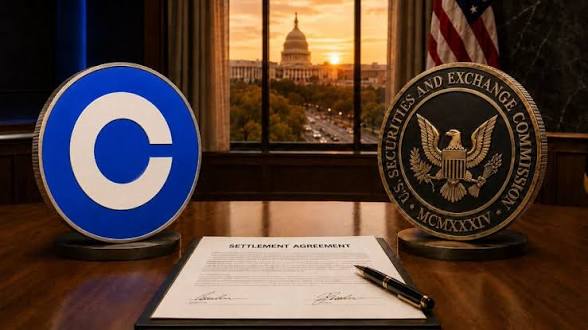
SEC to Revamp Recordkeeping After Reaching Settlement With Coinbase Over Missing Gensler Text Messages

One of the last legal battles stemming from Gary Gensler’s time at the SEC has now been resolved, according to Coinbase’s chief legal officer.

The US Securities and Exchange Commission spent much of Gary Gensler’s tenure pursuing enforcement actions against the cryptocurrency industry, particularly after the collapse of FTX.

While the current administration has since resolved many of those cases, the regulator has now settled a separate lawsuit brought by Coinbase, resulting in changes to the agency’s recordkeeping practices.

From Enforcement Target to Legal Challenger

The legal conflict between Coinbase and the SEC began in 2023 when the regulator sued the largest US based cryptocurrency exchange. The following year, the roles shifted after Coinbase, through its research arm History Associates, filed a lawsuit against the SEC for denying Freedom of Information Act requests seeking internal communications about the agency’s crypto regulatory strategy.

Coinbase argued that the requested records could reveal how the SEC developed its enforcement approach toward digital asset companies during the Biden administration, including the legal reasoning behind several high profile lawsuits against firms such as Binance, Ripple, and others.

The SEC has now agreed to settle the case by paying $150,000 in attorney fees, releasing two documents that had previously been withheld, and reviewing its policies for preserving text messages and other forms of electronic communication.

Coinbase Chief Legal Officer Paul Grewal announced the settlement in an opinion piece, describing it as a meaningful step forward for government transparency. At the time of writing, however, the SEC has not issued an official public statement confirming the agreement.

Why the Settlement Is Significant

During Gensler’s leadership, the SEC imposed billions of dollars in penalties on banks and financial institutions for failing to retain employee communications conducted through text messages and other unofficial channels. Coinbase argued that the regulator should be held to the same standards it required of the private sector.

The dispute intensified after the SEC acknowledged that certain text messages involving Gensler and other senior officials had been automatically deleted, leaving them unavailable in response to the Freedom of Information Act requests.

Although the settlement does not include an admission of wrongdoing by the SEC, it requires the agency to reassess its record retention procedures. The move is viewed as particularly significant given the regulator’s long standing emphasis on preserving official communications.#crypto#cryptonews https://coinsignals.net https://t.me/coinsignalpublic